
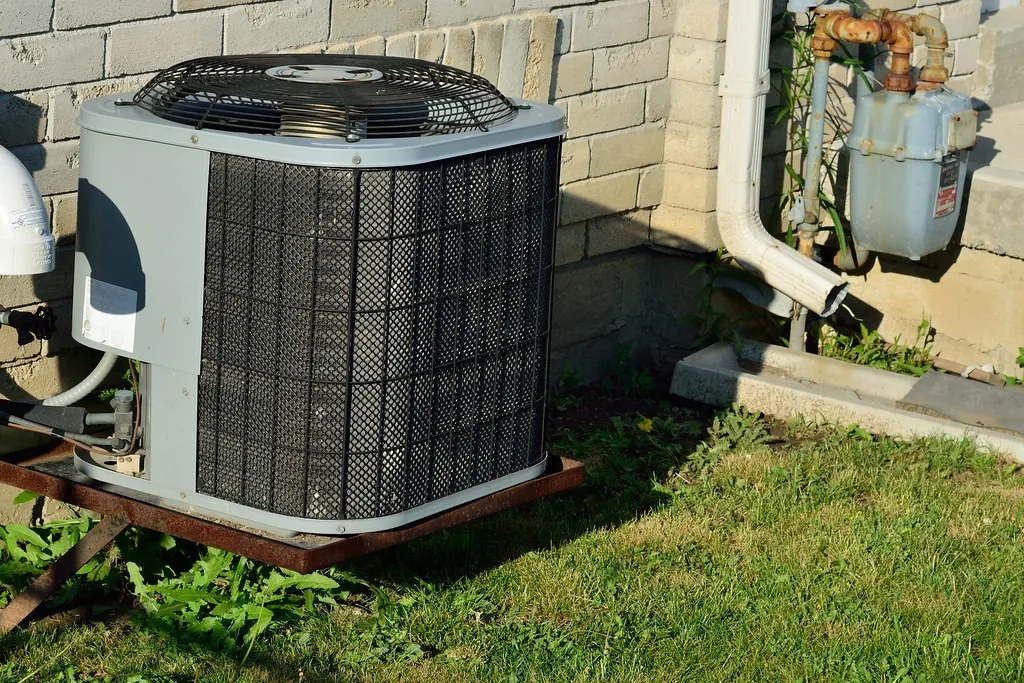
Published national figures put a central air replacement somewhere between $3,000 and $15,000, installed. Bryant and Carrier both give that range in their 2026 pricing guides. It’s wide enough to be close to useless on its own, because a 2-ton single-stage unit going onto sound ductwork and a 5-ton variable-speed system that needs a new line set and an electrical upgrade are both, technically, “replacing the AC.”
So most of what follows is about what pushes a quote toward one end or the other. If you have an aging central air system in a New Jersey home and want to understand the number before someone hands it to you, start here.
What central AC replacement costs, by the numbers
Published ranges
A caveat before the table. Every figure below comes from an equipment manufacturer’s own pricing page. They are national, they include installation, and none of them is tied to a state. Treat them as a sanity check on a quote you already have.
| Source | Published installed range | Year |
|---|---|---|
| Bryant pricing guide | $3,000 to $15,000 | 2026 |
| Carrier AC prices | $3,000 to $15,000 or more | 2026 |
| Trane AC replacement cost | $3,900 to $13,500; national average $6,958 to $13,418 | 2026 |
We checked all three pages on September 23, 2026. Trane’s “national average” band is the most useful of the lot, mostly because it trims off the extremes.
What New Jersey changes
Less than you’d hope, at least in hard numbers. We could not find a citable, state-specific installed price, so we won’t make one up. All three manufacturers list local labor rates and local codes among the things that move the price, which is their polite way of saying a national range can miss in either direction wherever you live.
The one firm local factor is the efficiency floor. The Department of Energy sets a minimum efficiency for new central air conditioners by region, and in the northern region split systems made since January 1, 2023 have to reach 13.4 SEER2 (seer2.com summary of the northern standard). The Southeast and Southwest have their own, stricter rules. Any unit you’re quoted should clear the minimum for your region with room to spare, and it’s a fair question to ask.
How efficiency tier changes the price
SEER2 is the seasonal efficiency rating on every new central air conditioner. A higher number means less electricity for the same cooling, and a higher price.
The “2” is newer than most people realize. It arrived in 2023, when the test procedure changed to assume more resistance in the ductwork, closer to what real houses have. Same hardware, lower number: a system that used to be rated 14 SEER comes out at about 13.4 SEER2. If you’re comparing today’s quote with the sticker on your old unit, or with a quote a neighbor got a few years back, you’re comparing two different scales.
Manufacturers tier their lines, and Carrier’s is a handy map: Comfort goes up to 16.5 SEER2, Performance up to 18.0 and Infinity up to 21.0. Other brands do something similar under other names.
The other half of the tier is how the compressor runs. Trane lists four types: single-stage, two-stage, multi-speed and variable speed. A single-stage unit is either running flat out or off. Two-stage adds a lower gear for mild days. Multi-speed and variable-speed units ramp up and down to match what the house needs, and that’s where the premium prices sit.
For most replacements in a humid climate, a two-stage unit is where we’d start looking. Long, low-speed run times pull more moisture out of the air, and on a sticky summer evening that affects comfort about as much as the thermostat setting does. Variable speed can make sense if you plan to stay in the house a long time and the ducts are in good shape. We won’t put a savings figure on any of it: that depends on your electric rate, how hard you run the system and what you’re replacing, and published savings claims rarely say which of those they assumed.
What moves the price
System size
Residential central air runs from about 2 to 5 tons, per Trane. Bigger costs more. It isn’t better, though. An oversized unit cools the house quickly, shuts off and leaves the humidity behind. The right size comes from a load calculation (Manual J is the usual method), not from the label on the old unit, because the house may have gained insulation, new windows or a finished basement since that unit went in.
Ductwork and electrical
These two get lumped together because they are the line items most likely to show up as a surprise. Ducts that leak, or that are too small for the airflow a new unit wants, can mean sealing, resizing or replacing sections. There’s also the indoor half of the system: a split AC replacement usually includes a new indoor coil matched to the new outdoor unit, and that coil is a real part of the price. On the electrical side, Bryant lists electrical compatibility as a cost factor. A new unit may need a different breaker, a new outdoor disconnect or wiring changes.
Line set
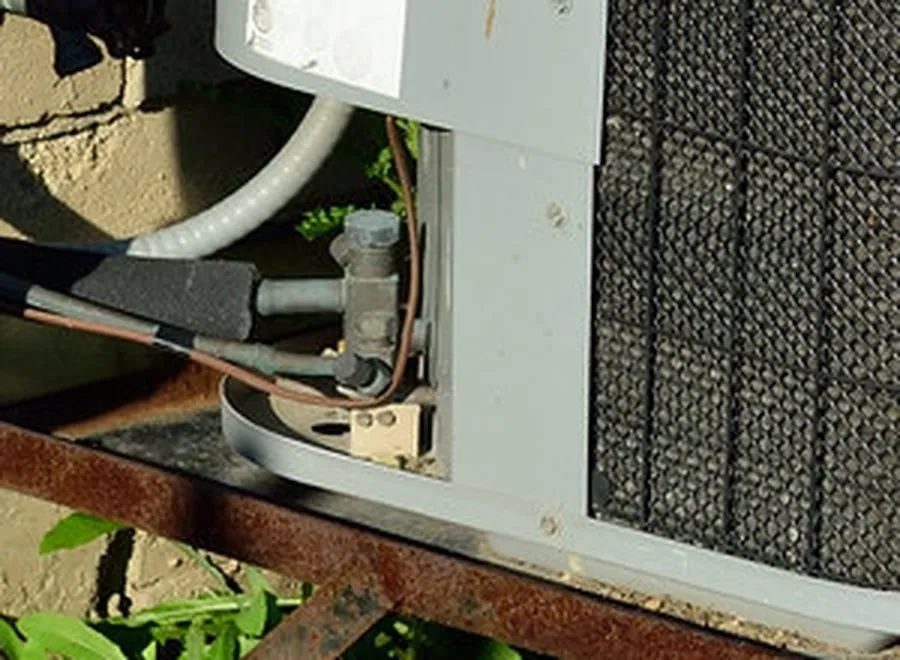
The line set is the pair of copper refrigerant lines running between the outdoor unit and the indoor coil. Some installers reuse it and some replace it as a matter of course. Reuse is cheaper when the lines are the right size and in good condition. Replacement gets expensive when the old lines run through finished walls or ceilings. We don’t have a reliable published figure for either, so treat it as a question: does this quote reuse the line set or replace it, and why?
Refrigerant type
This is the part of a 2026 quote that surprises people most, and it takes some explaining.
Since January 1, 2025, new residential split air conditioners and heat pumps can no longer be made or imported with R-410A, the refrigerant that has been standard for the last couple of decades. New systems use R-454B or R-32. The two families don’t mix. You can’t charge an R-410A system with R-454B, and an outdoor unit built for one refrigerant needs an indoor coil built for the same one. That is a big reason a replacement you pictured as “just the outside unit” comes back as a matched outdoor unit and coil, with a price to match.
R-454B and R-32 are both classed as mildly flammable (A2L) refrigerants. That doesn’t make them dangerous in a properly installed system, but it’s why some new indoor equipment ships with a refrigerant leak sensor, and why installers work to updated handling rules.
There is a wrinkle. Under an EPA final rule published May 26, 2026 and effective July 27, 2026, R-410A units made or imported before January 1, 2025 can still be installed until existing stock runs out (NAHB summary of the rule). So you may still see an R-410A system on a quote, sometimes at a lower price. It isn’t wrong, and it’s legal. Still, no new systems are being designed around R-410A, and we’d want a clear answer on how the unit will be serviced ten years from now before taking the discount.
One thing to be plain about: a working R-410A system does not have to be replaced. Nothing in these rules requires it.
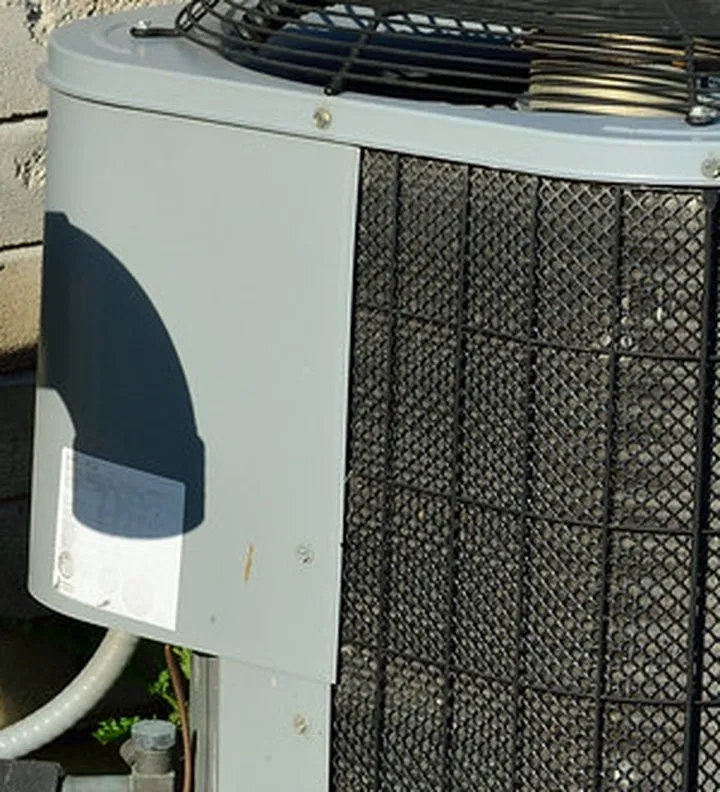
Removal, permits and access. The old refrigerant has to be recovered, not vented, before the old unit goes. Permits may be required for the work, so ask who pulls the permit and whether an inspection is included. And an air handler in a cramped attic or a tight crawlspace takes more labor than one sitting in an open basement.
Rebates in New Jersey
Figures here were checked on September 23, 2026. Rebates change, so confirm on the utility’s own page before counting on one.
JCP&L customers can get $100 for a central air conditioner rated at least 15.2 SEER2 and 12 EER2, or $200 at 17 SEER2 and 12 EER2 (JCP&L HVAC rebates). The page shows no end date. Watch the EER2 requirement: a unit can hit the SEER2 number and still miss the rebate on EER2, so check both on the quote.
Other utilities run their own programs. We couldn’t open PSE&G’s rebate page to confirm its current amounts, so we’ve left them out. Check with whoever supplies your electricity.
On the federal side, the ENERGY STAR tax credit page describes the home efficiency credits, central air included, as available “through December 31, 2025” (ENERGY STAR federal tax credits). A system installed in 2026 falls outside that window. A tax professional can tell you whether anything applies to your situation.
A $100 or $200 rebate is a nice bonus. It is rarely a reason, on its own, to move up a tier.
How to compare AC replacement quotes
Bryant suggests getting at least three detailed quotes, and points out that spring and fall are better times to buy than the peak of summer, when demand is highest. Both are sensible. What matters more is lining the quotes up so you’re comparing the same job:
- Brand and model number for the outdoor unit and the indoor coil. Ask for the AHRI reference number for the matched pair: that certificate is where the official SEER2 and EER2 ratings for the combination live.
- The refrigerant.
- What the price includes. Removal of the old equipment, the permit, the line set, electrical work and any duct changes should each be either in the quote or explicitly left out.
- The warranty, parts and labor separately, and whether the manufacturer’s parts warranty depends on registering the equipment.
The lowest number is not always the cheapest quote. One that leaves out the coil and the line set is quoting a smaller job than the others.
When a heat pump is worth pricing at the same time
A heat pump is a central air conditioner that can also run in reverse to heat the house. If your furnace is also getting old, or you heat with oil, propane or electric baseboard, it can be worth asking for a heat pump price alongside the AC quote. The two replacements involve much of the same outdoor work. Our heat pump guides explain how they work and when they fit.
Repair or replace?
There’s no clean cutoff age, and anyone who gives you one is guessing. A modest repair on a unit that still cools the house well can make sense, especially if it buys time to plan a replacement for spring instead of doing it in a July heat wave. A compressor failure or a refrigerant leak on an older system is a different conversation. So is any system old enough to run on R-22.
Honestly, the hardest case is the in-between one: a mid-sized repair on a system that isn’t new but isn’t failing either. We don’t have a formula for that. Price both, and ask what the technician expects to fail next. The cooling guides cover the warning signs that a system is nearing the end, and the costs and planning hub collects our other cost articles.
If you have a question about your own system or a quote you’ve been given, you can contact our team.