
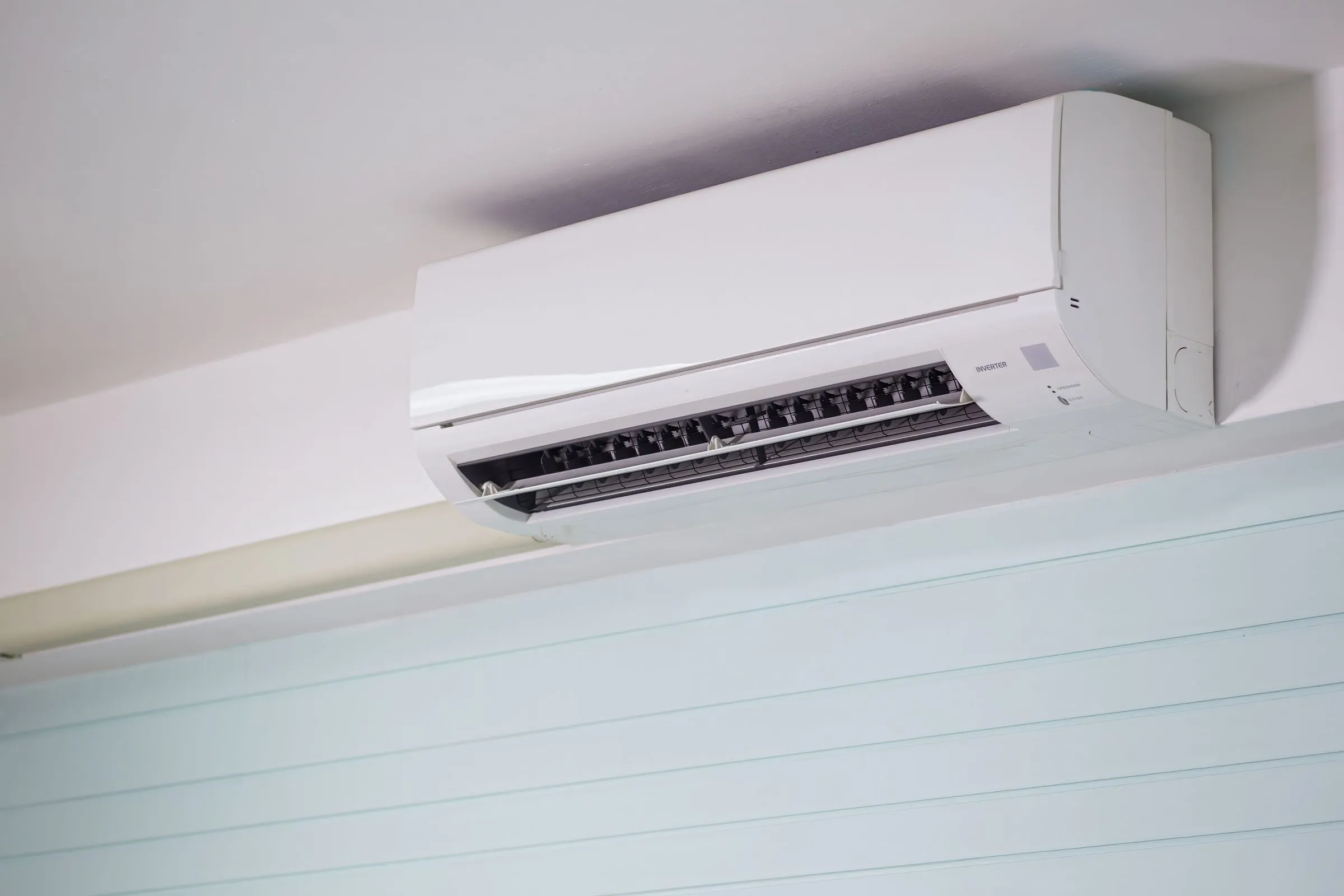
Published national ranges put a single-zone ductless mini split at roughly $1,200 to $6,000 installed. A multi-zone system runs from about $4,000 to $15,000 or more. Those numbers come from Bryant, Carrier and the retailer Filterbuy, all on 2026 pricing pages we checked on September 24, 2026. None of them is our price, and none is specific to New Jersey.
Mostly this is for two kinds of house. One heats with a boiler and radiators and has no ducts at all, so central air was never a simple add. The other has one room the existing system never really reached: an addition, a finished attic, a sunroom that’s pleasant in April and unusable by July.
What ductless costs, in published ranges
A caveat before any table. Every figure here is national and comes from a company that sells the equipment or something next to it. Bryant is a Carrier brand (its pricing page carries a Carrier copyright), so two of the three sources are really one company. Filterbuy sells air filters and its own installed mini split systems. We looked for a citable installed price for this state and didn’t find one.
Single-zone mini split cost
| Source (2026 page) | System | Installed range |
|---|---|---|
| Filterbuy | 9,000 BTU | $1,200 to $2,400 |
| Filterbuy | 12,000 BTU | $1,500 to $3,100 |
| Filterbuy | 18,000 BTU | $1,900 to $4,300 |
| Filterbuy | 24,000 BTU | $2,300 to $5,500 |
| Bryant | Any single zone | $2,000 to $6,000 |
Carrier doesn’t split it up at all. It gives one ductless mini split installation cost range, $2,500 to $15,000 or more, and says single-zone systems sit toward the bottom.
(The BTU sizes trip people up. 12,000 BTU is one “ton” of cooling, a unit that goes back to the days of cooling with blocks of ice: it’s roughly the heat needed to melt a ton of ice over a day. So a 24,000 BTU head is a two-ton unit, which is a lot for one room.)
Multi-zone mini split cost
Filterbuy lists two or three zones at $4,000 to $9,000 installed and four or five zones at $7,500 to $14,500, all on one outdoor unit. Bryant prices by the zone instead, $2,000 to $7,000 each. Do that math for three zones and you get $6,000 to $21,000, which starts near Filterbuy’s range and ends far above it. Carrier’s “$15,000 or more” sits somewhere in the middle.
Which is closer to a real quote for your house? We can’t tell you from the outside. None of the three pages says what size of house or what kind of job its numbers are based on.
Why the ranges disagree
Scope, mostly. Filterbuy splits each total into unit and labor and lists extras separately: line sets past 25 feet, a new circuit, permits, drilling through masonry. It reads as though those sit on top of the headline totals. Bryant and Carrier don’t break anything down.
Region is the other piece. Filterbuy says labor runs 30 to 50 percent of a mini split project and that “Labor in the Northeast and Pacific Coast runs 25 to 40 percent above the national average.” If both hold, the total for a Northeast job would come out something like 8 to 20 percent above the national figure. That’s our arithmetic on one retailer’s estimate, so treat it loosely.
What moves the mini split installation cost
Zone count moves it the most, and the tables already show that. Of everything else, the line set is the item a homeowner is least likely to think about.
Line-set length and routing
The line set is the bundle that connects the indoor head to the outdoor unit: two insulated copper refrigerant lines, a control cable and usually the condensate drain, passed through a hole in the wall a few inches across. Filterbuy says a standard install includes up to 25 feet, and each extra 10 feet adds $50 to $150. That’s small money.
Length isn’t really what gets expensive. The route is. A head on an outside wall with the condenser right below it is about as simple as this work gets: short, straight, one hole. Put the head on an interior wall of a finished second floor and put the condenser at the back of the house because that’s where there’s room, and the lines have to go somewhere. Through a closet. Down a wall cavity. Across the ceiling of the room below, or outside along the siding in a cover. Bryant’s page says it directly: running refrigerant lines through complex pathways, or putting the outdoor unit somewhere hard to reach, “increases labor time and cost.” Whether the drywall patching and painting afterward is in the price is a separate question, and quotes don’t always answer it.
Brick and concrete add their own line. Filterbuy puts core drilling through masonry at $150 to $400 per penetration.
Then there’s the outside of the house. Lines that run down an exterior wall usually go inside a plastic channel called a line-set cover. Plenty of people care more about where that channel shows than about the few hundred dollars that separate one route from another. Most covers can be painted to match the siding, and some can’t be hidden however you paint them. Ask each installer to walk you through the route, or sketch it, before you sign. It’s the part of a ductless quote most likely to be vague, and it decides how the house looks for as long as the system is there.
Electrical work
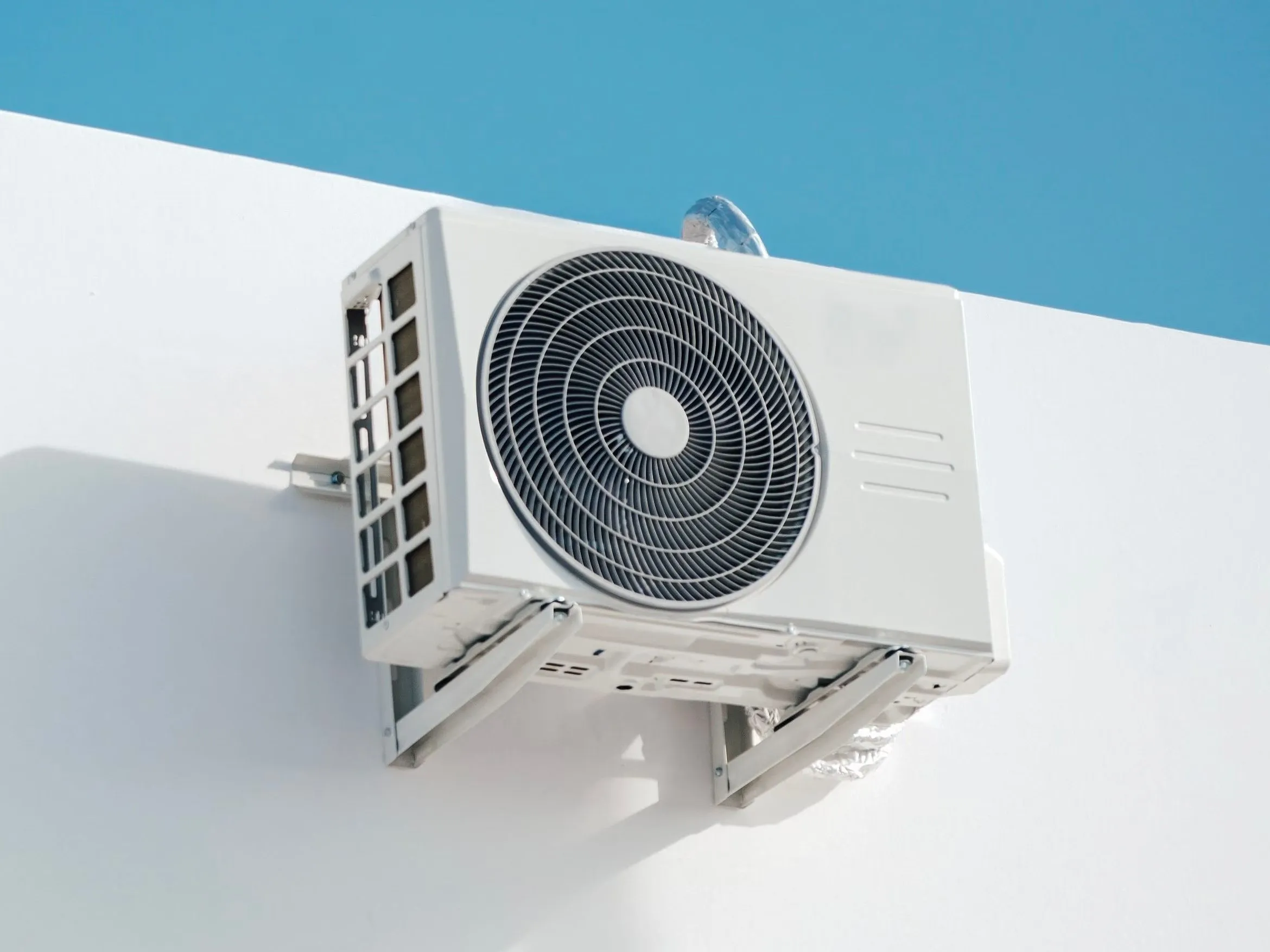
Most outdoor units want their own 240-volt circuit. Filterbuy’s budget figure for a new one is $300 to $800 per outdoor unit. Older panels are where that number stops meaning much. The same page notes that pre-1990 homes frequently need panel work and suggests budgeting $300 to $1,500 for electrical upgrades in an older home (checked September 24, 2026). Replacing the whole panel can land above that, so ask for it as its own line.
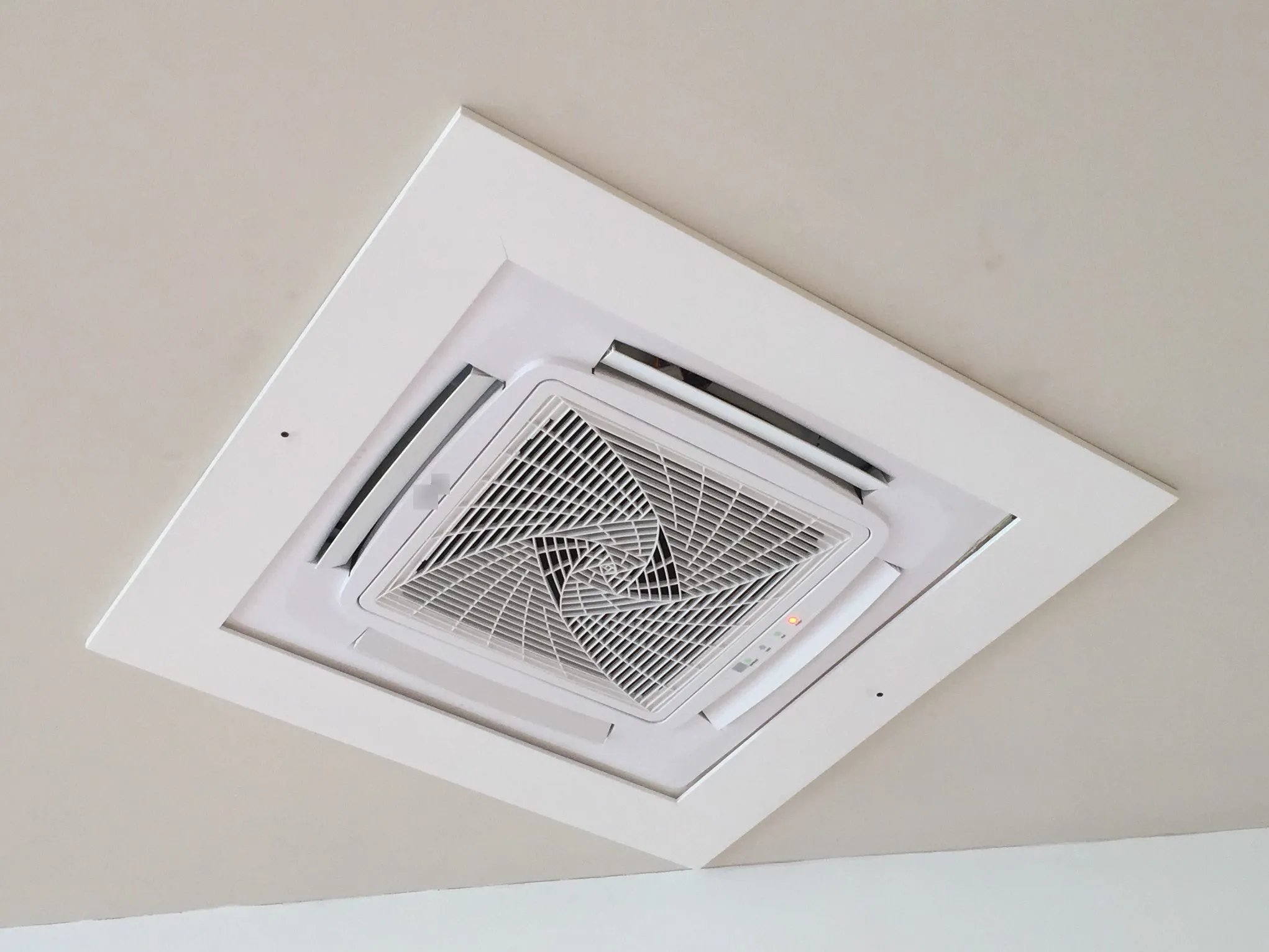
Wall heads vs ceiling cassettes. Bryant says standard wall-mounted units “are usually the most affordable,” while ceiling cassettes and concealed ducted units “require more complex installation and hardware.” Filterbuy adds that ceiling cassettes and second-story heads take 1 to 3 more hours of labor per zone. For one room we’d start with a wall head and only move to a cassette if the room has no good wall or the look genuinely matters to you.
The rest are smaller or harder to price. Permit fees run $100 to $500 depending on the municipality, per Filterbuy. Cold-climate models, the ones rated to keep heating well below freezing, generally cost more than standard ones, but we haven’t found a published premium we trust. If the mini split is meant to heat the room through January and not only cool it in summer, that’s the model to price. Do heat pumps work in New Jersey winters? explains what those ratings mean.
Is your house an easy install or a hard one?
It depends mostly on where the heads go and what the lines have to pass through on the way.
A boiler house with no ducts is the case where ductless makes the most sense and also where it can get the most expensive. Every room you want cooled needs a head or has to share one with a neighboring room through an open doorway. Condition the whole house and you’re into multi-zone territory at the top of the published ranges. In most of these homes the boiler stays and keeps doing the heating, with the mini splits handling summer and the shoulder seasons. If you’re not sure what kind of boiler you have, the steam vs hot water boilers guide helps.
One room is simpler. An addition, a finished attic or a sunroom is often a single zone, frequently on an outside wall, and that’s the cheapest and simplest version of this job.
What sits above and below the room matters more than people expect. An unfinished attic overhead or an open basement underneath gives the lines a path that doesn’t go through anyone’s finished walls. Plaster walls and finished ceilings on every side can mean the line set goes outside instead, in a cover.
A mini split is a heat pump, by the way. Almost all of them sold today heat as well as cool. Our heat pump guides cover how they work.
Running cost and rebates
Running cost depends mostly on your electric rate, which in this state ran about a third above the national average in June 2026; the furnace vs heat pump cost comparison has the figures and sources.
For rebates, JCP&L lists $750 for a ductless mini-split heat pump rated at least 17.1 SEER2, 11.7 EER2 and 7.8 HSPF2, with no end date shown (JCP&L HVAC rebates, checked September 24, 2026). Other utilities, and why the federal tax credit no longer applies, are covered in New Jersey heat pump rebates and incentives.
How to compare mini split quotes
The usual advice applies, and it’s in our guide to comparing HVAC quotes. The ductless-specific part is making sure two quotes describe the same job, because the totals mean nothing until they do:
- How many zones, and where each head goes, room by room. A quote with three heads and a quote with four are pricing different systems.
- The line-set route and length, and whether wall repair is included.
- Where the condensate goes. Every head makes water while it cools. It either drains by gravity to the outside or goes through a small pump, and a pump is one more part that can fail or hum at night.
- The electrical work: new circuit, disconnect, any panel changes.
- Model numbers for the outdoor unit and every indoor head, plus the matched efficiency ratings. You need those to check the rebate thresholds above.
- Who pulls the permit.
Also ask what happens to whatever the room uses now, a window unit or a space heater. It’s minor, but it’s easy to leave out.
If you’d like to talk through your house or a quote you’ve been given, you can contact our team.