

You asked two or three companies to price a new system, and the numbers came back far enough apart that one of them looks wrong. Usually none of them is. Quotes that sit a long way apart are very often pricing different jobs: a different furnace or condenser, a different amount of work around it, and sometimes a different idea of how big the system should be in the first place.
Put the quotes side by side and compare them line by line, the same item on each, until you can see where the money goes.
Start by making the quotes comparable
One quote might be a single page with a model name and a total. Another lists every fitting and a labor line. You can’t compare a total with a list, so the first job is to get all of them into the same format.
Ask each company for an itemised version if you don’t have one. You’re not asking anyone to drop the price, only to show what’s in it. Then take a sheet of paper (or a spreadsheet, if that’s how you think) and give each quote its own column. The rows are the items in the next section. Anything a quote doesn’t mention gets a question mark rather than a blank, because “not mentioned” and “not included” aren’t the same thing, and you’ll want to ask.
What an HVAC replacement quote should include
Equipment and installation work account for most of the difference between quotes, so they get the most space here. Permits, warranty and the “if needed” lines are shorter, but a quote that skips them isn’t finished.
Equipment: brand, model number and efficiency rating
The brand name on its own tells you very little. Most manufacturers sell several lines of furnaces and air conditioners, from a basic single-stage unit up to variable-speed models, and prices within one brand vary a lot. What you want on the quote is the full model number of every major piece.
For a central air conditioner or heat pump that means the outdoor unit and the indoor coil or air handler, and for a furnace it means the furnace itself. Split systems are rated as a matched pair, so a quote that names the outdoor unit and leaves the coil as “matching coil” is missing half the information. The efficiency rating belongs to the combination.
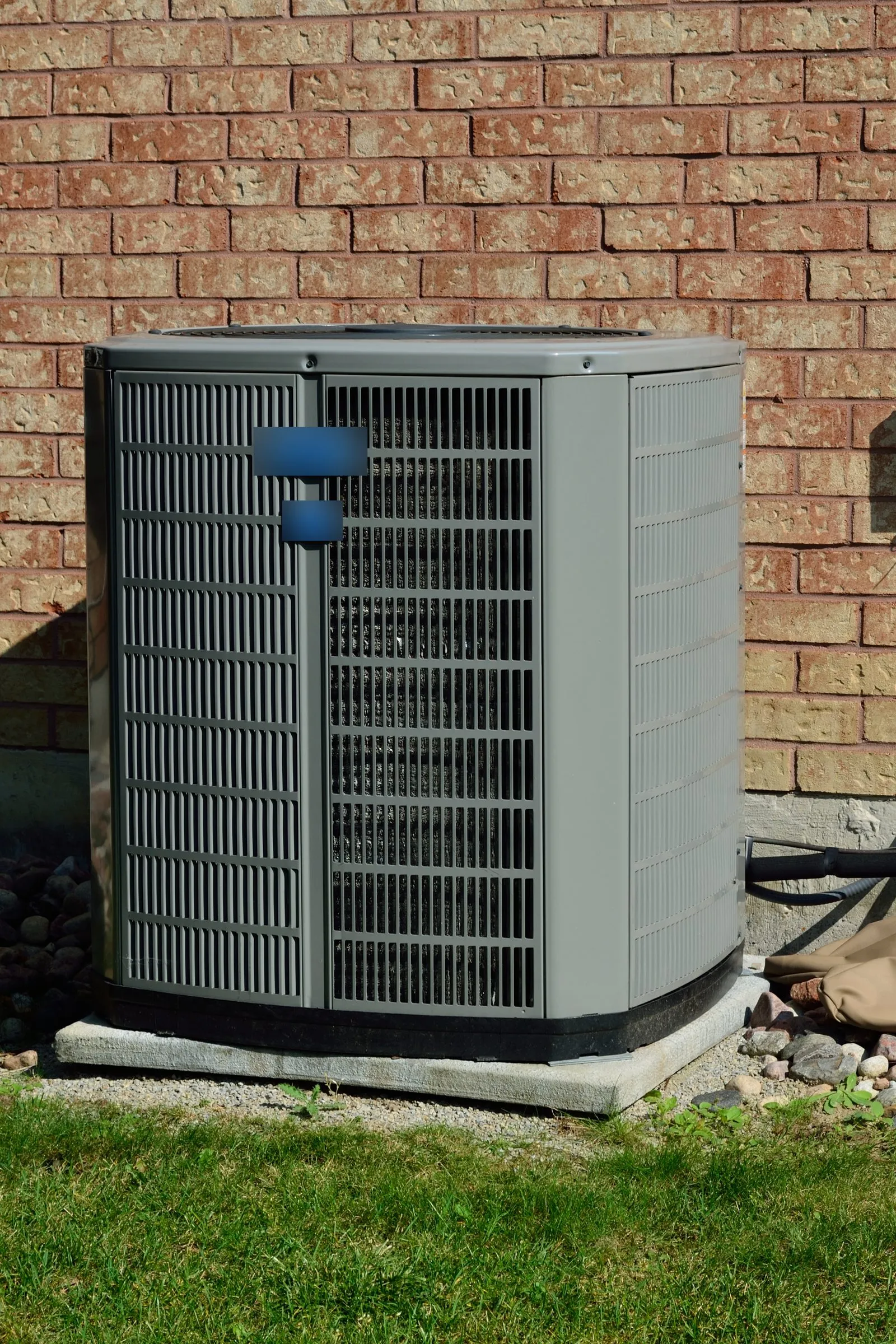
Then look at the rating each quote gives. Gas furnaces are rated by AFUE: the higher the number, the more of the fuel you pay for ends up as heat in the house. Central air conditioners and heat pumps carry a SEER2 rating for cooling, which is the seasonal cooling output divided by the electricity used. Heat pumps also carry HSPF2 for heating. Both have federal minimums that differ by region, so every new system you’re quoted clears a floor. Above that floor, a higher rating costs more up front and uses less energy to run.
This is the row where quotes most often split without anyone saying so. If one company quoted a unit near the minimum and another quoted a two-stage or variable-speed model, you’re looking at two different products, and the price difference is mostly the product.
Model numbers matter for rebates too. New Jersey’s Clean Energy Program says the state’s investor-owned gas and electric utilities run their own efficiency programs for customers, so the utility named on your bill is the one to ask. Whether a given unit qualifies usually comes down to the exact model and its rating, so ask each company which model numbers on its quote qualify, and check with your utility before counting on it. A rebate on one quote and not the other changes the comparison.
What the installation covers
Before anything else, make sure the quotes are for the same kind of system. If your house heats with a boiler and radiators, or has no ductwork at all, one company might quote a new boiler, another a ductless heat pump, and a third a furnace with new ducts. Those are three different projects. Their prices can’t be lined up against each other in any useful way, and the real question becomes which project you want.
Two quotes for the same model number can still differ a lot, because the work around the equipment varies from house to house. Check whether each quote says who removes and disposes of the old unit, and look for these as well:
- Venting. A high-efficiency condensing furnace vents through plastic pipe and makes water, so it needs a drain. Going from an older furnace to one of these can mean new venting and a condensate line that the old setup never had.
- Ductwork. Connecting a new unit usually needs some new sheet metal at the plenum. Bigger changes to the ducts are a separate line, or should be.
- The refrigerant lines between the indoor and outdoor units: reused or replaced.
- Electrical work, including the disconnect by the outdoor unit and any circuit changes.
- The thermostat, if a new one is part of the price.
- If the house heats with oil and the new system runs on gas or electricity, disconnecting or removing the old tank, and what happens to the fuel line.
Permits and inspection
In New Jersey, the rules sit in the state’s Uniform Construction Code (Title 5, Chapter 23 of the administrative code). It treats swapping a furnace, boiler, air conditioner or condensing unit for a new one “of like capacity” as minor work (N.J.A.C. 5:23-2.17A). Minor work still needs a permit, but the same rules let the work start once the local enforcing agency has been given notice, before the permit itself is issued. A replacement that changes capacity, or adds something new, can fall under different rules. Your municipal construction office enforces that code locally and can confirm what applies to your house.
For comparing quotes, the questions are simple. Who files the notice and pulls the permit? Is the permit fee in the price or billed separately? Is the final inspection part of the job? One quote that includes all of that and one that’s silent on it aren’t the same price, even if the totals match.
Warranty on parts and on labor
These are two different warranties and quotes often blur them. The manufacturer covers parts. Labor, meaning the cost of someone coming out to replace a failed part, is usually covered by the installer, if at all. Ask each company how long each one lasts and who you’d call to use it. Also ask whether the parts warranty depends on registering the equipment after installation, and if so, who does it.
Exclusions and “if needed” items
Read the small print for anything priced “if required” or “additional if needed”. A line like that isn’t a problem in itself, because nobody can see inside a wall before opening it. It becomes a problem when one quote has several of them and another has none, and you’re comparing the totals as if they were final.
Sizing: was a load calculation done?
If there’s one row on your comparison sheet that deserves a conversation, it’s this one.
Size is given in tons for cooling and Btu per hour for heating. The size on a quote should come from somewhere, and there are two common places it comes from.
The first is a load calculation. The industry standard for homes is ACCA’s Manual J, which works through the house room by room: the walls and insulation, the windows and which way they face, air leakage, the local climate. It takes time and a visit with a tape measure, and it produces a number for your particular house.
The second is a rule of thumb. ACCA’s own blog quotes the familiar one: “Install one ton of air conditioning capacity for every 500 (or 400 or 600) square feet”. The same post reports that Manual J results in its sample averaged 1,431 square feet per ton, far from any of those rules. That’s one sample, not a figure for your home, but it shows how far a square-footage shortcut can drift. The other common shortcut is to match the old unit’s size, which quietly assumes the old one was right and that nothing has changed since, even if you’ve replaced the windows or insulated the attic.
Why it matters: an oversized air conditioner cools the house quickly and shuts off, then starts again, over and over. Short runs like that pull less moisture out of the air, so the house can feel cool and clammy at the same time. It also costs more to buy. A heat pump quote has a second problem to solve, because the winter heating load and the summer cooling load are rarely the same size, and the quote should say which one set the size. An undersized system has the opposite problem on the hottest and coldest days.
So ask each company, plainly, how they arrived at the size on the quote. A load calculation is a good answer; so is a clear explanation of what they measured. “It’s the same size as the old one” deserves a follow-up question. And if two quotes name different sizes for the same house, that difference alone can explain a good part of the price gap. Two quotes that agree on size don’t prove either one did the math, so ask both.
The cooling guides go further into how size, humidity and comfort interact.
Why two quotes can differ so much
Usually it’s scope: one quote includes the venting, the permit and hauling the old unit away, and the other leaves them out or doesn’t mention them. A low total with three “if needed” lines and no permit isn’t a lower price for the same job. After scope and the equipment and size rows above, what’s left is usually the thermostat and small parts, which rarely move the total much.
Here is a blank grid to copy. Fill in what each quote says, and put a question mark where it says nothing.
| Item | Quote A | Quote B | Quote C |
|---|---|---|---|
| Equipment model numbers (every piece) | |||
| Efficiency rating (AFUE, SEER2, HSPF2) | |||
| Size, and how it was worked out | |||
| Removal and disposal of the old unit | |||
| Venting, drain and duct changes | |||
| Electrical work | |||
| Thermostat | |||
| Permit, fee and inspection | |||
| Parts warranty (length, registration) | |||
| Labor warranty (length, who honors it) | |||
| “If needed” items | |||
| Total | $____ | $____ | $____ |
When you’re comparing furnace quotes, the venting and drain rows usually matter most. For air conditioning and heat pumps, look hardest at the model-number and size rows.
Questions to ask about any quote
- What are the full model numbers for each piece of equipment?
- How did you decide on this size?
- What’s included in the installation, and what would be extra?
- Who handles the permit and the inspection?
- How long is the labor warranty, and who do I call if something fails?
- Is anything on this quote an estimate that could change once the work starts?
When the answers come back, circle the rows where the quotes still disagree.
Planning ahead
Quotes are easier to compare when you aren’t in a hurry. If your system is getting older, pricing a replacement before it fails gives you time to ask the questions above and wait for proper answers. The heating guides cover the signs that a furnace is near the end, and the costs and planning hub collects the rest of this topic.
If you have a question about anything here, get in touch.