
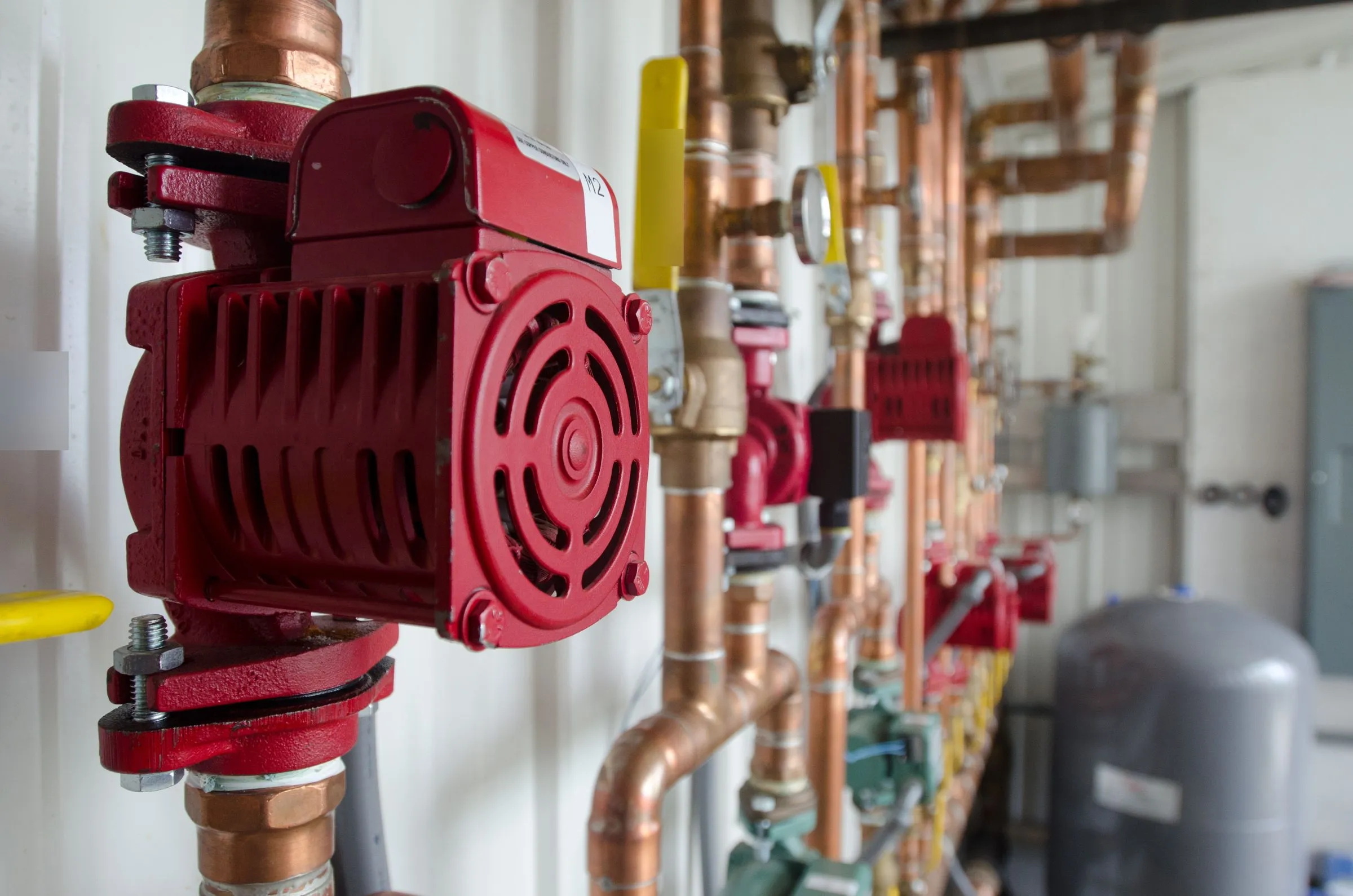
Published installed prices for a replacement boiler mostly land between about $3,500 and $12,000 (Queen B, October 2025). The low end is a like-for-like swap of a basic unit. The top is a high-efficiency condensing boiler, or a job where the venting, piping or fuel changes along with the boiler.
So how much does a boiler cost for your house? That’s a wide range to answer with. Most of this article is about why it’s that wide, and how to tell where your house sits in it.
Published boiler replacement cost, by type
A caveat before the table: these figures are rougher than we’d like. Nobody publishes an official price list for installed boilers. What exists is cost-guide websites and HVAC companies’ own pages, and the companies’ pages are marketing. The ranges also don’t line up neatly, because every source slices boilers differently (by fuel, by efficiency, by steam or hot water) and none of them slices it the way a homeowner actually thinks about it.
For boiler replacement cost in NJ specifically, the most detailed published figures we found come from one New Jersey plumbing and HVAC company, Queen B Plumbing, Cooling & Heating, published October 2, 2025:
| Boiler | Published installed range (Queen B, Oct 2025) |
|---|---|
| Standard gas boiler | $4,500-$7,500 |
| High-efficiency gas condensing boiler | $7,500-$12,000 |
| Oil boiler | $6,000-$9,000 |
| Electric boiler | $3,500-$6,000 |
National cost guides, for comparison, from the dates shown:
| Type | Published installed range | Source |
|---|---|---|
| Steam boiler | $3,400-$9,500 | Today’s Homeowner, updated April 9, 2025 |
| Condensing (high-efficiency) | $4,000-$11,000 | Fixr, updated January 28, 2026 |
| Combi (heat and hot water in one) | $2,600-$10,000 | Fixr, updated January 28, 2026 |
| Natural gas, any type | $4,000-$10,000 | Fixr, updated January 28, 2026 |
And one more overall figure: Runwise (December 31, 2024) puts a typical replacement at $3,500 to $8,500 with a national average around $6,000.
So how much is a new boiler, really? The honest answer is that the local page runs higher than the national guides, and we can’t tell you how much of that gap is New Jersey labor and how much is simply who wrote the page. Both point the same way on one thing. The equipment tier moves the price, and the installation moves it at least as much.
You’ll notice “hot water boiler” isn’t its own row. None of the sources we found gives a separate installed range for a standard hot water (hydronic) gas boiler. Our reading is that most “standard gas boiler” figures describe exactly that job, but that’s an inference, not something the sources say.
Queen B’s October 2025 page also mentions NJ Clean Energy Program rebates of up to $1,500 for qualifying gas boilers (90% AFUE or higher), and says rebates change. Check current eligibility before you count on it.
These are market ranges with the dates shown. They aren’t our prices and they aren’t a quote.
Steam boiler replacement cost: why the old house changes the math
If your house has big cast iron radiators and the pipes knock a little when the heat comes on, you probably have steam. (The steam vs hot water article shows how to tell for sure.) Steam is the case the national averages handle worst, and it deserves more space than the rest.
It’s also not a rare case here. Nobody publishes a count of steam homes in the state, but the Census shows how old the housing is: in the American Community Survey 2024 1-year estimates (table B25034), about 23 percent of New Jersey’s housing units were built before 1950, a figure the steam vs hot water article works through in more detail.
The boiler itself isn’t the expensive surprise. The piping around it is.
Near-boiler piping
A steam boiler makes steam, and that steam has to leave the boiler dry, without dragging water up into the mains. The manufacturers publish piping diagrams for the connections right at the boiler (the header, the risers, the equalizer) for that reason. When a new boiler goes in on old piping that was fitted to a different boiler decades ago, the connections often don’t match what the new unit needs.
Piping it properly takes time and material, and it is where quotes quietly diverge. One company prices new near-boiler piping to the manual. Another reconnects to what’s there. The second quote is cheaper on paper, and the difference may show up later as banging pipes and radiators that heat unevenly. We’d take the first quote almost every time, and we’d ask the second company, in writing, whether their price includes re-piping to the manufacturer’s diagram.
Ask about a skim port too. New steam boilers carry oil and residue from manufacturing, and skimming it off after installation is part of a proper startup.
Sizing a steam boiler
A hot water boiler is sized to the home’s heat loss. A steam boiler is sized to the radiators: the total amount of radiation connected to it, added up radiator by radiator. Someone should be counting your radiators (and measuring them, since a tall three-column radiator and a short one don’t hold the same amount of steam). If a quote gives a boiler size and nobody went room to room, ask how they got the number.
Counting is tedious. There are published rating charts for old radiator styles that list how much steam each section of each style condenses.
What steam can’t do
A steam boiler can’t be a condensing boiler. Condensing needs cool water coming back to the boiler, and a steam system never returns anything cool enough. So the high-efficiency tier in the table above isn’t really on the menu for a steam house unless the system is converted to hot water, which is a separate, larger project.
Other things that move the price
How much does a new boiler cost once everything around it is counted? Two quotes for “a new boiler” can be thousands of dollars apart, and the tables above show why: Queen B’s own range runs from $4,500 for a standard gas boiler to $12,000 for a condensing one. Much of the rest of the gap has little to do with the boiler.
Boiler chimney liner cost and new venting
An older boiler usually vents into a masonry chimney. What happens to that chimney depends on what replaces it.
A new condensing boiler generally leaves the chimney alone. Its exhaust is cool and wet, so it typically exits through plastic or stainless pipe, often out a side wall, and the boiler needs a condensate drain. That venting is part of the job.
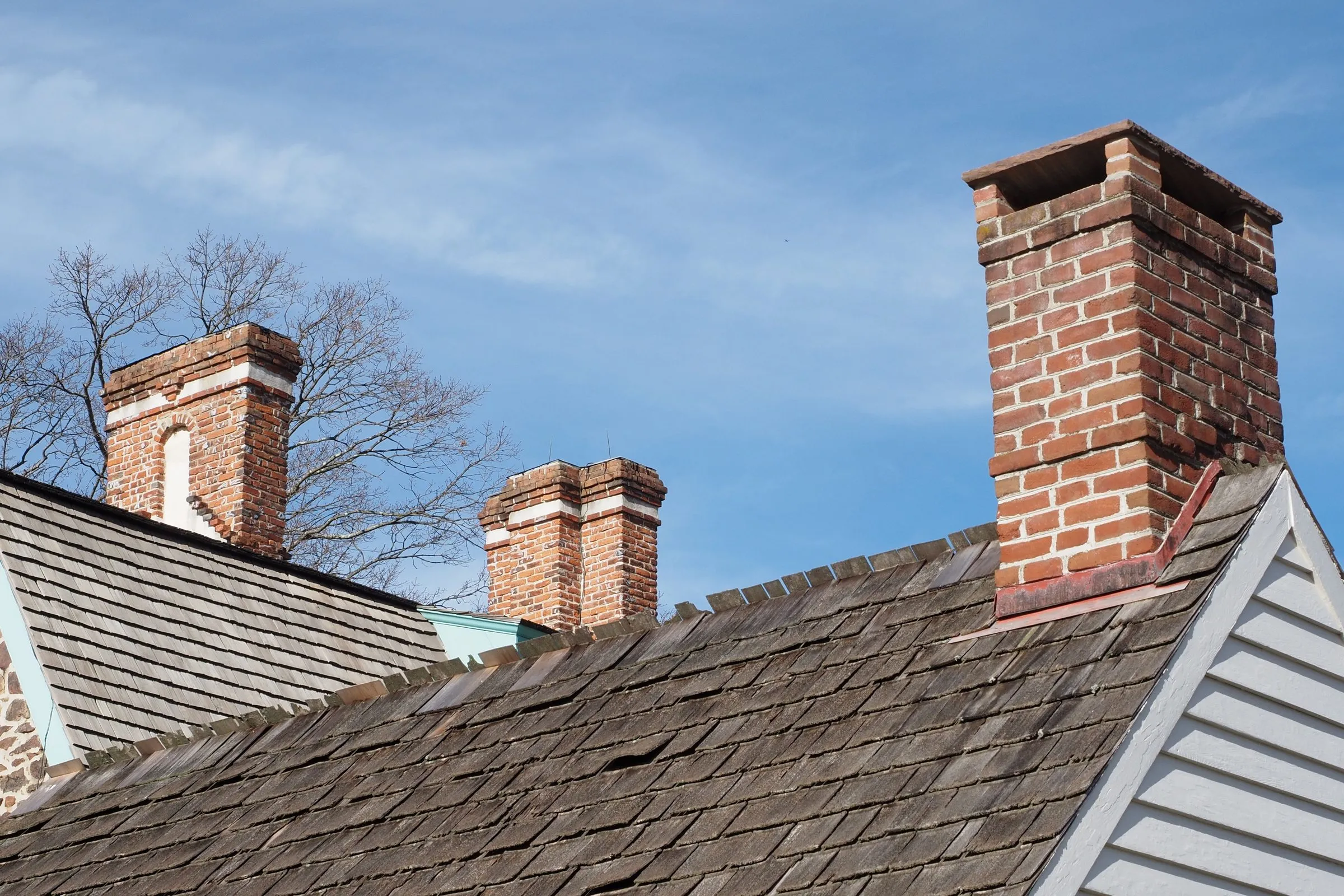
A new non-condensing boiler (every steam boiler, and a standard-efficiency hot water one) often still uses the chimney, and that’s where the liner question comes in. An unlined or oversized masonry flue may need a liner sized to the new appliance. And if the boiler moves off the chimney while a gas water heater stays on it, the chimney may end up too big for what’s left.
Published liner prices vary a lot. Queen B (October 2, 2025) lists chimney liner installation at $750 to $2,000. Fixr (updated January 31, 2025) puts chimney liner installation at $1,800 to $4,000, with a national average of $2,500. We can’t reconcile those two. A liner for a single boiler flue and a full relining job are different things, and the sources don’t say which they mean.
An indirect water heater
A boiler can heat your domestic hot water through a separate tank, called an indirect water heater. If you have one, or want one, it’s usually added or replaced with the boiler. Fixr (updated January 27, 2026) lists indirect water heater installation at $1,200 to $4,500. That’s a real chunk of a quote, so check whether each quote includes it.
Combi boilers skip the tank and heat water on demand. They’re compact and they make sense in smaller homes. We’re less keen on them for a big old house with several bathrooms, where one unit trying to heat the house and run two showers at once can leave someone disappointed. That’s a judgment call rather than a rule, and the answer depends on the specific unit’s hot water output.
Oil vs gas boiler cost
If you heat with oil, the sources above put a new oil boiler roughly in the same band as gas: $6,000 to $9,000 installed per Queen B (October 2025), and $4,800 to $9,000 per Fixr (January 2026). For oil steam boilers specifically, Fixr’s oil boiler guide (updated January 26, 2026) gives $5,000 to $9,500.
Switching from oil to gas is a different project, not a swap. The house needs gas service and a gas line to the boiler, the venting often changes, and the oil tank has to be dealt with. None of the ranges here cover all of that. Fixr lists piping and gas line upgrades at $500 to $2,500 (January 28, 2026), which covers only part of it.
The rest is smaller. Removal of the old boiler and the permit are the two line items with a published range: Queen B lists $300 to $800 and $100 to $500 (October 2025). A cast iron boiler in a tight basement takes more effort to get out than a wall-hung one.
How long does a boiler last?
Published lifespans vary, and the spread tells you something.
- Queen B (October 2025): 15 to 25 years for gas and oil boilers, 12 to 20 for high-efficiency condensing boilers.
- Today’s Homeowner (April 2025): 20 to 30 years for steam boilers.
- Fixr (January 2026): 7 to 25 years for oil boilers, depending on type and maintenance.
Note the condensing figure. The most efficient boilers carry the shortest published lifespans in that source. A boiler past these ages isn’t necessarily finished, and one inside them isn’t necessarily fine. Age alone won’t tell you when yours is done.
Repair or replace
Is it worth replacing a 15-year-old boiler? Usually not if the only thing wrong with it is its age. A leak in a cast iron section is a different story: on most sectional boilers a cracked section means replacement, and a repair quote for one deserves a second opinion.
In between is where it gets genuinely hard. A failing circulator or a bad low-water cutoff on a 20-year-old boiler is a normal repair. Several of them in two winters starts to look like money spent on a boiler you’ll replace anyway. We can’t give you a rule for that line, and anyone who does without seeing the boiler is guessing. The heating guides cover the warning signs.
Comparing boiler quotes
The usual advice applies: get it in writing, line item by line item, with the exact boiler model and its efficiency rating. For boilers, add four specific questions to each quote: is new near-boiler piping included (steam), is a chimney liner or new venting included, is the indirect water heater included, and did someone count the radiators or run a heat loss calculation to size it. A quote that is far below the others is usually missing one of them.
Our guide to comparing HVAC quotes goes through the rest. If you have a furnace instead of a boiler, the furnace cost guide covers that side.
The figures here are published third-party ranges with the dates shown, not quotes or our prices. Questions about your boiler? Contact our team.