
If your furnace is getting old, you probably want to know what a new one costs before anyone comes out to look at it. That’s a reasonable thing to want, and it’s also where most online answers fall short. They give one number, or a table with no date on it.
Here’s what we could find with a date and a source attached, what makes one quote thousands higher than another, and the rebate conditions to check before you count on one.
The short answer
A caveat first. Nobody publishes an official price list for installed furnaces. The ranges below come from HVAC companies’ own websites, which is the best public data there is. It’s still marketing material, so read it that way.
The most specific published range for this state comes from one New Jersey HVAC company, Supreme HVAC, published February 1, 2026. It puts a typical furnace replacement at $4,500 to $9,500 installed, broken down like this:
| Equipment | Published installed range (Supreme HVAC, Feb 2026) |
|---|---|
| Standard-efficiency gas furnace (80% AFUE) | $4,500-$7,200 |
| High-efficiency gas furnace (95-97% AFUE) | $6,500-$9,500+ |
| Ultra-high-efficiency / modulating | $9,500 and up |
A national guide comes in noticeably lower. HVACProjectCost (updated August 2, 2026) lists $2,800-$4,000 for an 80% single-stage unit, $4,000-$6,500 for a 90-96% two-stage unit, $6,500-$10,000+ for a 97%-plus modulating unit, and a national average of about $4,500 installed.
So which is right? Probably both, for different houses. National averages mix in cheaper labor markets, and a single company’s page reflects the jobs that company tends to get. We honestly can’t tell you how much of the gap is New Jersey and how much is the source. What both agree on is the shape: the efficiency tier moves the price, and the installation moves it at least as much.
These are market ranges, not our prices and not a quote. They include equipment and installation. Equipment-only prices you see online look far lower and tell you very little about the final bill.
Gas or electric
In the Energy Information Administration’s most recent household survey (RECS 2020, released March 2023), natural gas was the main heating fuel in about 75% of New Jersey homes, electricity in 16% and fuel oil or kerosene in 7%. So a gas-to-gas replacement is the common case, and it’s the one the price ranges above describe.
Electric furnaces exist and can cost less to buy. They run on your electric rate, though, and for heating a whole house through a cold winter that rate matters more than the purchase price. If someone quotes you an electric furnace, ask why, and compare what it will cost to run over its life.
That 7% on oil is worth a second look if it’s you. Replacing an oil furnace with a gas one is a fuel conversion, not a swap: the house needs a gas service and a gas line to the furnace, and the oil tank has to be dealt with. It’s a different quote from a basic replacement, and none of the published ranges above cover it.
What actually moves the price
Two quotes for the “same” furnace can be thousands apart for reasons that have little to do with the furnace itself.
The efficiency tier is the obvious one. You can see it in the table.
Venting and condensate drainage
This is the one people don’t see coming.
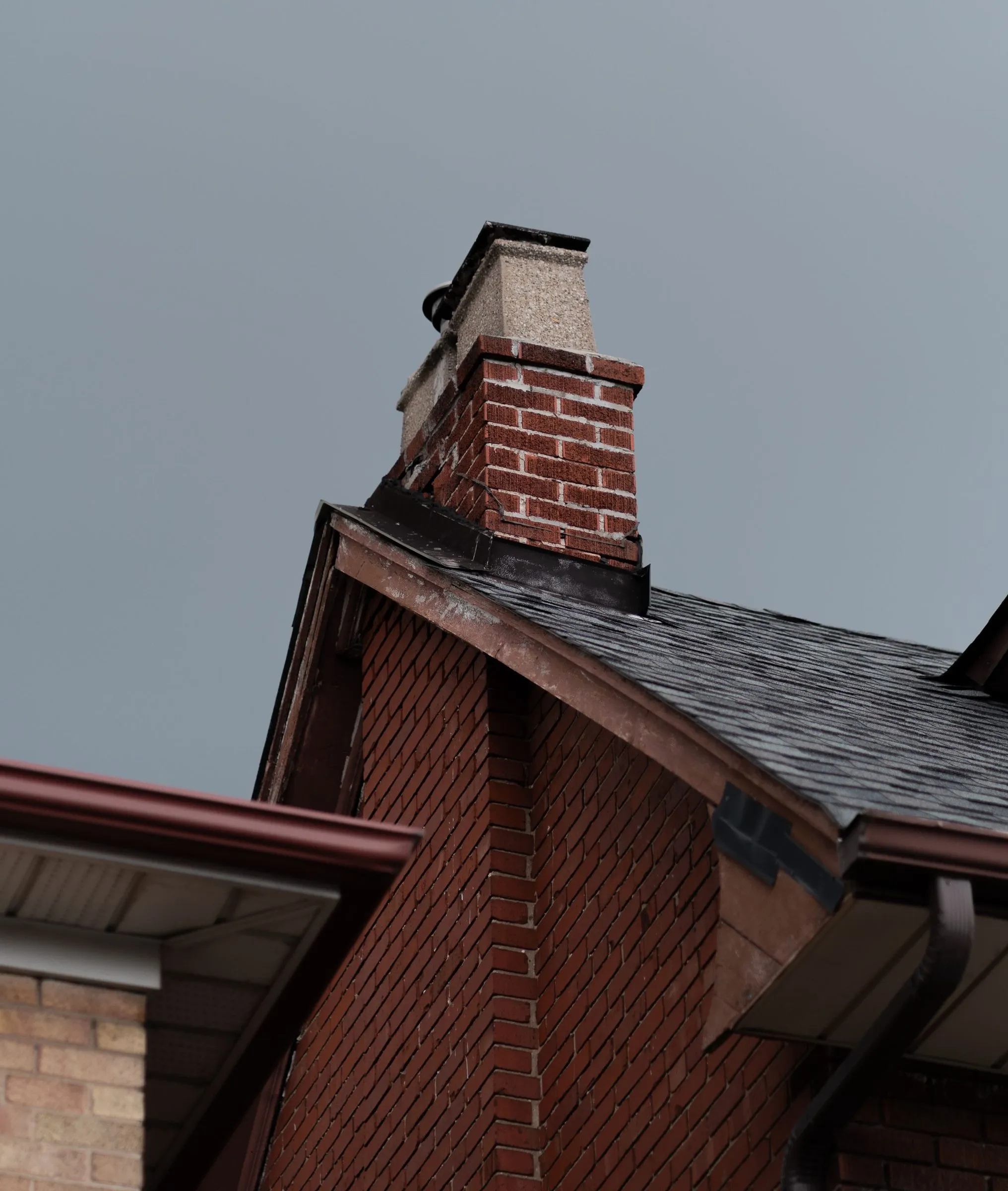
An 80% furnace sends hot exhaust up a chimney or metal flue. A 90%-plus condensing furnace pulls so much heat out of the exhaust that water condenses inside it. That changes two things. The exhaust is cool enough that it usually leaves through plastic pipe, often out a side wall, not the old chimney. And the unit now makes water, which needs a drain, sometimes a condensate pump if there’s no floor drain nearby.
If your current furnace is an 80% unit and you’re moving up to 95%, the new venting and drainage are part of the job. A quote that doesn’t mention them either includes them silently or doesn’t include them at all, and you want to know which.
There’s a catch on the chimney side too. Once the furnace stops using it, the chimney may be left venting only a gas water heater, which is a different load than it was sized for. Ask whether yours needs attention.
Ductwork is the next biggest swing. If the new furnace moves air differently from the old one, the ducts at the unit may need changing, and that belongs in the quote rather than on a change order. A unit in a crawlspace or behind a finished basement wall also takes longer to get out and replace. Furnace replacement is generally permitted work, handled by your municipal building department (the state lists the construction permit forms), so the permit should be on the page too.
How to compare quotes fairly
Comparing the bottom numbers is the least useful thing you can do with three quotes. Look at:
- What’s included: equipment, installation, venting, drainage, duct changes, gas line check, permit, removal of the old unit.
- The exact equipment, meaning brand, model and AFUE rating. Different models aren’t comparable quotes.
- Whether you have a written quote with the line items. “Depends on what we find” tells you how the price might end up. It isn’t a price.
- The workmanship guarantee, in writing.
- The manufacturer’s warranty on the unit, which is separate.
When one quote is far below the others, the usual reason is scope. Something is missing from it. How to compare HVAC quotes goes through it line by line.
Repair or replace
Gas furnaces typically last 15 to 20 years with proper maintenance, according to HVACProjectCost. Past 15 to 20 years, each repair is buying time on a unit near the end of its life. It won’t necessarily fail this winter, but the repair money doesn’t carry over to the next furnace.
Our view: a small repair on a well-kept furnace under fifteen is almost always worth doing. A major part (heat exchanger, burner assembly, control board) on a unit well into its second decade starts to look like a down payment on a replacement you’re going to buy anyway. The in-between cases are genuinely hard, and anyone who gives you a confident answer without seeing the unit and the repair price is guessing. Our heating guides cover the warning signs worth watching.
Timing and the New Jersey rebate
If your furnace is still running reliably, you have the one thing a January breakdown takes away: time to get several quotes and read them properly. Whether prices are lower outside heating season, we couldn’t confirm from any source. It’s worth asking.
The rebate is more concrete. According to the New Jersey Clean Energy Program’s HVAC page:
- a natural gas furnace qualifies at a 95% AFUE rating
- the equipment has to be purchased and installed by June 30, 2027
- you apply within 120 days of the equipment purchase date
- you need a photo of the existing furnace before it’s replaced
The program lists up to $3,650 as its maximum HVAC and water-heating rebate. That’s the ceiling across equipment types, not a furnace-only amount, so a furnace alone may come in lower. Program details change. Confirm the current terms with your gas or electric utility, or through the state program hub, before the rebate becomes part of the math.
Take that photo before anyone disconnects the old unit. It’s easy to forget on the day, and you can’t take it afterwards.
A side note on AFUE, since the rebate hinges on it. AFUE is an annual, lab-rated average: the share of the fuel’s energy that ends up as heat over a season. A 95% furnace isn’t 95% efficient on every cycle of every day, and an 80% unit, the federal minimum for most indoor gas furnaces, loses about a fifth of what it burns up the flue.
The figures here are published third-party ranges with the dates shown, not quotes or our prices. Every house is different. Questions about a replacement? Contact our team, or read more about Greystone.