
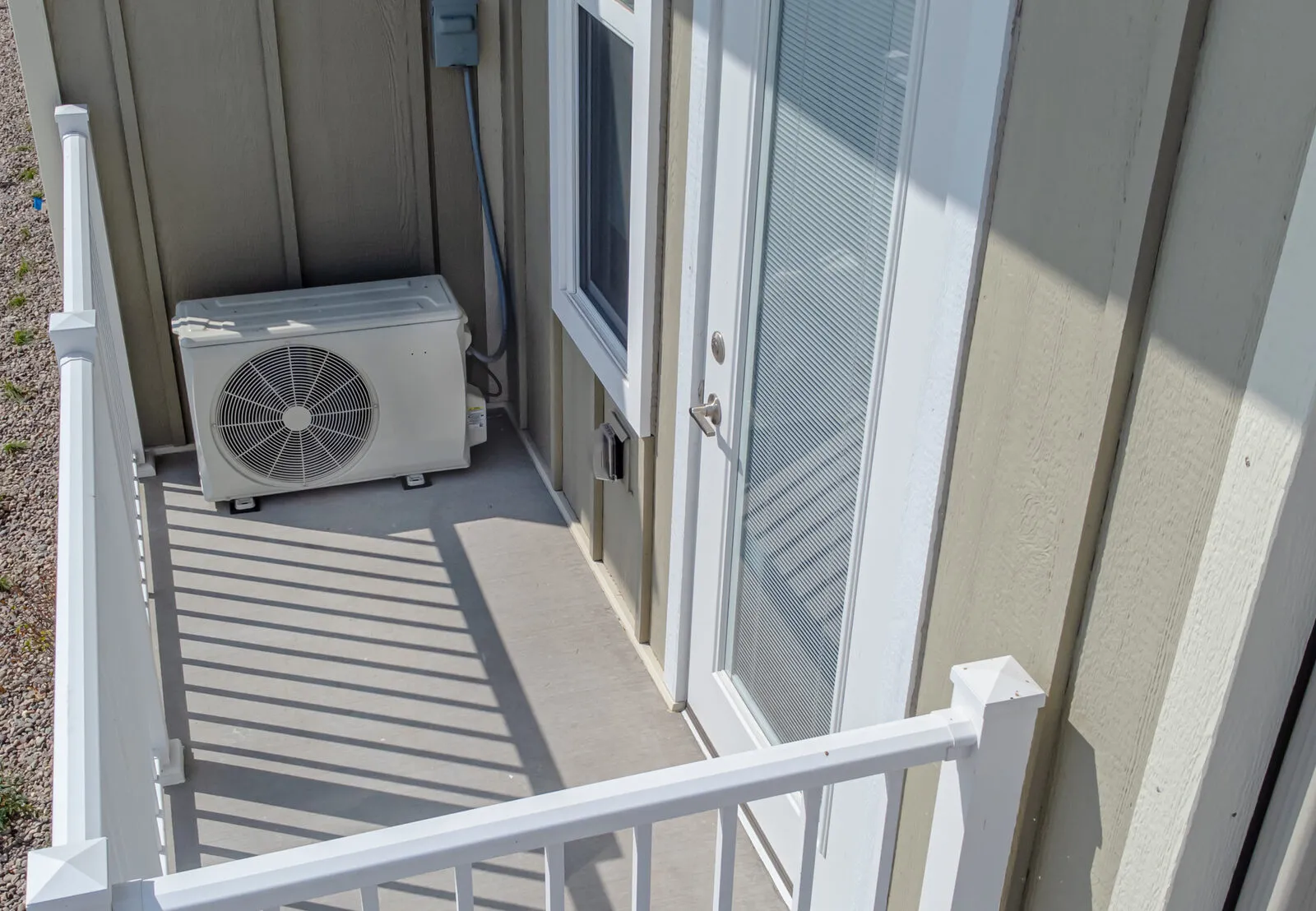
Usually, yes. A cold-climate heat pump that has been sized for the house can carry most homes here through January on its own. The handful of coldest nights each winter is where backup heat earns its keep, and an older house may need its ducts or electrical panel looked at before any of that matters.
Whether heat pumps work in cold weather in general is well tested by now. The rest of this guide covers what January here actually looks like and what an older house needs checked.
How a heat pump heats with cold outdoor air
A heat pump doesn’t make heat by burning anything. It moves heat that is already there, and even 20°F air holds plenty of it (air only runs out of heat at absolute zero, about 460 degrees below zero Fahrenheit).
The trick is the refrigerant. Outside, it runs through the coil colder than the winter air around it, so heat flows into it. The compressor squeezes that refrigerant, which raises its temperature well above room temperature, and the indoor coil or head gives the heat off into the house. In summer the same loop runs backwards and you have an air conditioner. The heat pumps hub covers the basics in more detail.
One thing that worries people the first winter: on a damp morning around freezing, the outdoor unit may stop, go quiet, and then send up a cloud of steam. That’s a defrost cycle clearing ice off the coil. It’s normal, and it’s also one of the moments when backup heat may briefly switch on.
How cold do New Jersey winters get?
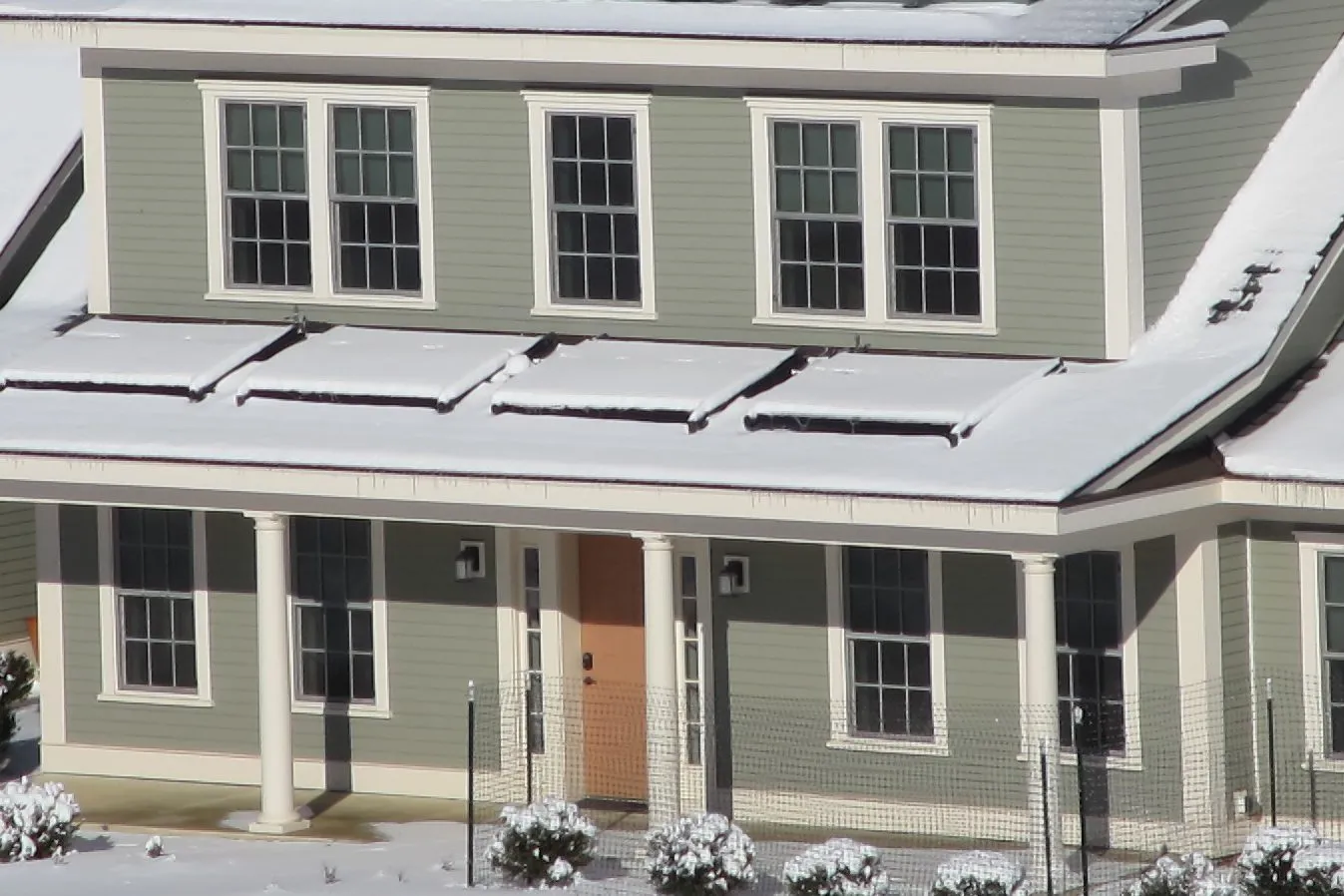
A caveat first: averages are the wrong tool for this question, because a heat pump is judged on the worst nights, not the typical ones. Still, they set the scene. NOAA’s state climate summary describes “moderately cold and occasionally snowy winters”, with these January averages:
| Part of the state | Average January minimum |
|---|---|
| Northwest | 15° to 20°F |
| Along the coast | 25° to 30°F |
That’s comfortably inside what current cold-climate equipment is tested for. The same summary notes that the number of very cold nights “has been below average since the early 1990s.”
Individual winters swing hard, though. The Office of the New Jersey State Climatologist at Rutgers put the statewide January 2026 average at 28.0°F, 3.7° below the 1991 to 2020 normal, and the coldest reading that month was -17°F at a station in the far northwest on January 28. Three years earlier, January 2023 averaged 41.0°F and tied 1932 as the mildest January since records began in 1895. That’s a 13-degree gap between two monthly averages, three years apart.
What we couldn’t find is a published, citable design temperature for each part of the state, the cold-night figure a heating system is actually sized against. A proper load calculation for your house will use one for your location, and it’s worth asking what number was used.
What “cold climate” heat pump actually means
Most of the difference is in the compressor. Older heat pumps ran at one speed, on or off, and lost a lot of output as the air got colder. Cold-climate models use variable-speed (inverter) compressors that ramp up when it gets cold, so they hold on to far more of their heating capacity.
Two lists are useful when you’re comparing equipment. ENERGY STAR’s cold-climate certification “requires third-party verified performance for low temperatures, testing ASHPs down to 5°F,” according to its air source heat pump page. The Northeast Energy Efficiency Partnerships (NEEP) keeps a cold-climate heat pump specification and product list, now on version 4.0, effective January 1, 2023. Consumer Reports, drawing on that database, found that “many models in the database can heat as effectively at a frigid 5° F as they can at a mild 47° F” (Consumer Reports, March 2026).
When you look at a listing, find the heating output at the lowest temperature shown (5°F if it’s there) and at maximum speed. Compare that with how much heat your house loses on a design-cold night. The size on the brochure, usually given in tons, is a cooling rating and says very little about January.
How cold is too cold for a heat pump?
For a cold-climate model there’s no single cutoff. Output and efficiency both fall off gradually as the temperature drops. New York’s state Clean Heat program, for example, says cold-climate heat pumps can provide comfortable heat when it is as cold as -15°F outside.
Each model does have a minimum operating temperature on its spec sheet, and they vary. Check it. An older single-speed unit is a different animal and may need help well above zero.
Backup heat: auxiliary, emergency and dual fuel
Most heat pump systems in cold places have some kind of backup. The labels on the thermostat confuse people, so here’s what they mean.
Auxiliary vs emergency heat
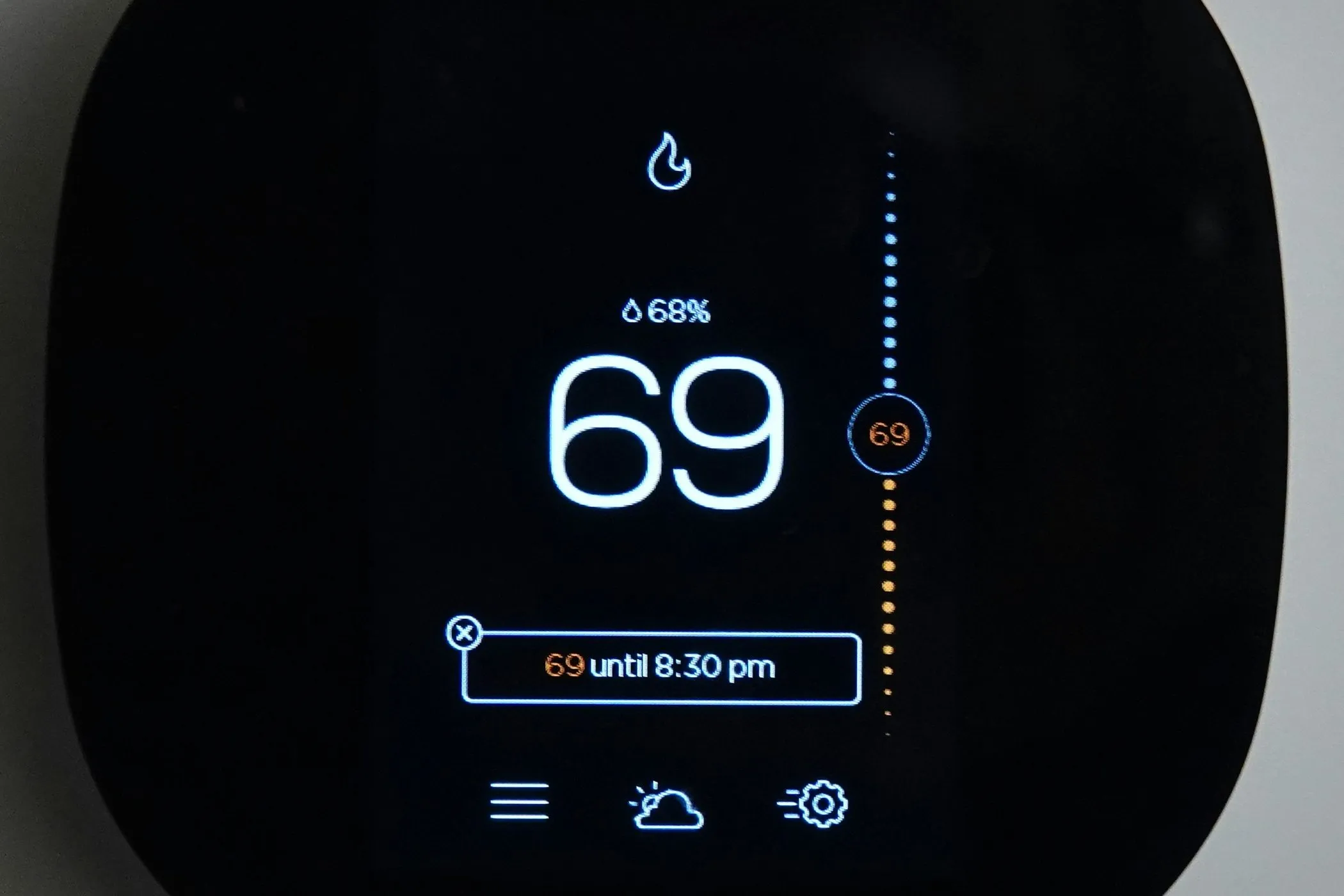
Auxiliary heat (often shown as “aux”) is a backup that switches on by itself. In most ducted systems it’s a set of electric resistance strips in the air handler. It tops up the heat pump when the house falls behind, on very cold nights or during a defrost cycle, and switches off again once it isn’t needed.
Emergency heat is a manual setting. It shuts the heat pump off and runs the backup alone. It’s there for when the outdoor unit has failed or is buried under ice. It isn’t a “very cold” mode, and leaving it on means heating the house the most expensive electric way for no reason.
Dual fuel: a heat pump with a gas furnace as backup
A dual fuel heat pump pairs the heat pump with a gas furnace instead of electric strips. The two normally take turns rather than running together. The heat pump carries the mild and moderately cold days, and below a set outdoor temperature (the switchover point) the thermostat hands over to the furnace.
Where that point is set is a judgment call. The Building America Solution Center’s cold-climate sizing guide talks about the balance point, the outdoor temperature below which the heat pump alone can’t meet the house’s heat loss. A sensible switchover sits at or above that.
Dual fuel comes up a lot in this state because most homes already burn gas. The Census Bureau’s 2024 American Community Survey counts about 74% of occupied homes in the state heating mainly with utility gas and about 17% with electricity (house heating fuel, via Census Reporter). Some owners set the switchover above the balance point because of what they pay for each fuel. That’s a running-cost choice, and the costs and planning section is where it belongs.
When is a backup worth it? If the house already has a gas furnace in good shape, keeping it as the backup means the heat pump doesn’t have to cover the coldest nights alone, and nothing is lost if the switchover point needs adjusting after the first winter. A leaky house needs a backup more. So does one where the heat pump ended up sized for cooling to keep the ducts or the budget in check. Consumer Reports goes as far as saying that with a modern heat pump suited to your climate, “you might not need a backup system.” That holds when the load calculation shows the heat pump’s output at the design temperature covering the house’s heat loss on that night.
What matters in an older New Jersey home
This is where most heat pump disappointments start, and very little of it has to do with the weather. The housing stock here skews old: in the same 2024 Census survey, roughly 36% of the state’s housing units were built before 1960, and about one in six before 1940 (year structure built, via Census Reporter).
A heat pump should be chosen from a room-by-room load calculation (ACCA’s Manual J is the usual method), not from the tonnage of the old air conditioner. The Building America guide is blunt about why: “In most areas of the United States, right-sizing a heat pump for cooling will result in an undersized heating capacity.” A house needs more heating on a cold January night than it needs cooling in July, so a heat pump sized for cooling will come up short in the cold. The guide recommends running both the heating and the cooling calculations, whichever one the system is designed around. If a proposal can’t tell you what heat-loss figure it’s built on, that’s the gap to close before anything else.
A furnace pushes out small amounts of very hot air, and ductwork designed around one can struggle with a heat pump, which moves more air at a lower temperature. Through undersized ducts or too few return grilles that shows up as noise, rooms that never quite catch up, and registers that feel cool on your hand while the system is working properly. A return or two sometimes fixes it; a ductless head can cover the one room the ducts never reached. The wiring is a separate check. A heat pump needs its own 240-volt circuit, electric backup strips can need a large one as well, and a panel with no free space may need upgrading. Get an electrician’s view of it before you pick equipment, because the answer can change which system makes sense.
A house on radiators has no ducts to reuse at all. That usually means ductless heads or a short new duct run, with the boiler often kept for the coldest stretch. The heating guides cover the boiler side.
Air sealing and attic insulation shrink the heat pump you need.
Questions to ask before deciding
- What heat-loss figure was the system sized against, and at what outdoor design temperature?
- What is this model’s heating output at 5°F, at maximum speed?
- Is it on the NEEP list or ENERGY STAR certified for cold climates?
- What backup does it have, and at what outdoor temperature does the backup take over?
- Do my ducts and my electrical panel need work first?
Running costs, and the rebate programs that change them, are big enough topics for articles of their own.
If you have a question about your own house, you can get in touch with our team.