
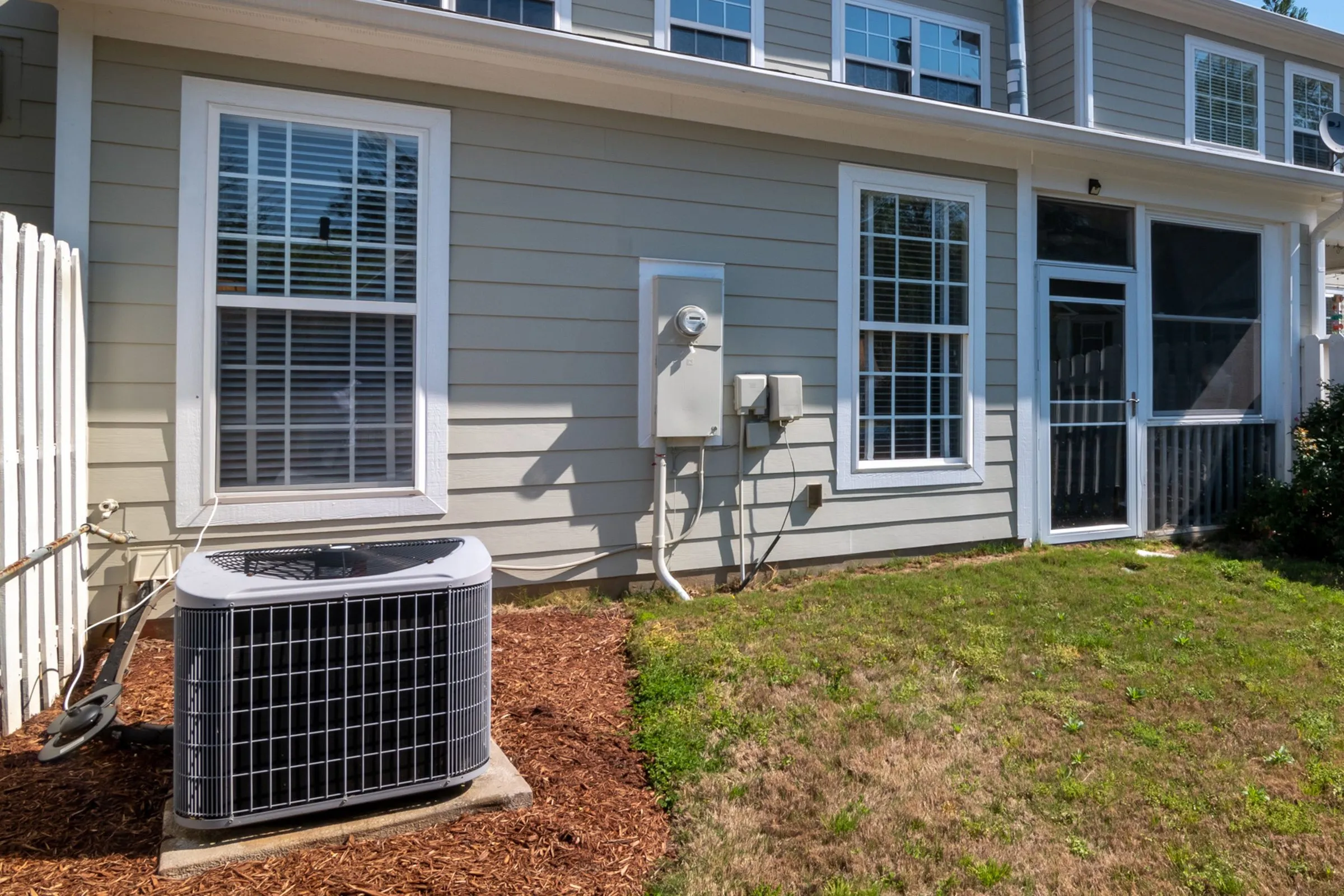
Most houses in New Jersey already heat with gas. The Census Bureau’s 2024 American Community Survey counts about 74% of occupied homes in the state heating mainly with utility gas and about 17% with electricity (table B25040). So the honest comparison is rarely a heat pump against nothing. It’s a heat pump against a furnace or boiler that, in a lot of basements, still runs fine.
The advantages hold up: one machine for heating and cooling, and far less energy spent per unit of heat. So do the disadvantages. Most of them come down to money and to how the system behaves in winter.
The advantages
One system heats and cools
A heat pump is an air conditioner that can run backwards. In summer it pulls heat out of the house and dumps it outside. In winter a reversing valve flips the flow, and it pulls heat from the outdoor air and brings it in.
So instead of a furnace and a central AC, each with its own age and its own repair history, you have one outdoor unit and one indoor unit doing both jobs. When the old AC and the old furnace are both getting tired at the same time, that changes the math a lot.
Efficiency
Moving heat takes much less energy than making it. A furnace burns fuel to create heat; electric baseboard turns each unit of electricity into one unit of heat. A heat pump uses its electricity to carry heat that already exists outdoors, so it delivers more heat than the energy it consumes. Whether that turns into a lower bill is a different question, because it depends on what you pay for electricity and gas, and our furnace vs heat pump cost comparison works through that arithmetic.
No combustion in the house
Nothing burns, so the heating system gives off no flame and no carbon monoxide. That doesn’t make CO detectors optional if you still have a gas stove or water heater, but it takes the largest fuel-burning appliance out of the basement.
What are the disadvantages of a heat pump?
Upfront cost
A heat pump usually costs more to install than a gas furnace, though it replaces the air conditioner as well, so a furnace-only price flatters the furnace. For installed prices, see what a heat pump costs in New Jersey. The cost comparison lines the numbers up fairly, and the rebates guide covers incentives.
Output falls in deep cold
The colder the outdoor air, the harder a heat pump works to pull heat from it, and older single-speed units lose a lot of capacity on the coldest nights. For scale, NOAA’s state climate summary puts average January minimums at 15° to 20°F in the northwest and 25° to 30°F along the coast, while ENERGY STAR’s cold-climate certification tests equipment down to 5°F. Averages hide the bad nights, though, and those are what a heat pump gets judged on. The winters article goes through the coldest recent readings and what “cold climate” means on a spec sheet.
Backup heat
In a cold climate a heat pump usually has a backup, either electric strips in the air handler or a gas furnace, and the strips are the priciest way to heat with electricity. How auxiliary heat, emergency heat and dual fuel switchover work is covered in the winters article.
Electrical upgrades
A heat pump usually needs its own 240-volt circuit, and electric backup strips can need a large one too. The housing here is old: the same Census survey (table B25034) counts about 17% of the state’s housing units as built in 1939 or earlier. An older panel may simply have no free space for another large circuit, and then it needs upgrading first. How much that costs varies too much from house to house for us to give a meaningful figure, so get the panel looked at early. It can change which system makes sense.
Defrost cycles and noise
When a heat pump is heating, its outdoor coil runs colder than the air around it. That’s the whole point, but it also means moisture in the air freezes onto the coil, and a coil packed with frost can’t pull in heat. So the system melts it off. According to Lennox’s guide to the heat pump defrost cycle (November 10, 2025), “most systems are programmed to check for frost every 30 to 90 minutes during heating mode,” and a defrost only runs when frost is actually found. Once it starts, “the entire process usually lasts between 5 and 15 minutes, depending on weather and frost levels.”
What you notice during those minutes:
- The outdoor fan stops, and the unit goes oddly quiet.
- Then there’s a whoosh as the system switches modes. Lennox describes “a whooshing sound as the system shifts modes.”
- Steam may rise off the unit. It looks alarming. It’s melted frost evaporating off a warm coil.
- Indoors, the air from the vents can feel cooler for a few minutes, unless backup heat kicks in to cover the gap. Lennox notes that many heat pumps “automatically switch on backup or auxiliary heat strips during defrost to prevent temperature swings inside.”
Because the cycle only runs once frost has built up, how often you see it tracks the moisture in the air more than the temperature. Dry, bitter cold leaves less frost on the coil than a raw, damp morning near freezing.
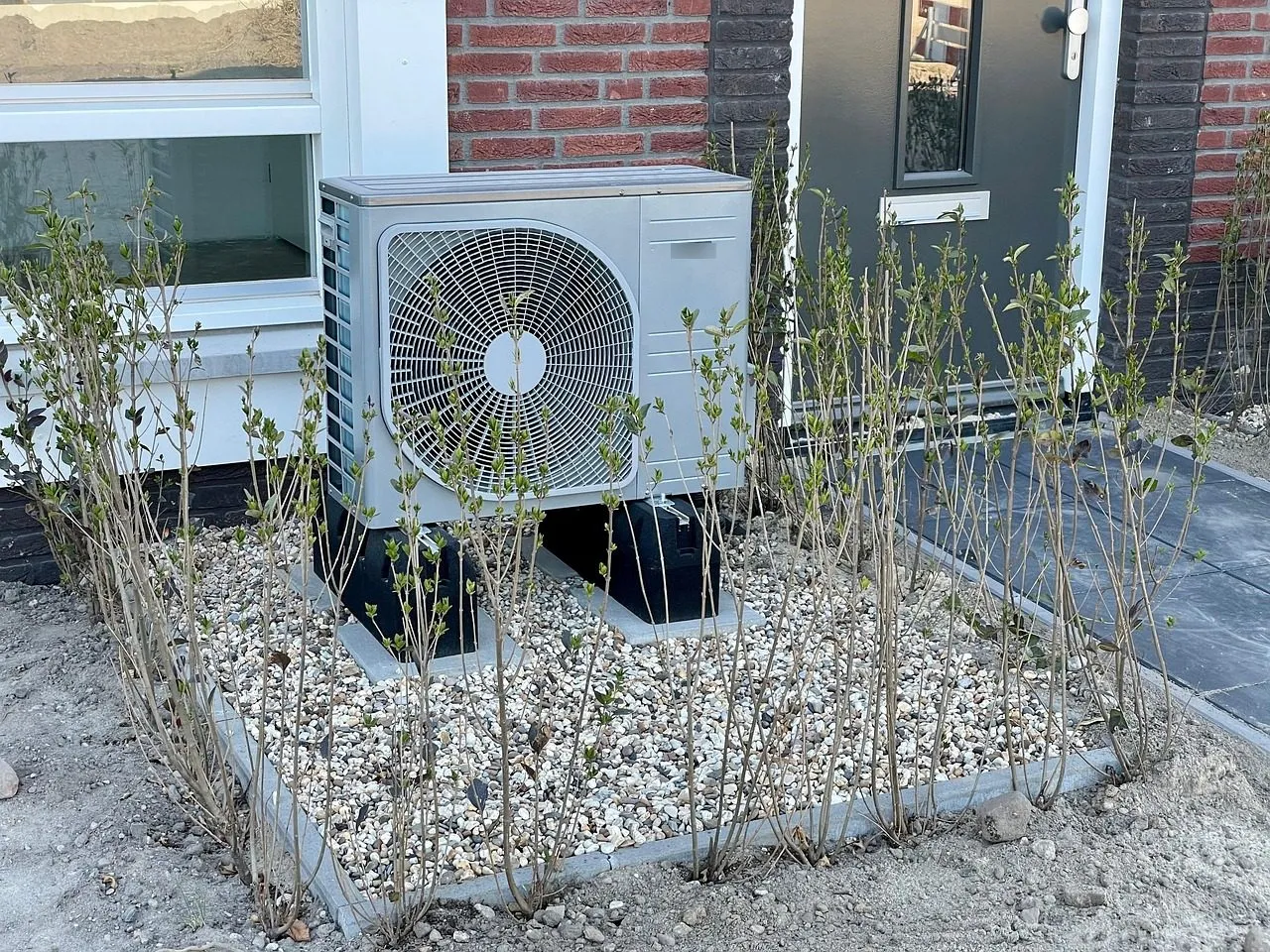
The unit should sit up off the ground, on a stand or raised pad, so the meltwater drains away and doesn’t refreeze into a block of ice around the base. Also, the defrost cycle should end on its own. A unit that stays iced over for hours, or that never seems to clear, needs a look.
As for everyday noise, a heat pump outdoor unit sounds much like any central air condenser, a fan plus a compressor hum. The difference is the calendar. It runs all winter, including at night, so placement near a bedroom window or a neighbor’s patio matters more than it would for an AC. Variable-speed models spend much of their time running slowly and tend to be quieter for it.
How long does a heat pump last?
The published numbers here are soft, so treat them as a rough guide rather than a promise.
EnergySage, in How Long Should Your Heat Pump Last? (updated April 17, 2025), puts it this way: “Heat pumps typically last around 10 to 15 years, but some experts claim a well-maintained heat pump can last closer as long as 20 to 25 years.” That’s a third-party estimate. The Department of Energy’s Federal Energy Management Program, in its buying guidance for residential air-source heat pumps, works out lifetime energy costs using “an average residential air-source heat pump life of 15 years.” That’s an assumption for a cost calculation rather than a promise, but it sits at the top of EnergySage’s usual range.
We’d plan around the 10 to 15 years. The 20 to 25 is possible for a well-kept unit, and “some experts claim” is doing a lot of work in that sentence.
The same page notes that a heat pump is relied on year-round and that “furnaces and air conditioners may last a little longer than a heat pump system,” though they’re two purchases to replace instead of one. It also says “proper maintenance increases the lifetime and efficiency of a heat pump.” In practice that means clean filters and an outdoor coil kept clear.
Who a heat pump suits, and who should look at dual fuel
A heat pump on its own makes the most sense when:
- the air conditioner and the furnace are both near the end of their lives, so one purchase replaces two;
- there’s no gas line to the house, or getting one there would be costly;
- the house holds heat reasonably well, with decent insulation and air sealing;
- you’re adding heat and cooling to a space the existing system never reached, like an addition or a finished attic, where a ductless unit can do the job.
Dual fuel is the better starting point for a lot of other houses. That’s a heat pump paired with a gas furnace: the heat pump carries the mild and moderately cold days, and the furnace takes over below a set outdoor temperature.
The clearest case is a healthy furnace and a failing air conditioner. Replace the AC with a heat pump, keep the furnace as the backup, and you get most of the benefit without paying to rip out equipment that works. It also suits older, leakier houses that lose heat fast on the coldest nights. And in a house where the panel is already stretched, gas backup avoids the large circuit that electric strips would need.
Radiator houses are their own case. With a steam or hot water boiler there are no ducts to reuse, so a heat pump usually means ductless heads, often with the boiler kept for the coldest stretch. If you’re not sure which kind of boiler you have, steam vs hot water boilers shows how to tell.
If the furnace is old too, both routes are open: a heat pump on its own, as in the first list above, or a new dual fuel setup. There isn’t one right answer. It comes down to your gas and electric rates and how well the house holds heat. Rebates move the numbers too, and which schedule you’re under depends on your electric utility (PSEG, JCP&L, Atlantic City Electric or Rockland Electric). The rebates guide shows how to check yours before comparing quotes.
If you have questions about your own house, you can get in touch with our team.