
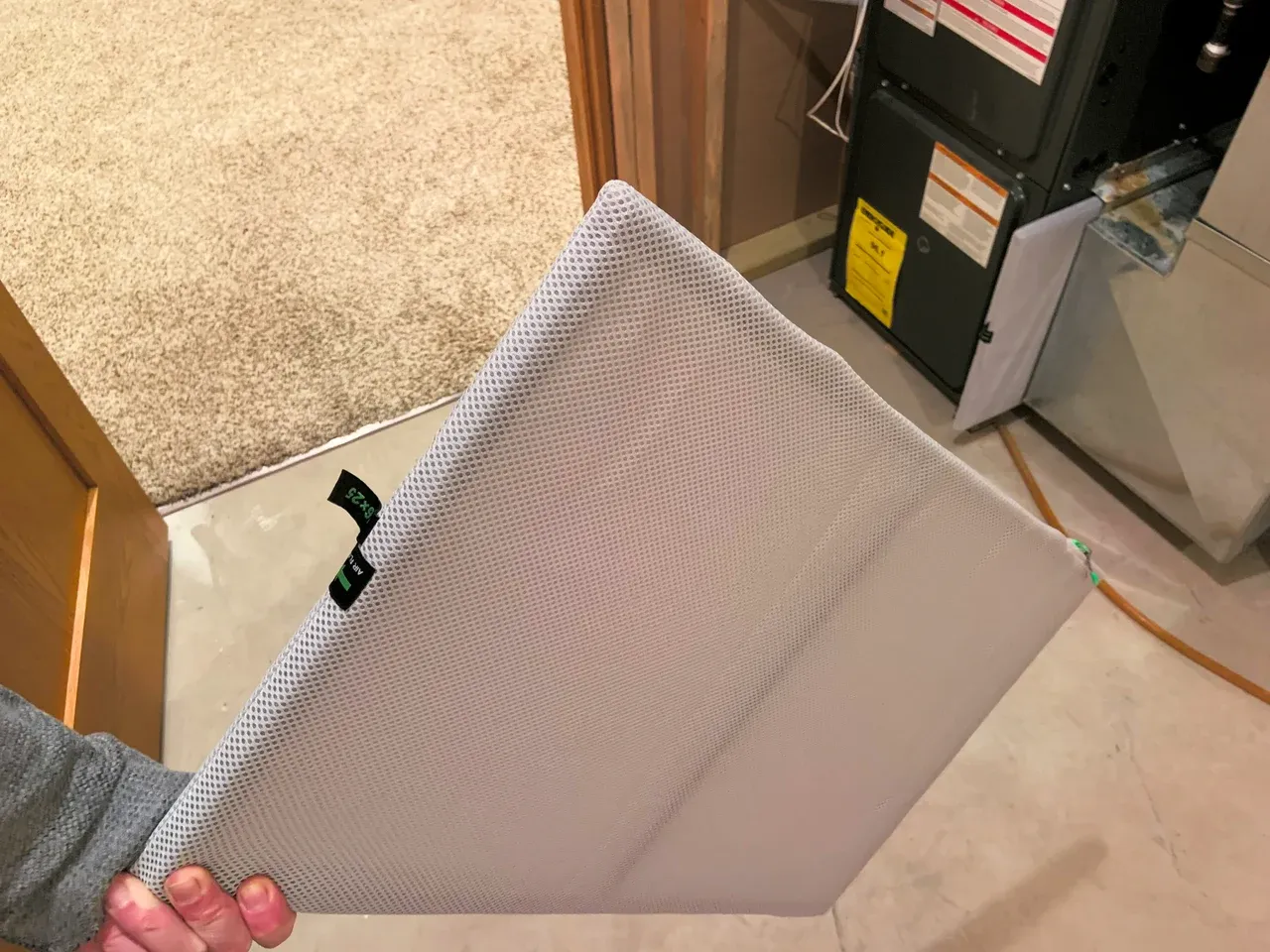
The air filter is the cheapest part of your heating and cooling system and the one that gets forgotten first. Changing one takes about a minute. It also decides how much dust ends up on the blower, the coil and your furniture.
There’s no single interval that fits every house. There is a good default, though, and a short list of things that make it shorter. Below is a general schedule and the reasoning behind it.
The quick answer
Check the filter once a month. For a standard 1-inch filter, expect to replace it somewhere between every month and every three months. That’s the default for most homes in New Jersey and anywhere else with a furnace and central air.
By filter type, Carrier’s published intervals look like this:
| Filter type | Typical replacement interval |
|---|---|
| 1-inch fiberglass | About every 30 days |
| 1-inch pleated | Every 30 to 90 days |
| 4-inch media filter | Every 6 to 12 months |
Sources: Carrier, How often to change air filter and ENERGY STAR, heating and cooling, both accessed 2026-09-23.
ENERGY STAR’s version is simpler and worth remembering on its own: check every month, especially in the heavy winter and summer months, change it if it looks dirty after a month, and change it at least every three months no matter what.
Why the furnace filter matters more than it looks
Every bit of air your system moves comes back through the return duct, and the filter sits in that path before the air reaches the furnace or air handler. What it catches doesn’t land on the blower motor or the coil.
When it loads up, the blower has to pull the same air through a denser mat of dust. Airflow drops. Rooms at the end of long duct runs often notice first. ENERGY STAR puts the result plainly: a dirty filter can increase energy costs and damage your equipment, leading to early failure (maintenance checklist, accessed 2026-09-23).
It also catches some of the dust, pet dander and pollen that would otherwise keep circulating. A filter is one part of the picture there, and our indoor air quality articles cover the rest.
What changes your HVAC filter change schedule
Pets change it more than anything else, so they come first.
A dog or a cat that sheds puts hair and dander into the air all day, and a 1-inch filter has very little depth to hold it. Carrier’s guidance for homes with several pets is to check the filter every 30 days, and it notes that high-shedding pets can mean changing it more often than that. With one pet, the normal interval for your filter type is often fine. Keep looking at it anyway, because shedding is seasonal. A filter that looks fine in March can be grey by the end of May.
If someone in the house has allergies or asthma, lean toward the short end of the range. A fresher filter can’t hurt them, and it’s the cheap part of the job.
Runtime matters too. A system that runs for hours on a humid July afternoon, or through a cold January week, moves far more air through the filter than one idling through a mild October. Most New Jersey homes get both extremes, so the same filter can last longer in spring and fall than in the peaks.
Then there’s plain dust. Renovation work is the big one: sanding drywall or refinishing floors can load a filter well ahead of the calendar. Living near construction, a busy road or a gravel drive adds to it more slowly.
1-inch versus 4-inch filters
A 1-inch filter has a thin layer of media and fills up quickly. A 4-inch media filter spreads the same dust over much more pleated surface, which is why Carrier gives it 6 to 12 months instead of 1 to 3.
If your furnace has a deep filter cabinet, use it. You’ll change the filter once or twice a year instead of every month or two. Five-inch versions exist too. Carrier’s intervals only cover the 4-inch size, so for a 5-inch filter go by the maker’s label.
A note on MERV
MERV is the rating for how fine a particle a filter can catch. Higher numbers catch smaller particles. They also resist airflow more, which is why the rating and the replacement schedule go together.
EPA’s advice is to use MERV 13, or as high as your system will accommodate, and it says most systems can take a MERV 13 as long as the filter is replaced often. The catch is in its own guide: HVAC systems usually aren’t labeled with a filter recommendation, so it can be hard to tell what yours can handle. EPA suggests a technician confirm it (EPA, Guide to Air Cleaners in the Home, accessed 2026-09-23). MERV gets its own article later.
How to know your air filter is due
Knowing when to replace an air filter is mostly a matter of looking. Pull it out. A fresh pleated filter is white or off-white, and a loaded one is grey or brown with dust packed into the folds. Hold it up to a window or a lamp. If light barely gets through, it’s done.
The visual check is the easy part. The hard part is remembering when you last changed it, and that’s where most schedules fall apart. Write the date on the frame with a marker when you put a new one in. It takes a few seconds and ends the “when did we last do this?” argument for good.
One small thing people get wrong: the arrow on the frame. It shows which way the air flows, so it should point toward the furnace or air handler, away from the room.
What happens if you let it slide
Usually, nothing dramatic. That’s the problem. A clogged filter doesn’t announce itself. Airflow drops a little at a time, rooms heat and cool more slowly, and dust that the filter can no longer hold keeps moving through the house. The energy costs and equipment wear ENERGY STAR warns about build up the same slow way, which is why a monthly look beats waiting for a symptom.
Finding your size
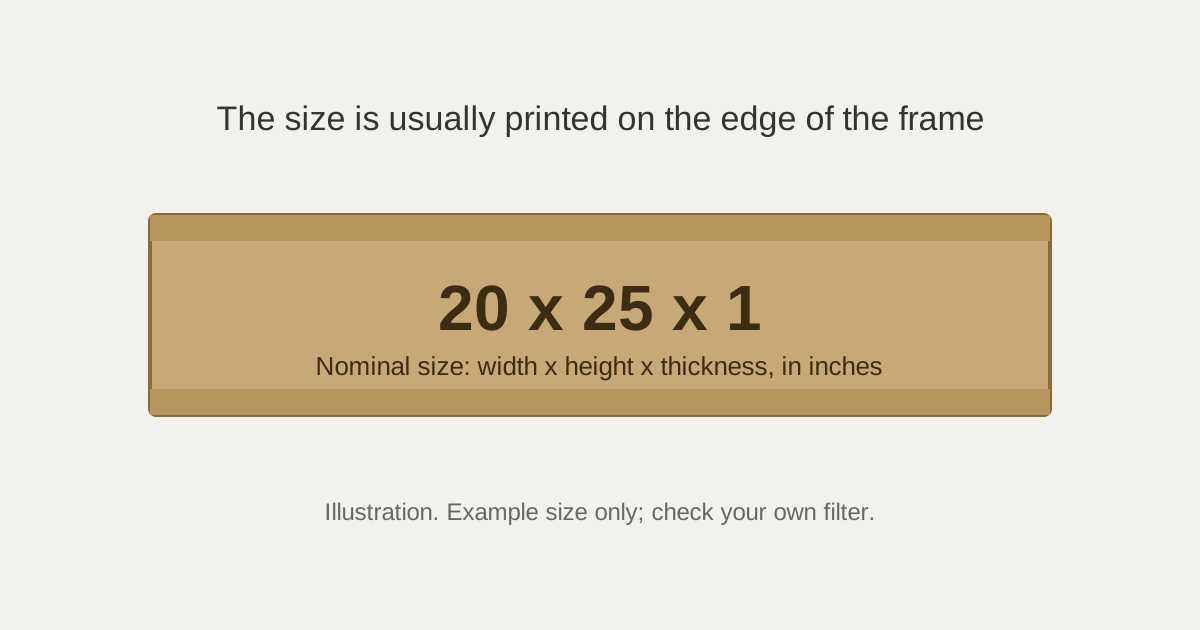
The size is printed on the frame of the filter you already have, in a format like 20 x 25 x 1: width, height and thickness in inches. Buy that size. Size gets its own article too; sizing questions beyond the printed label will go there.
The schedule, summarized
- Check a 1-inch filter monthly and replace it roughly every 1 to 3 months.
- Replace a 4-inch media filter every 6 to 12 months, and look at it every few months in between.
- With pets, allergies, renovation dust or a system that runs hard in summer and winter, go shorter.
- Write the date on the frame.
This article is general information, not a service offer. Questions about your own system? Get in touch, or read more about us.