
NOAA’s climate summary for New Jersey describes “moderately cold and occasionally snowy winters and warm, humid summers.” That’s two different jobs for one house, and the upkeep splits the same way. Most of it lands on the two switchovers. In fall the heat comes on after months off; in spring the cooling does. A system that has sat idle since the last season is suddenly asked to carry the house, so that’s a sensible time to check it.
ENERGY STAR gives the same split: have the cooling system checked in spring and the heating system in fall, before contractors get busy. It suggests planning the check-ups around the clock changes, which here fall in March and November. You’re already walking around the house resetting the microwave and the oven. The smoke alarms and the filter can go on the same list.
What follows is the homeowner side of seasonal HVAC maintenance, plus what a technician’s visit adds. There’s a condensed version to print at the end.
Fall HVAC maintenance checklist
Fall is the bigger list. In the EIA’s 2020 household energy survey, 75% of homes in the state named natural gas as their main heating fuel and another 7% used fuel oil or kerosene. So most houses here go into winter with a flame burning somewhere in the house, and the whole house is about to be closed up for months. That’s why the safety items sit on this list and not the spring one.
Filter, thermostat batteries and the humidifier pad
Start with the filter. ENERGY STAR’s advice is to inspect, clean or change it once a month in a central air conditioner, furnace or heat pump, and the first cold week is a good moment to put in a fresh one. How often after that depends on pets, dust and filter type; our guide on how often to change your HVAC filter goes through it. If you’re not sure what to buy, finding your HVAC filter size walks you through it.
Swap the thermostat batteries while you’re at it, if yours uses them. A thermostat with a dying battery can go blank, and that’s a lot less fun to discover at 6 a.m. in January than on a mild October afternoon.
If there’s a whole-house humidifier on the furnace, its pad (some makers call it a water panel) is a fall job too. The humidifier’s manual gives the replacement interval and the steps, including turning off its water and power first. Also check whether the humidifier’s summer damper or bypass needs to be switched back to its winter setting.
Clearing the outdoor unit and the yard around it
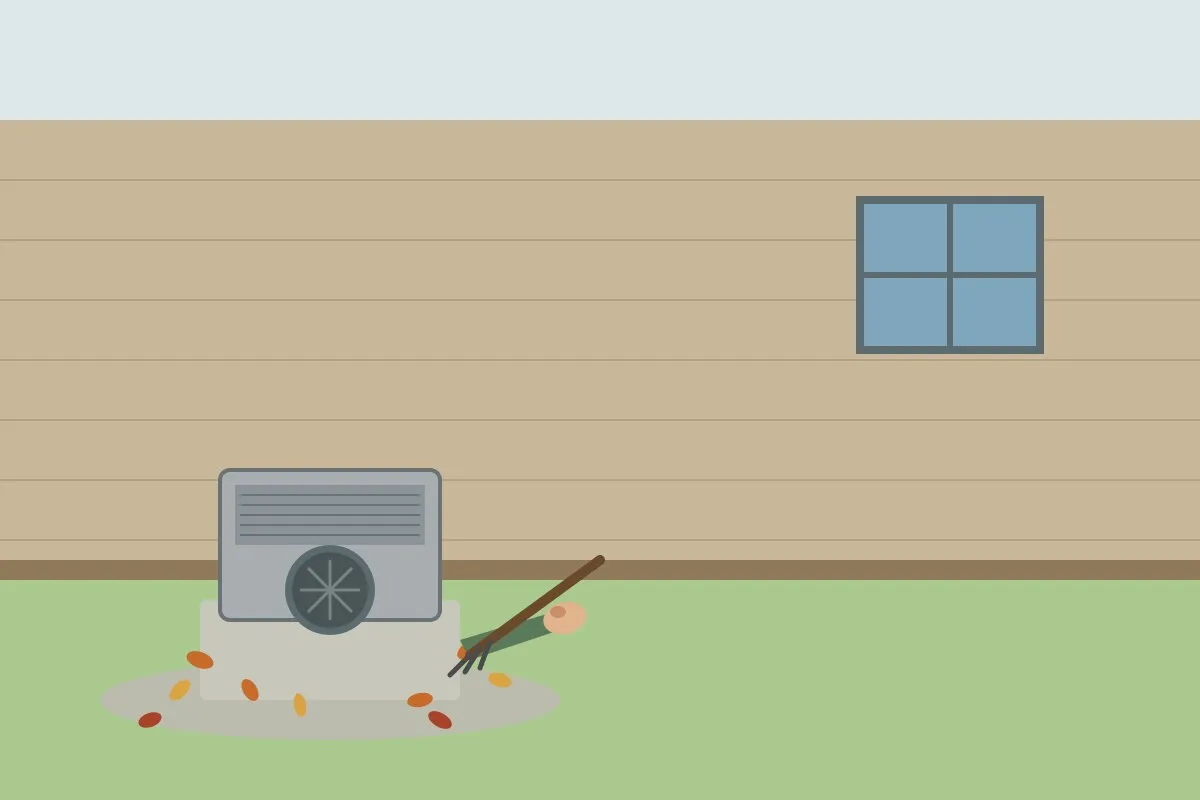
The outdoor condenser sits in a leaf trap all fall. Before you touch it, shut off its power at the electrical disconnect switch, as Lennox’s guide to cleaning the fins says, and keep your hands out of the fan opening. Then pull out whatever has blown into the fins and the top grille, cut back plants that have grown up around it, and keep the space around the cabinet open. The manual for your unit gives the clearance it needs.
If the house has a high-efficiency furnace, walk around to its plastic vent pipes, which usually come out through a side wall. One carries exhaust out and, on many models, a second brings combustion air in, and a furnace can shut itself off if they’re blocked. In fall that’s usually leaves. Winter is snow. NOAA says damaging nor’easters are most common between October and April, and the ones that track over or near the coast can bring strong winds and heavy precipitation. After any heavy snowfall, dig out the vent pipes right after the front steps. If you have a heat pump, clear the snow from around its base as well so the unit can breathe and drain.
Testing CO and smoke alarms
This is the item on the fall list we’d never skip.
NFPA’s carbon monoxide safety page names heating equipment that burns fuel as a potential source of carbon monoxide in the home. A furnace or boiler that burns gas or oil can produce it if something goes wrong with combustion or venting, and the heating season is when that equipment runs for hours at a time.
Press the test button on every smoke alarm and every CO alarm in the house. NFPA recommends doing this at least once a month, so fall is a reminder, not the only time. Check the date on the back, too. NFPA says a smoke alarm must be replaced 10 years after the manufacture date printed on it, and a CO alarm should be replaced when its maker’s instructions say, even if it still beeps when tested.
Where the CO alarms should go is a separate question, covered in where to put carbon monoxide detectors. For more on carbon monoxide itself, see carbon monoxide at home.
Open supply and return vents room by room
Walk through the house and make sure the supply registers (where warm air comes out) are open and the return grilles (where air goes back in) aren’t blocked by a couch, a bookshelf or a rolled-up rug. Furniture has a way of drifting over at least one of them.
Closing registers in rooms you don’t use can seem like a way to save money, but the system was designed to move air through all of them, so we’d leave them open unless a technician says otherwise.
Should you cover your AC unit in winter?
Probably not, or at least not the way most covers are sold.
Lennox, the heating and cooling manufacturer, is direct about it: “Modern Air Conditioners are designed to live and operate outdoors and typically don’t require winterization.” The unit spends every summer out in thunderstorms and it’s built for rain and snow.
The problem is a full wrap, the kind of cover that pulls down over the whole cabinet like a sleeve. Lennox’s explanation: “Moisture captured under a cover can lead to rust and corrosion, damaging your AC’s components and finish.” A sealed cover doesn’t keep water out as well as it keeps water in. Lennox adds that restricting airflow lets moisture build up under the cover, and that a lack of airflow can invite mold and mildew. The same article points out that a covered unit can attract rodents looking for a sheltered spot out of the cold, which is its own kind of spring surprise.
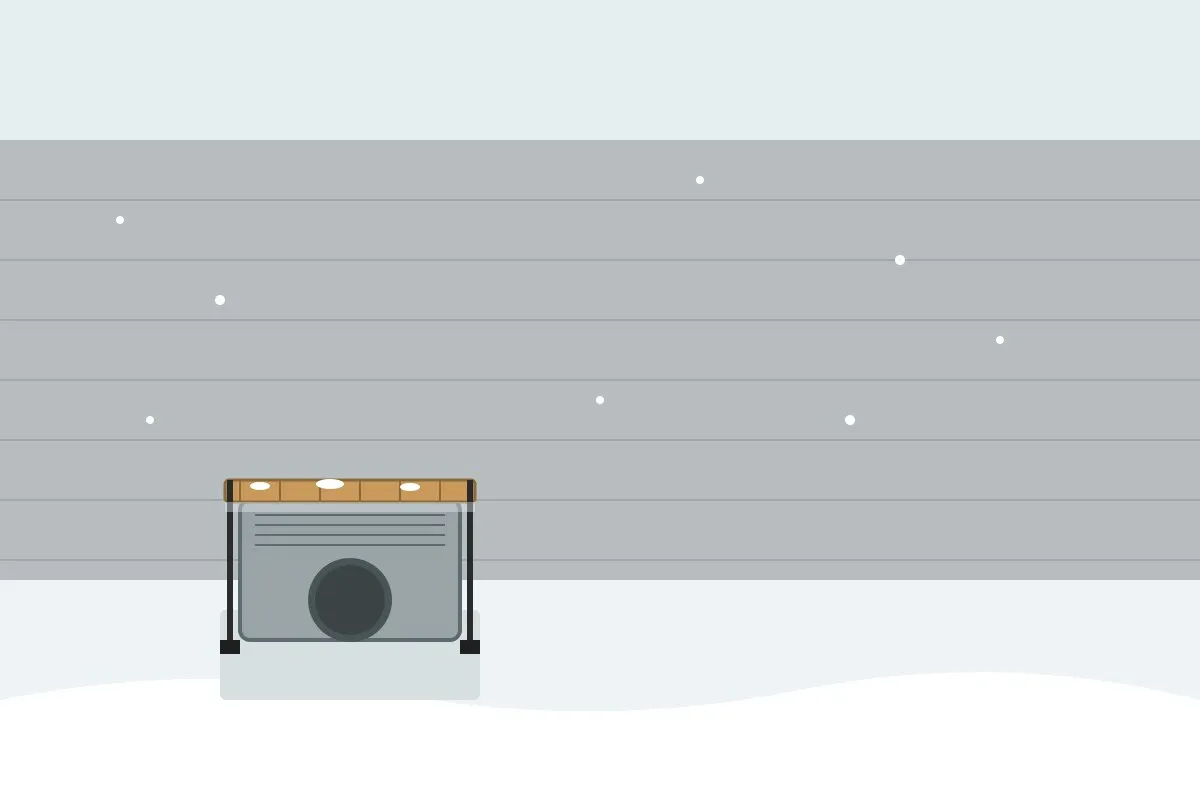
If the unit sits under trees or where things can fall on it, or a technician suggests it, Lennox lists a few ways to protect it without blocking airflow. Two are simple for a homeowner. One is a lightweight, breathable cover that won’t hold water or block airflow. The other is to secure something like a piece of plywood over the top of the unit, which keeps falling debris off and, in Lennox’s words, helps “reduce ice build-up on the internal components.” The sides stay open, so air moves and water dries. Either way, Lennox’s advice is to clean out any debris inside the unit before covering it.
One exception matters more than anything above: never cover a heat pump. A heat pump’s outdoor unit looks almost identical to an air conditioner’s, but it’s the part that heats the house all winter. It needs open airflow and a clear path for the water it sheds when it defrosts. If you’re not sure which one you have, the label on the outdoor unit or the thermostat’s settings will usually tell you, and so will a look at whether that unit hums along on a cold day. Our guide on how to tell if you have a heat pump goes through each of those.
Spring HVAC maintenance checklist
Spring is shorter, and it’s mostly about water and airflow.
Filter check, condensate line and vents
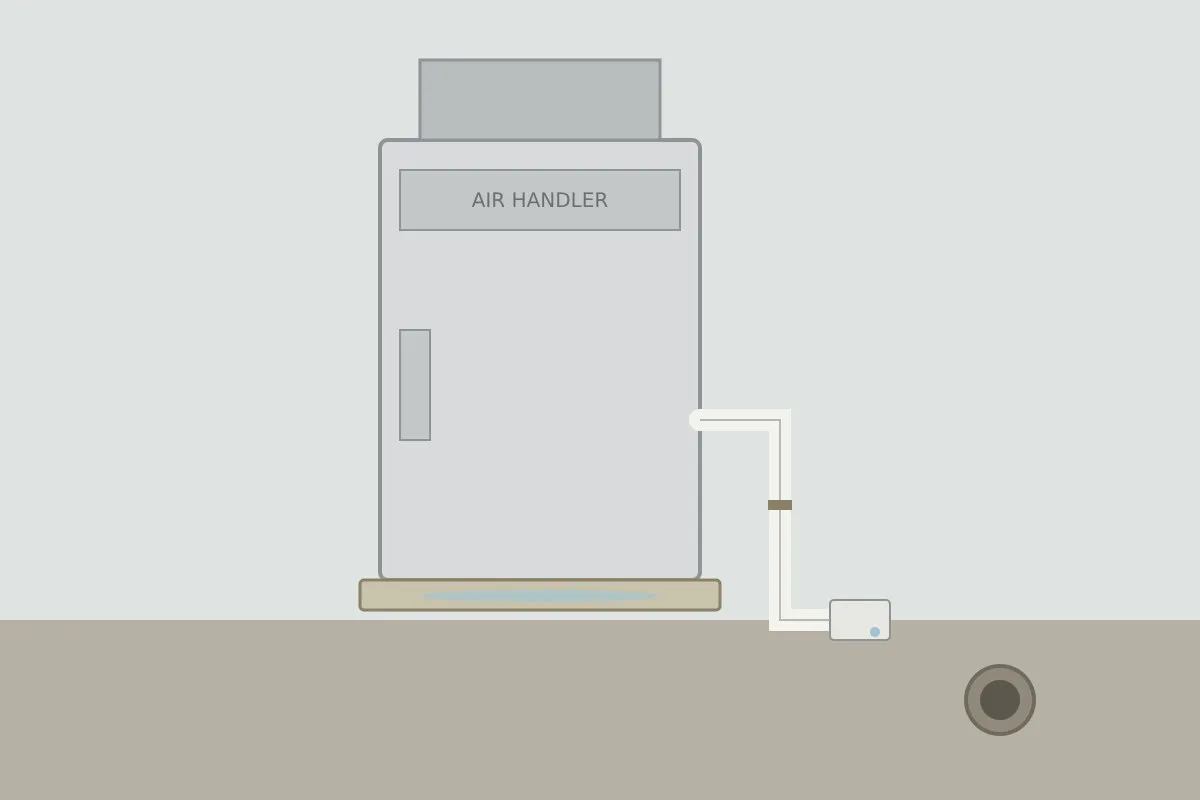
Change or check the filter again. Then find the condensate line, the small pipe (often white PVC) that carries water away from the indoor coil. When the air conditioner runs, it pulls moisture out of the air, and all of that water has to drain somewhere: a floor drain, a pump or outside. ENERGY STAR lists the condensate drain on its checklist and says a plugged drain can cause water damage in the house and affect indoor humidity levels. Depending on the setup, that can mean a wet ceiling. Look at where the line ends. If there’s a drain pan under the indoor unit, look in it too. Standing water or slime in the pan in spring means it’s worth a closer look before summer.
The vents get the same walk-through as in fall.
Uncovering and clearing the outdoor unit
Shut off power at the disconnect switch again before you start, and keep your hands out of the fan opening. Take off whatever you put on top in the fall, and clear out what the winter left behind: leaves, twigs, the occasional nest. Check that the unit still sits level on its pad and that shrubs haven’t grown into it. Then turn the cooling on for a test run on a warm spring day, well before you actually need it.
Humid summers are hard on the wet side of the system. The more moisture the air conditioner pulls out of the house, the more water runs down that condensate line, so it pays to look at it in spring, before the muggy weeks start.
What a professional tune-up covers
A homeowner checklist covers what you can see and reach. A tune-up covers the parts you can’t, and ENERGY STAR’s list of what a technician should do is a useful reference for what to expect:
- On both systems: check thermostat settings, tighten electrical connections and measure voltage and current on the motors, lubricate moving parts, inspect the condensate drain, and check the system’s controls so it starts, runs and shuts off properly.
- On the cooling side: clean the evaporator and condenser coils, check the refrigerant level, and clean and adjust the blower.
- On the heating side: check the gas or oil connections, gas pressure, burner combustion and the heat exchanger.
The heating items are the ones a homeowner really can’t do. A cracked heat exchanger or a burner that isn’t combusting cleanly doesn’t show from the outside. Whether to pay for those visits one at a time or through a yearly plan is a separate question, covered in is an HVAC maintenance plan worth it?
A printable seasonal HVAC maintenance checklist
Fall (heating season prep)
- Replace or check the filter; after that, check it monthly
- New batteries in the thermostat
- Check or replace the humidifier pad, as its manual says, and switch its damper to winter
- Clear leaves and plants from around the outdoor unit
- Board or breathable cover on top of the AC only, if you want one (never on a heat pump)
- Clear the furnace’s plastic vent pipes outside
- Test every smoke and CO alarm and check the dates on the back
- Open all supply registers and clear the return grilles
- Heating system check by a technician
Winter
- After a heavy snowfall, dig out the furnace vent pipes and the base of the heat pump, if you have one
- Check the filter monthly
- Test smoke and CO alarms monthly
Spring (cooling season prep)
- Replace or check the filter
- Check the condensate line and drain pan
- Take the cover off the outdoor unit and clear out debris
- Make sure the unit sits level and has open space around it
- Walk through the vents again
- Test run the cooling on a warm day
- Cooling system check by a technician
Summer
- Check the filter monthly, since the system is running hard
- Keep an eye on the condensate drain after long humid stretches
- Test smoke and CO alarms monthly
For more on keeping a system in shape, see the maintenance hub. This article is general information, not a service offer. Questions about your own system? Get in touch.