
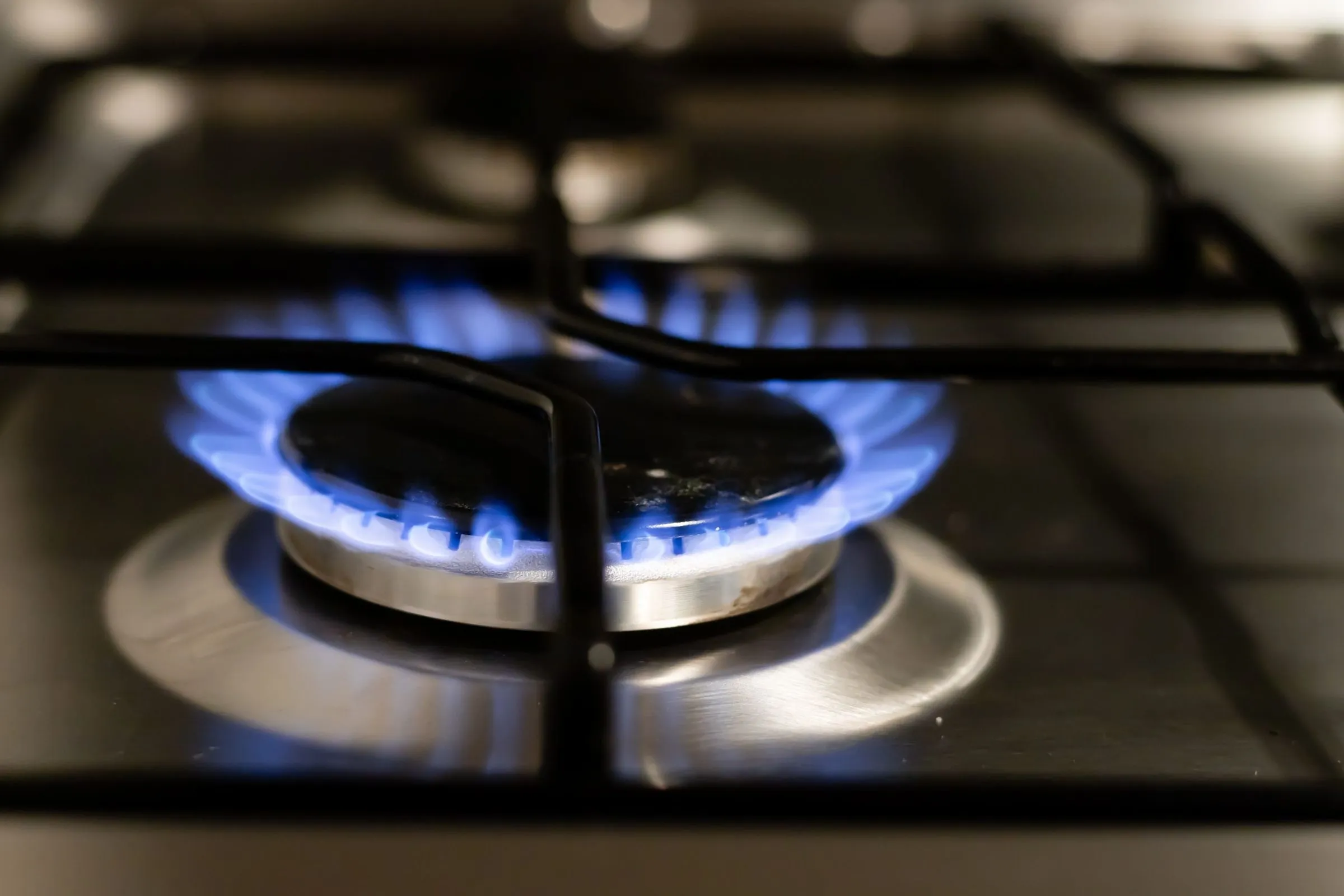
Carbon monoxide in a house comes from something burning fuel. That means a gas or oil furnace or boiler, a gas water heater, a gas range, a fireplace or wood stove, a car idling in an attached garage, or a generator running too close to the house. The gas is always there when fuel burns. It becomes a problem when it doesn’t get out of the house the way it was meant to.
If an alarm is going off right now, stop reading. The Consumer Product Safety Commission’s instruction is: “If you suspect CO poisoning, get outside to fresh air immediately, and then call 911.” More on the alarm below.
Where carbon monoxide in a house comes from
The CDC’s list is short and blunt: “CO is found in fumes produced any time you burn fuel in cars or trucks, small engines, stoves, lanterns, grills, fireplaces, gas ranges, or furnaces.” (CDC, carbon monoxide basics). Anything that runs on electricity alone isn’t on it.
Furnaces, boilers, water heaters and the range
In most homes the heating equipment is the biggest fuel burner, and carbon monoxide from a furnace or boiler is the case people worry about most. A gas or oil burner that is clean and adjusted burns fuel almost completely and sends what’s left up a flue. A burner that’s dirty, starved of air or badly adjusted burns it less completely and makes more carbon monoxide. That’s why a burner flame that stays yellow, covered in our piece on signs your furnace needs replacing, is a reason to call someone rather than something to watch.
The gas water heater gets forgotten. It runs all year and usually vents into the same chimney or flue as the heating system. Boilers belong here too, steam or hot water (our steam vs hot water boilers article explains how to tell which you have). The range is the fuel burner you stand closest to while it runs, and the EPA advises an exhaust fan over it that is vented to the outdoors.
For more on how the different heating systems work, see the heating guides.
Blocked or leaking flues, chimneys and vent pipes
A burner can be fine and the house can still fill with exhaust, because the other half of the story is the path the gas takes to get outside. The EPA’s list of sources (carbon monoxide’s impact on indoor air quality) includes “leaking chimneys and furnaces” and “back-drafting from furnaces, gas water heaters, wood stoves and fireplaces”. It points to combustion devices where “the flue is improperly sized, blocked or disconnected” or leaking.
Back-drafting means the exhaust comes back into the house instead of going up the flue. A chimney blocked by debris will do it (the CDC mentions exactly that). So will a vent connector that has slipped apart at a joint behind the water heater, where nobody looks for years.
The CDC has one oddly specific rule about vent pipes: “Horizontal vent pipes for appliances, such as a water heater, should go up slightly as they go toward outdoors.” Most people have never looked at the angle of that pipe. It takes ten seconds with a flashlight, and a pipe that sags toward the outside is worth mentioning at the next service visit.
Snow over the pipes of a high-efficiency furnace
This is the source people don’t think of until the first real storm.
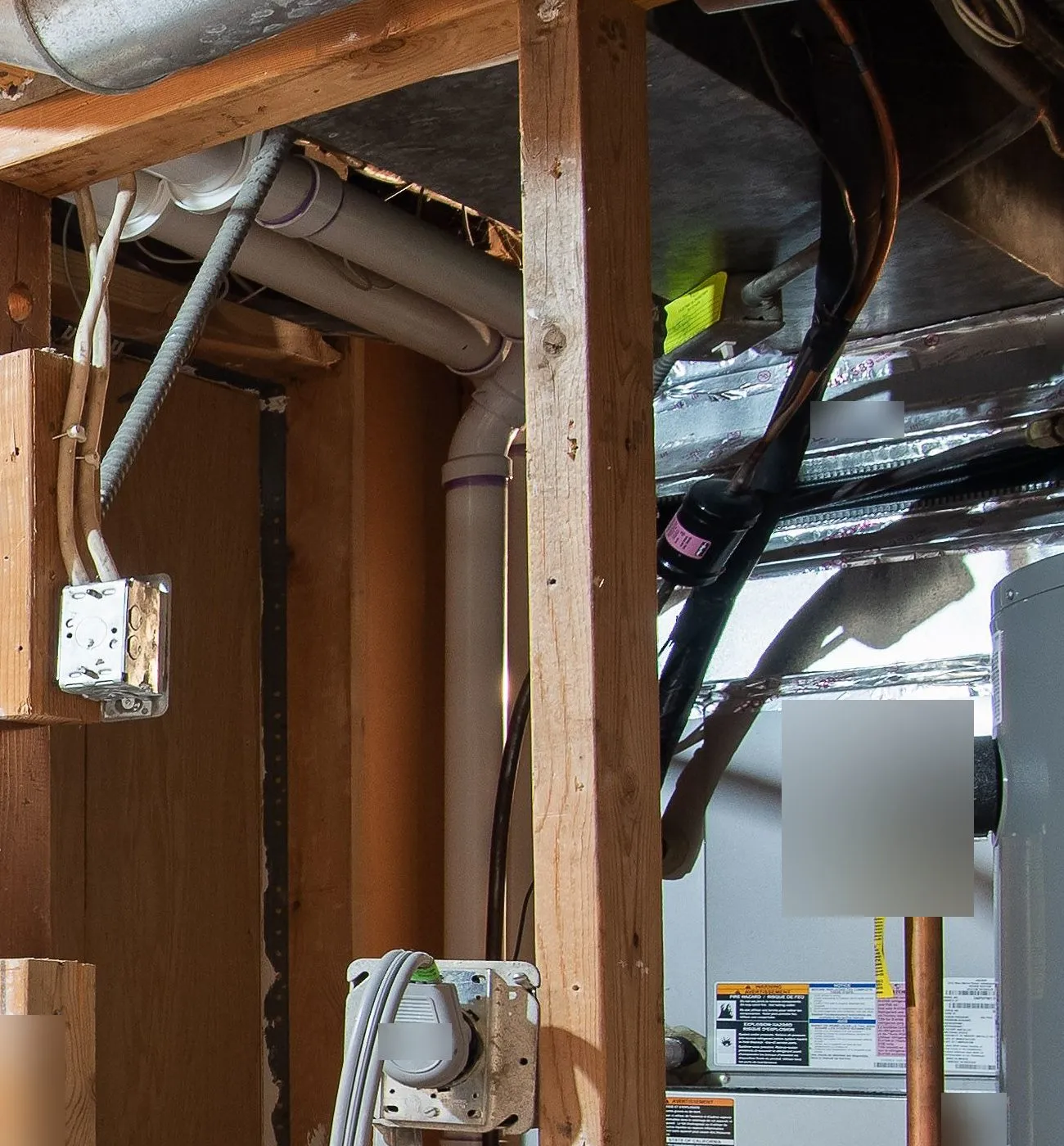
A high-efficiency (condensing) furnace doesn’t need a chimney. It usually vents through two plastic pipes that come out of a side wall of the house, often fairly close to the ground: one draws in combustion air, the other carries exhaust out. Snow drifts against a wall, the plow pile from the driveway grows, and those pipes disappear under it.
What the furnace does about it depends on the model, and we won’t guess on yours; the manual is the place to look. A safety control is a backup anyway, not a plan. Sioux City Fire Rescue in Iowa put out a winter reminder that is as useful here as it is there: check the intake and exhaust pipes after snow, because a blocked pipe could result in carbon monoxide poisoning (Sioux City Journal).
So after a heavy snowfall, find those pipes and clear the snow around them carefully, by hand or with a brush. Do the same for the dryer vent and any other opening on that wall while you’re out there. If you don’t know which pipes are which, find out on a dry day in October, not during a storm at eleven at night. The furnace manual shows the vent layout.
A word on the dryer vent while we’re on that wall: an electric dryer burns nothing, so its vent has nothing to do with carbon monoxide. A gas dryer does burn fuel, and it vents out the same kind of hole.
Cars, generators and grills
An attached garage connects a very large source of carbon monoxide to the house. The CDC’s rule has no exceptions: “Never run your car or truck inside a garage that is attached to a house, even with the garage door open.” Warming the car up in the garage on a January morning is a habit worth dropping.
Portable generators come out during power outages. CPSC says to use them “outside only, at least 20 feet away from homes with exhaust facing away,” and never inside homes or garages, “even if doors and windows are open.” Charcoal and gas grills are outdoor equipment too. The CDC lists grills among the fuel burners, and none of them belong in a garage, a porch you’ve closed in for winter, or a basement.
Can an air conditioner or heat pump make carbon monoxide?
No. An air conditioner moves heat with electricity, a compressor and refrigerant. It burns nothing, so it can’t produce carbon monoxide. The same goes for an all-electric heat pump.
The confusion is understandable, because in many houses the air conditioner shares a blower and ductwork with a gas furnace. If a carbon monoxide alarm goes off in July, the air conditioner is not the source. Look at what else burns fuel: the water heater (it runs all summer), the range, a car in the garage, a generator. A dual-fuel system, where a heat pump is paired with a gas furnace for the coldest days, does include a fuel burner, and that furnace is a source like any other. More on how those systems split the work is in do heat pumps work in New Jersey winters?
What to do if the carbon monoxide alarm goes off
Follow official guidance word for word here, not a blog. CPSC’s Carbon Monoxide Information Center says:
“If you suspect CO poisoning, get outside to fresh air immediately, and then call 911.”
Note the order in that sentence: outside first, then the call.
CPSC lists the symptoms of carbon monoxide poisoning as “headache, dizziness, weakness, nausea, vomiting, sleepiness, and confusion.” We won’t add to that. Anyone with symptoms needs medical help, and that’s a question for 911, not for us.
One thing that trips people up: many alarms also chirp when the battery is low or the unit has reached the end of its life, and that sound is different from the full alarm pattern. The alarm’s own manual, or the label on its back, explains which is which. If you aren’t sure which one you’re hearing, treat it as the alarm.
A cracked heat exchanger, and why only a technician can confirm it
The heat exchanger is the metal part of a furnace that keeps the burner flame and its exhaust gases on one side and the air blowing through your house on the other. Heat passes through the metal, and the exhaust goes out the flue. A crack in it is a safety defect, because it can let the two sides mix.
You’ll find plenty of symptom lists for a cracked heat exchanger online. We haven’t found one from an official source that a homeowner can rely on, so we aren’t giving you one. The crack is often small and hidden inside the furnace, and seeing it takes someone who can take the furnace apart and inspect it. The CDC’s advice is to have heating equipment “serviced by a qualified technician every year,” and a yearly visit is when this gets looked at. If a technician tells you they’ve found one, ask them to show you, and get a second opinion if you’re unsure. That’s reasonable for any big repair.
Keeping carbon monoxide out of your home
The basics are the same on every official list, and they’re dull because they work.
Get a yearly inspection. The CDC: “Have your heating system, water heater, and any other gas, oil, or coal burning appliances serviced by a qualified technician every year.” The EPA says the same about central heating, including “furnaces, flues and chimneys.” The water heater tends to fall off the checklist, so ask about it by name. What a proper heating visit covers, a carbon monoxide check included, is laid out in is an HVAC maintenance plan worth it? You don’t need a plan to get the visit.
Get the chimney checked or cleaned every year too (the CDC again), and keep vents clear, snow included.
Working alarms. In New Jersey this is a legal requirement as well as good sense. The state fire code, N.J.A.C. 5:70-4.19 (republished by Cornell’s Legal Information Institute), requires carbon monoxide alarms in one- and two-family homes. It exempts buildings that do not contain a fuel-burning device or have an attached garage. The alarms go “in the immediate vicinity of the sleeping area(s)” and can be battery-operated, hard-wired or plug-in, listed to UL-2034. CPSC’s own advice goes further: alarms “on every level of the home and outside sleeping areas,” battery-operated or with battery backup.
Exactly where to mount them is a longer question than it looks. Where to put carbon monoxide detectors goes through it, with what New Jersey requires.
Questions about the fuel-burning equipment in your home? Get in touch.