
So, are HVAC maintenance plans worth it? Sometimes. A plan is mostly prepaid tune-ups with a few extras attached. It earns its fee when you would book those visits anyway and the extras are spelled out in writing. If one check a year is all your system needs, and the “coverage” turns out to be a discount on repairs, paying per visit usually comes out about the same.
What an HVAC maintenance plan usually is
Most plans are a yearly fee for scheduled tune-ups: the heating side in fall, the cooling side in spring. The paperwork might call it a service agreement, a maintenance agreement or a service contract. People use those names loosely, and the name tells you nothing about what’s inside.
Consumers’ Checkbook, a nonprofit consumer group, sorts these contracts into three kinds in its November 2025 article on HVAC maintenance contracts. Maintenance-only contracts cover the “labor cost usually of either annual or semiannual planned maintenance visits.” A second kind adds the labor on repairs, with parts billed separately. The comprehensive kind covers labor plus “selected parts,” and that word “selected” is doing a lot of work.
What a tune-up checks
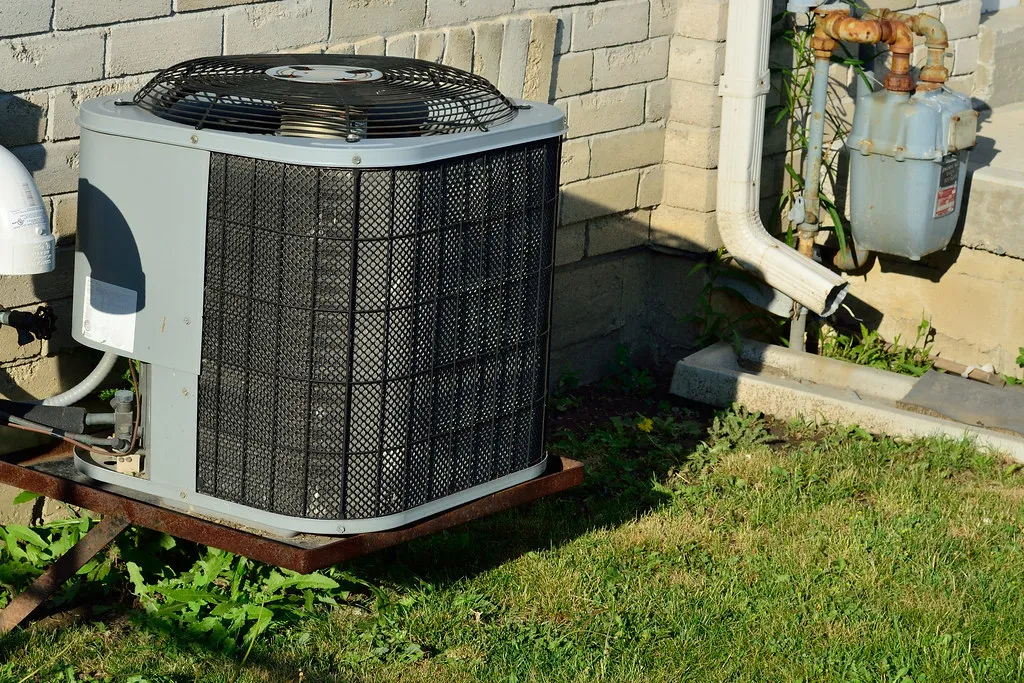
On the heating side, a proper visit looks at the burners, the flame sensor, the safety controls and the venting, and includes a carbon monoxide check. On the cooling side it’s the coils, the refrigerant charge, the condensate drain and the electrical parts that wear out. The filter gets a look on both. Our maintenance hub covers the seasonal rhythm in more detail.
Trane, which sells plans through its dealers, publishes a longer list in its article What Is an HVAC Maintenance Plan: the thermostat, electrical connections, the furnace’s ignition, blower and heat exchanger, lubricating moving parts, cleaning the evaporator and condenser coils, checking refrigerant levels, flushing the AC drain line if needed, cleaning the condensate drain pan, and changing filters if needed.
The drain line earns its place on that list in a New Jersey summer, when an air conditioner pulls a lot of water out of humid air and all of it has to go somewhere. (The flame sensor, if you’ve never heard of it, is the thin rod that tells the furnace a flame is actually lit.) Checkbook found that maintenance-only contracts often leave out AC coil cleaning, which is one of the main jobs of a spring visit, so check for it by name.
What the numbers look like
These are national averages from one cost guide. They aren’t New Jersey prices and they aren’t ours, and local quotes can land well outside them. HomeAdvisor’s AC and HVAC maintenance cost guide (updated June 19, 2026; retrieved September 23, 2026) gives these ranges:
| What | HomeAdvisor range |
|---|---|
| Yearly fee for an extended service contract, whole system | $150 to $300 |
| One HVAC maintenance visit | $175 to $350 (average about $250) |
| AC service on its own | $60 to $200 |
| Furnace inspection and maintenance | $80 to $300 |
On those figures a year of plan fees costs roughly what one maintenance visit does. So the fee on its own rarely settles anything. Where plans really differ is what they do once something fails.
How to judge any plan
Start with the visits. Trane recommends two a year: “once in the spring before cooling season starts, and once in the fall before heating season starts.” Some plans include only one, in which case ask which season, and whether you pick the date or they do.
What does an HVAC maintenance plan include, and what costs extra?
Get the task list in writing and hold it up against the lists above. Trane’s own advice is to “be sure you know exactly what’s included and what will cost extra,” which is fair advice from a company that sells these plans. Filters, coil cleaning and drain flushing should appear by name.
What happens when something breaks?
If you’re weighing a plan, you’re probably picturing the day the heat quits, so look hard at what the contract does on that day. This is where a plan turns out to be coverage or a coupon. A maintenance-only plan offers, at most, a discount. A “discount on repairs” is a percentage off a price you haven’t seen yet, and we find that close to impossible to value. A plan that covers repair labor is worth more, but parts are often the bigger share of a repair bill, and they’re billed on top.
Then read the exclusions. Checkbook puts it plainly: “the costliest repairs, such as replacing compressors and heat exchangers, aren’t usually covered by most service contracts.” It also lists capacitors among the common exclusions. A capacitor is a small part that costs little to replace, though a plan that excludes it still bills you for the visit. So the big failure that makes people want a plan can sit outside it, and so can the small one.
The last point from Checkbook is the uncomfortable one: “Some contractors seem to use service contracts as twice-a-year opportunities to squeeze customers for unnecessary repairs.” Ask to see the worn part or the reading that flagged it. Worn parts are real, and catching them early is the point of the visit. On anything expensive, getting a second opinion before you agree is reasonable, and nobody honest will mind.
What does priority service mean?
Nearly every plan promises it. Ask for the definition in writing: priority over whom, and within how many hours? Checkbook heard from plan holders who still had to “wait weeks to get a repair appointment.” A promise with no number attached shouldn’t count toward the price.
Renewal and cancellation terms are rarely in the brochure. Find out whether the plan renews automatically, whether a refund is pro-rated if you move or replace the system, and whether it transfers when you sell the house. A visit you paid for and never booked may simply lapse. If your equipment is still under a manufacturer’s warranty, read the warranty document itself for anything it says about maintenance. We haven’t found a manufacturer statement on this that we could point you to, so go by your own paperwork.
When a plan pays off, and when one tune-up does the same job
A plan has a real chance of paying off if you’d book two visits a year regardless, because you have a heat pump or a furnace plus central air. It also helps if you’d rather someone else handled the reminders and kept a record of every visit, or if the system is older and needs attention more often. A household where someone can’t safely go without heat or cooling might find a clearly defined priority response worth paying for.
Checkbook’s view is shorter: contracts make sense if you need several visits a year, and otherwise you should pay per visit. For a newer system that needs one look a year, we’d agree. Book the tune-up, keep the receipt, and put the plan fee aside.
Is a furnace maintenance plan worth it?
A gas furnace on its own needs one visit a year, in the fall, before the first cold snap. A plan built around that one visit is really a prepaid tune-up, so compare its yearly fee with the price of a single visit; anything above that is what you’re paying for the perks. Some older New Jersey homes still heat with oil, and an oil burner needs its yearly cleaning more than a gas one does, which is one of the few cases where a heating-only plan might make sense. The carbon monoxide check belongs in that fall visit either way.

Questions about your own system? Get in touch with our team.