
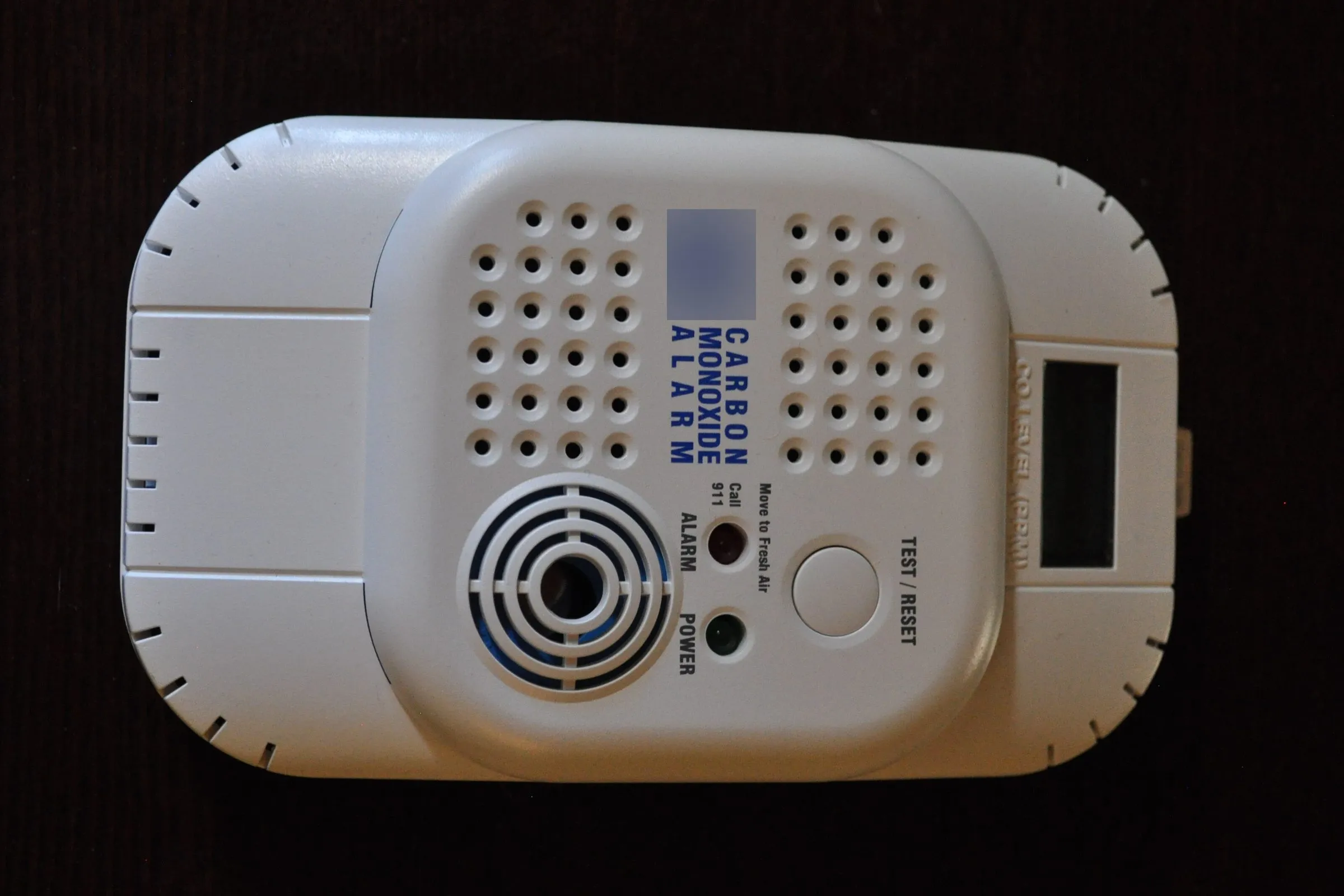
It’s easy to treat a carbon monoxide alarm like a smoke alarm and put it wherever there’s a free outlet. The guidance for the two isn’t the same, though. The spots that matter most for a CO alarm are the ones near where people sleep, since someone asleep can’t notice the early signs of carbon monoxide.
Where to put a carbon monoxide detector
Every level, and outside the bedrooms
The Consumer Product Safety Commission says it in one line: “CO alarms should be installed on each level of the home and outside sleeping areas.” The EPA says the same thing, with a useful fallback for a home that only has one alarm so far: put it near the sleeping areas, “and make certain the alarm is loud enough to wake you up.”
That last part gets skipped. If the bedrooms are spread out, say a primary suite on the first floor and the kids upstairs, one hallway alarm between them might not be heard through two closed doors. That’s the case for an alarm near each sleeping area, not one for the whole floor.
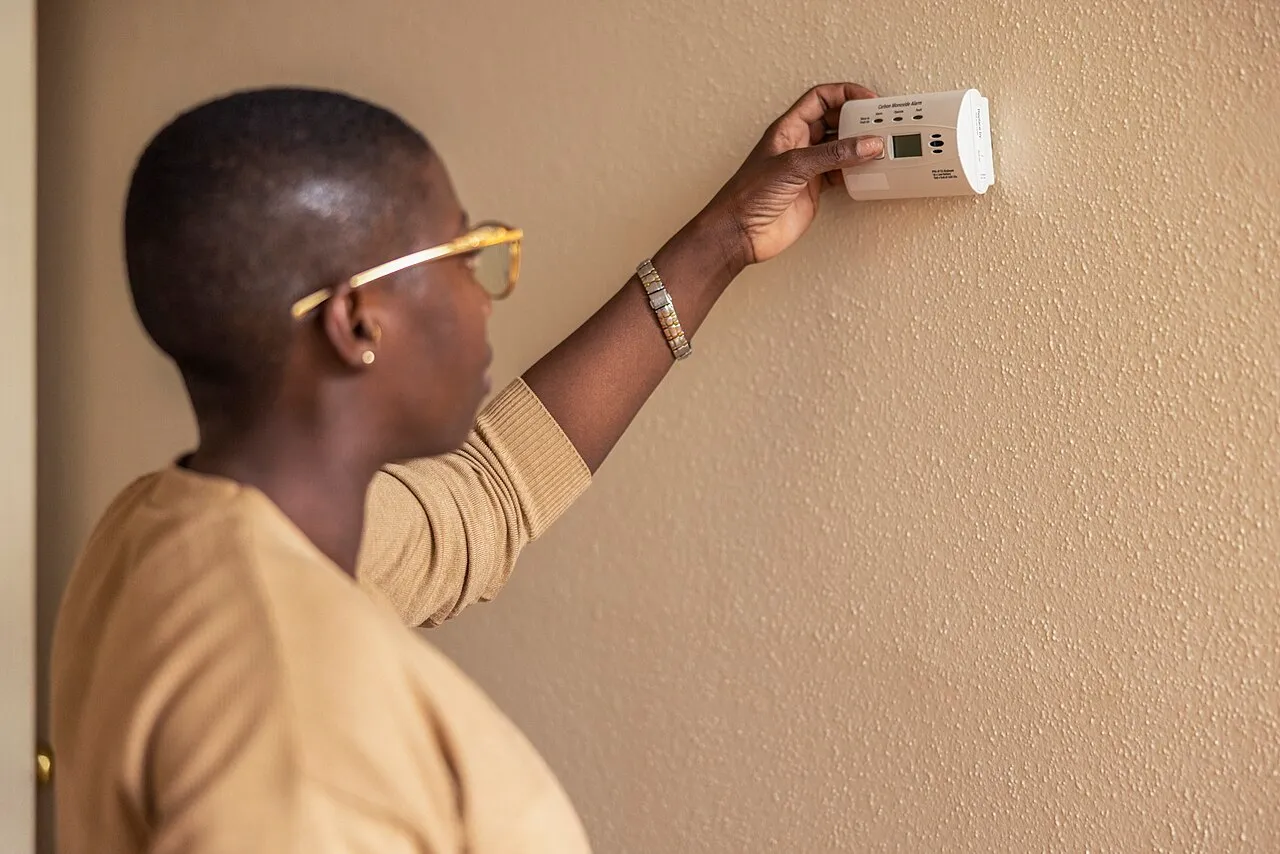
So where do you install a carbon monoxide detector in an ordinary two-story house with a basement? One in the upstairs hall outside the bedrooms, one on the main floor, and the basement depends on the next point.
Attics and basements
CPSC’s advice is that CO alarms “should not be installed in attics or basements unless they include a sleeping area.” If someone sleeps in a finished basement, that basement gets an alarm. If the basement only holds the furnace, the water heater and the laundry, the CPSC guidance doesn’t call for one there.
That can feel backwards, since the basement is often where the fuel-burning equipment sits, and alarm makers go further than CPSC here. Kidde’s placement guidance recommends an alarm on each level, “ideally on any level with fuel burning appliances,” and says additional alarms are recommended “5-20 feet from sources of CO such as a furnace, water heater or fireplace.” So if the furnace or boiler is in the basement, an alarm down there makes sense even when nobody sleeps there. Manufacturers also publish their own lists of spots to avoid (distance from appliances, mounting height, bathrooms, garages), so read the manual for your alarm before you drill.
Combination smoke and CO alarms
These exist, and CPSC mentions them. They save a spot on the ceiling and a battery to track. The catch is that a combination unit is still one device. It has to be somewhere that works for both jobs.
What New Jersey requires
A caveat first. What follows is the state fire code as it’s written, read through the Cornell Legal Information Institute copy, which republishes the New Jersey Administrative Code. It isn’t legal advice, and your municipality’s fire official has the final say on your house.
Which homes, and where the alarm goes
N.J.A.C. 5:70-4.19 requires carbon monoxide alarms in one- and two-family homes and attached single-family homes. The exception covers buildings with no fuel-burning device and no attached garage. In plain terms: a gas or oil furnace, boiler, water heater, stove or fireplace, or a garage attached to the house, brings the home under the rule. The code’s wording on that exception is a little awkward, so if your house is all-electric with a detached garage, confirm with the town rather than assume you’re out.
The alarms can be battery, hard-wired or plug-in. They have to be listed to UL 2034 and installed per NFPA 720 (or be part of a supervised system under the Uniform Construction Code). And they go “in the immediate vicinity of the sleeping area(s).” That matches the CPSC and EPA advice above.
The certificate when you sell, lease or change occupancy
Under N.J.A.C. 5:70-2.3, before a one- or two-family or attached single-family home is sold, leased or otherwise changes occupancy, the owner needs a Certificate of Smoke Alarm, Carbon Monoxide Alarm, and Portable Fire Extinguisher Compliance. No certificate is issued without a UL 2034 carbon monoxide alarm (same fuel-burning and garage exemption).
A few details from the rule that are easy to miss:
- The certificate comes from the local enforcing agency. Some municipalities run their own property inspection instead, and that can satisfy it.
- It isn’t transferable.
- If the sale or move-in doesn’t happen within six months, you apply again.
There’s a fee, set in a separate section of the code (5:70-2.9(d)). We’re leaving the amount out rather than quote a number that may have changed.
The state’s side of this lives on the Department of Community Affairs fire safety portal, which lists the certificate application. In practice, the first call is to your town’s fire prevention or code office. They’ll tell you who inspects and how far out they’re booking, and that lead time can matter for a closing date.
How long do carbon monoxide detectors last?
There’s no single number, and the numbers vary more than you’d expect. Kidde says its CO alarms last seven to ten years depending on the model: most made since 2013 have a 10-year life, and older ones a seven-year life. Another brand’s figure may differ. The alarm itself is the best source. Kidde points to the manufacture date on the back, and many units also print a “replace by” date.
A useful habit when you install a new one: write the install month on the back in marker. It saves a ladder trip and a squint later.
If you’re buying new, the sealed 10-year battery models are the easier ones to live with. There’s no yearly battery swap, and when the alarm is done it tells you. Models with replaceable batteries need fresh ones every year, which is CPSC’s standing advice for smoke and CO alarms alike.
Why is my carbon monoxide detector beeping?
A short chirp every so often is the alarm telling you about itself, not about carbon monoxide. The pattern tells you which problem it is, and patterns differ by brand. On Kidde alarms, per Kidde’s help page:
| What you hear or see | What it means on a Kidde CO alarm |
|---|---|
| A chirp once every 60 seconds | May mean a low battery |
| “Lb” on a digital display | Low battery, replace it |
| A chirp every 30 seconds | End of life, the alarm can no longer sense CO |
| “ERR” on the display | An error code, look it up in the manual |
Kidde adds that a chirp every 30 seconds can also mean a malfunction. Either way, the unit needs replacing or a call to the maker.
The rule of thumb that holds across brands: if it still chirps after a fresh battery, it’s probably end of life. A new battery won’t fix that. For any other brand, the pattern is printed in the manual, and the maker’s site usually has a copy if the paper one is long gone.
A full, continuous alarm is a different signal entirely. Follow the instructions on the unit, get everyone outside to fresh air, and then call 911. That’s CPSC’s advice if you suspect carbon monoxide poisoning. Where carbon monoxide comes from and what to do after the alarm is covered in carbon monoxide at home.
Testing and linking alarms
Test monthly. That’s CPSC’s advice, and it’s a matter of pressing the test button and waiting for the sound. If your manual gives a different schedule, go with the manual.
Interconnection is worth asking about when you replace alarms. Some models are sold as interconnectable, hard-wired or wireless, so when one sounds they all sound. That helps most in a house where a basement or a far bedroom is out of earshot. Whether your existing wiring supports it depends on what’s in the walls, and the box will say what the alarm can do.
Fuel-burning equipment and your alarms
A CO alarm only warns. What produces carbon monoxide in most homes is the fuel-burning equipment, and keeping that equipment in good shape is the other half. If your home has a boiler, steam vs hot water boilers covers what each one needs. An aging furnace has its own warning signs, listed in signs your furnace needs replacing. Whether a yearly checkup on a plan makes sense is its own question, covered in is an HVAC maintenance plan worth it?. More on heating systems is in the heating guides.
If you have a question about the alarms or the equipment in your home, get in touch.