
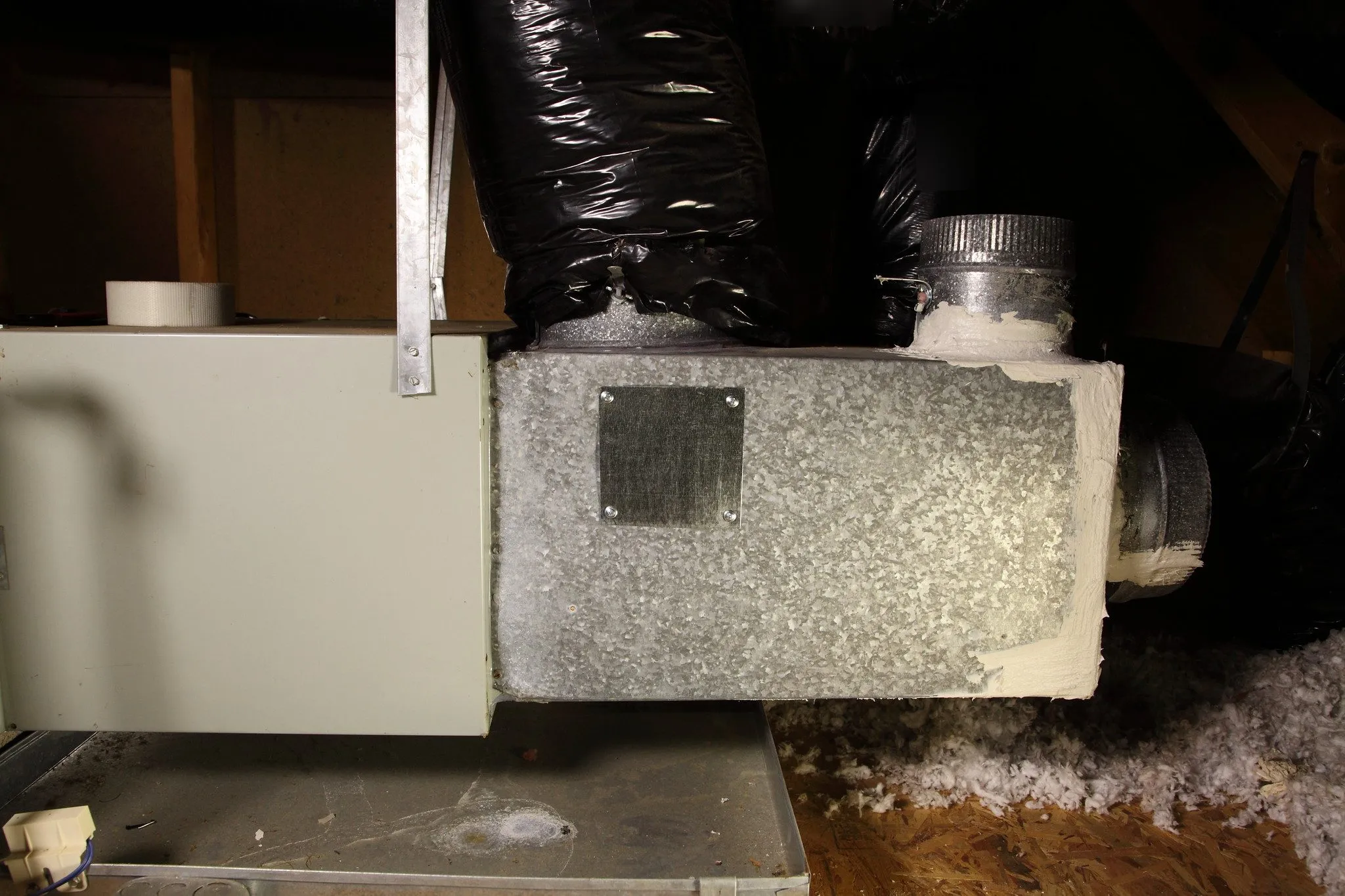
Water on the floor next to the indoor unit looks alarming, but it’s rarely a mystery once you know where the water comes from. Your AC makes water on purpose. The problem starts when that water can’t get where it’s supposed to go.
So before you look for a cause, it helps to know the normal path.
Where the water comes from
Warm, damp air from the house blows across the indoor coil (the evaporator). The coil is cold, so moisture in the air condenses on it the way it does on a glass of iced tea. That water drips into a drain pan under the coil, runs out through a condensate drain line, usually white PVC pipe, and ends up somewhere harmless: a floor drain, a laundry sink, a condensate pump, or outside next to the foundation.
That’s also why your AC dries the house as it cools it. Our article on indoor humidity covers what level to aim for.
How much condensation from AC is normal?
Some, and on a humid day, a surprising amount. The honest answer is that there’s no single number, because it depends on how humid the air is, how long the system runs and how big it is. A system that runs all afternoon on a muggy New Jersey day in July can move a steady stream down its drain, and a few drops on a cool, dry day are just as normal.
What matters is where the water shows up. Water coming out of the end of the drain line is normal, however much there is. Water anywhere else is a leak:
- on the floor around the indoor unit
- in the pan under an attic unit, or on the ceiling below it
- dripping from the unit’s cabinet or the insulated pipes near it
If the outside end of the drain line is dry on a hot afternoon while the system has been running for an hour, that’s worth noticing too. The water is going somewhere.
Why is my air conditioner leaking water?
Most indoor leaks come down to one of four things. Carrier calls a blocked drain line one of the most frequent reasons for an AC leaking water, so that’s where we’ll start. An attic unit can have any of the four, and it gets a section of its own further down because of where its water ends up.
A clogged condensate drain line
The drain line is a small pipe carrying warm, wet water through a dark space, all summer. Algae and a slimy film of bacteria grow in it, dust from the coil washes into it, and over a season or two that buildup can narrow the line until it can’t keep up. The pan fills, and the water goes over the edge.
It often happens slowly. The line drains fine in June, drips a little in July, then overflows during a long, humid stretch, when the system runs for hours and the drain has a steady flow to carry.
There’s a detail on most drain lines that people don’t expect: a U-shaped bend, called a trap, close to the unit. The blower pulls air through the cabinet hard enough that, on many systems, it would suck air up the drain instead of letting water out. The trap holds a plug of water that blocks that air. If a trap dries out, cracks or gets built wrong, the water can sit in the pan even when the pipe itself is clear. It’s one of the reasons a line can look fine and still overflow.
Signs point to the drain line when water shows up at the unit while the system is cooling normally and the air from the vents is cold. A musty smell near the unit or standing water in the pan are the other giveaways.
Clearing a blocked line is its own job. Many units have a cleanout or access port on the line near the unit (often a capped T-fitting), and your manual will say whether the manufacturer wants you using it.
A frozen coil that’s thawing
This one confuses people, because the system usually seems to be cooling badly rather than leaking. When too little warm air crosses the coil, the coil gets colder than it should, and the moisture on it freezes instead of dripping. Ice builds up. When the system shuts off, or the ice finally melts, all of it comes off at once, more water than the pan and drain were built to handle in a rush.
The usual reason for too little air is the filter. A clogged filter starves the coil. Closed or blocked return grilles, a failing blower and a dirty coil do the same thing. A low refrigerant charge can also freeze a coil, and that one isn’t a homeowner fix at all (more on that below).
This is also the answer to “why is my AC filter wet?” A dry filter sits upstream of the coil and shouldn’t get wet on its own. A damp or soggy one usually means water is backing up out of an overflowing pan, or the coil has iced and is dripping or blowing water back toward the return. Either way, the filter is telling you about a problem, and swapping it doesn’t fix that problem. It still needs swapping, though. A wet filter grows mold and chokes airflow even more. Our guide on how often to change your HVAC filter covers the schedule.
If you see ice on the coil or on the copper line going into the unit, don’t chip at it. Turn the cooling off at the thermostat and leave the fan on so warm air melts the ice, with towels down for the water that’s coming.
A cracked or rusted drain pan
This one shows up on older systems especially. A metal pan rusts through over the years and a plastic one can crack. The drain works fine, the pan just doesn’t hold water anymore. On some units the pan is part of the coil assembly, so whether it’s a cheap fix or a much bigger one depends on how your unit is built, and we can’t tell you which without seeing it.
A failed condensate pump
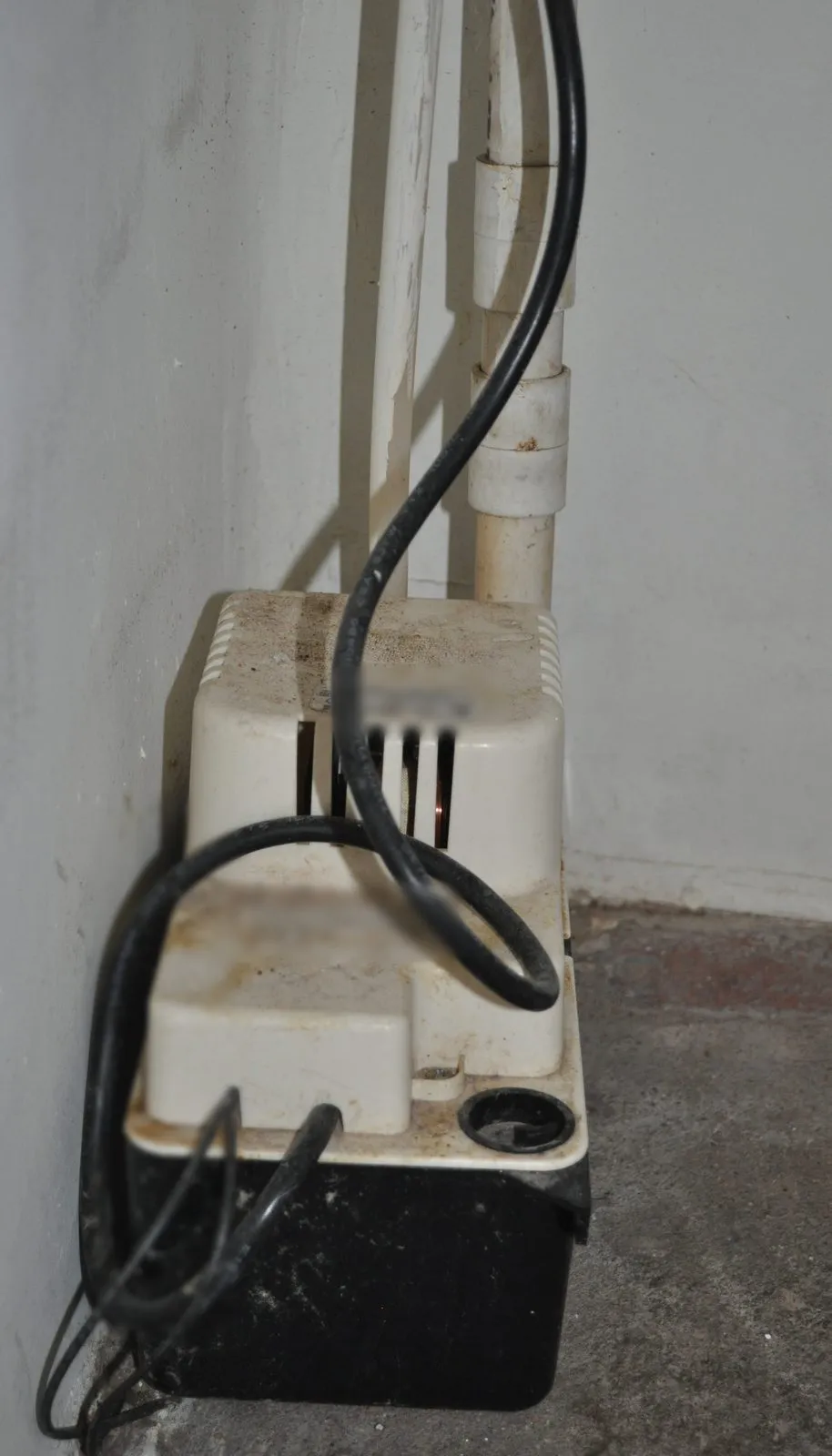
This is the other simple one. Basements without a floor drain nearby often have a small pump with a reservoir that pushes the water up and out. When its motor or float fails, the reservoir overflows onto the floor. If you have one, you’ll hear it run now and then in summer. If it’s silent and full of water, you’ve likely found your leak.
Air handler leaking water in the attic
Attic units deserve their own section, because when they leak, the water comes through your ceiling.
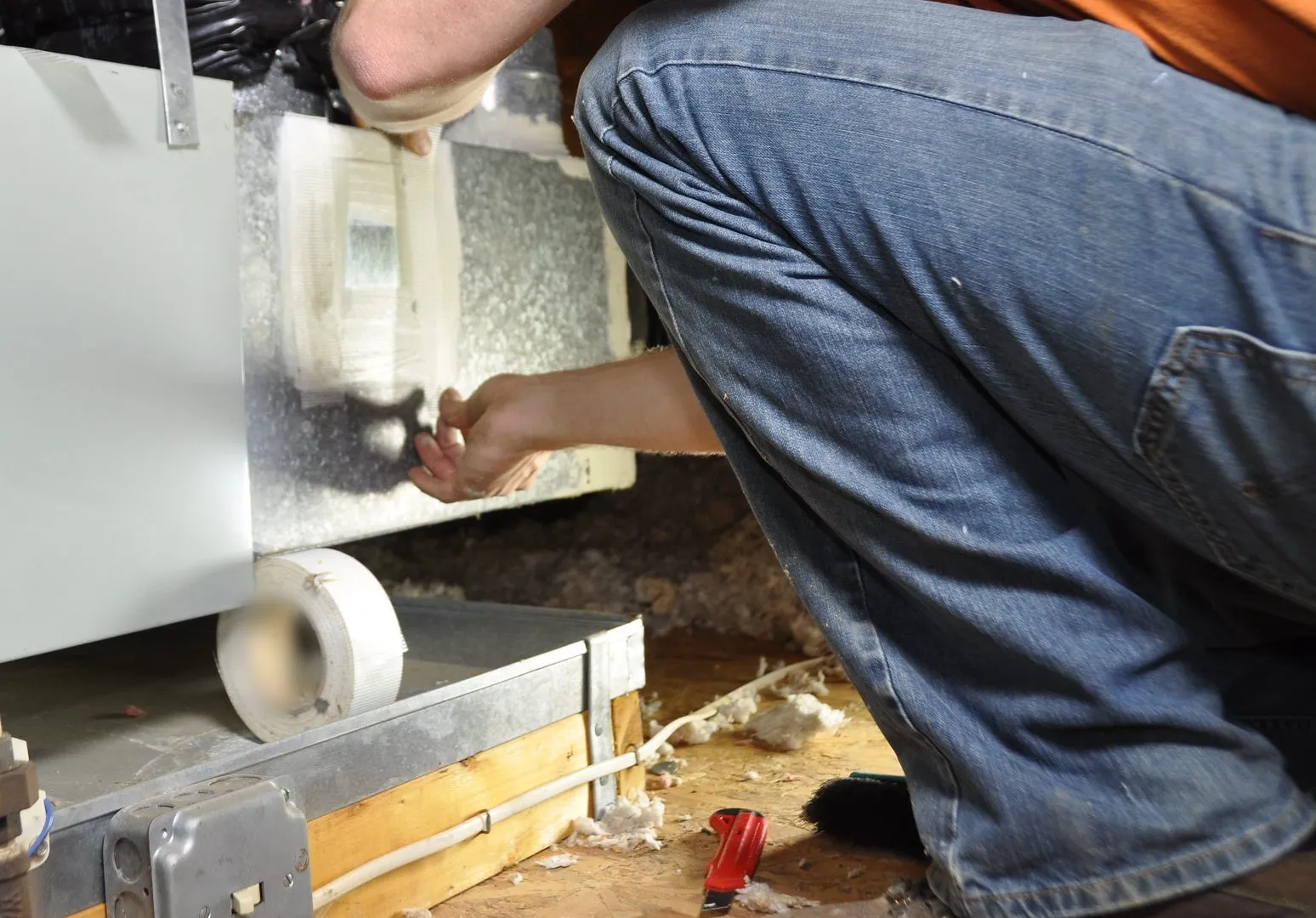
An air handler above living space normally has a backup. The International Residential Code calls for one when an overflow could damage the house, in section M1411.3.1 (auxiliary and secondary drain systems). It’s usually some combination of:
- a secondary drain pan, a wide shallow pan under the whole unit, sometimes with its own drain line
- a float switch, a small sensor in the main pan, the secondary pan or the drain line, that shuts the system off when the water rises
The secondary drain line is often run to a spot you’ll see, like above a window, on purpose. Water dripping from a pipe over a window is the system telling you the main drain is blocked. Plenty of people never notice it, or assume it’s normal.
When the system shuts off on a hot day and won’t restart, a tripped float switch is a real possibility. That’s the switch doing its job. The water has nowhere to go, and the switch stops the system from making more.
We feel strongly about one thing here. Don’t bypass or disconnect a float switch to get the cooling back on. That trades a warm afternoon for a wet ceiling. And a water stain spreading below an attic unit should be treated as urgent even if nothing is dripping yet: the secondary pan may already be full.
Can I keep running my AC if it’s leaking water?
Not for long. If water is on the floor or coming through a ceiling, turn the cooling off at the thermostat. Stopping the system stops new condensate. If the water is near the unit’s wiring or an outlet, switch the unit off at the breaker panel too. Never touch the unit’s own switch, a power cord or an outlet while you’re standing in water.
Then put down towels or a bucket, and, if the leak is from an attic unit, check the secondary pan if you can reach it safely. A full pan needs emptying before anything else.
A short run to test the drain after you’ve fixed something is fine. Letting it run and hoping is not.
What you can safely check yourself
The filter first. It’s the easiest thing to rule in or out, and a dirty one explains a frozen coil.
After that:
- Look at where the drain line ends. Is water coming out when the system runs?
- Look in the pan under the coil, if you can see it without opening sealed panels. Standing water means the drain isn’t keeping up.
- If you have a condensate pump, check whether it runs and whether its reservoir is full.
- In the attic, look at the secondary pan and at the float switch, if there is one.
Your owner’s manual is the authority on what’s meant to be opened. Turn off the power at the unit’s service switch before you open any panel, and leave electrical parts and sealed panels alone. Some homeowners clear their own drain lines through the cleanout, and many manuals show how.
What a technician handles
A drain line that clogs again right after it’s cleared. A pan that has to be replaced. A coil that keeps freezing with a clean filter, which often points to a refrigerant or blower problem. A pump that has failed. Anything electrical.
Refrigerant is the clear line. The EPA requires technicians who maintain, service, repair or dispose of equipment that could release refrigerants to be certified under Section 608 of the Clean Air Act. The rules are in 40 CFR Part 82, Subpart F, and the EPA explains who needs certification on its Section 608 technician certification page (accessed 2026-09-24). A charge that runs low also usually means there’s a leak somewhere in the refrigerant lines, and adding refrigerant without finding it just brings the same problem back next summer.
If the system is old and the leaks keep coming, it may be time to think about what’s next. Our article on how long central air lasts covers that decision.
This article covers central air with an indoor unit. Water dripping from supply vents, window units and ductless mini-splits are different problems with different causes, and a furnace that leaks in winter gets an article of its own.
If you’d like to talk it through, you can get in touch with our team.