
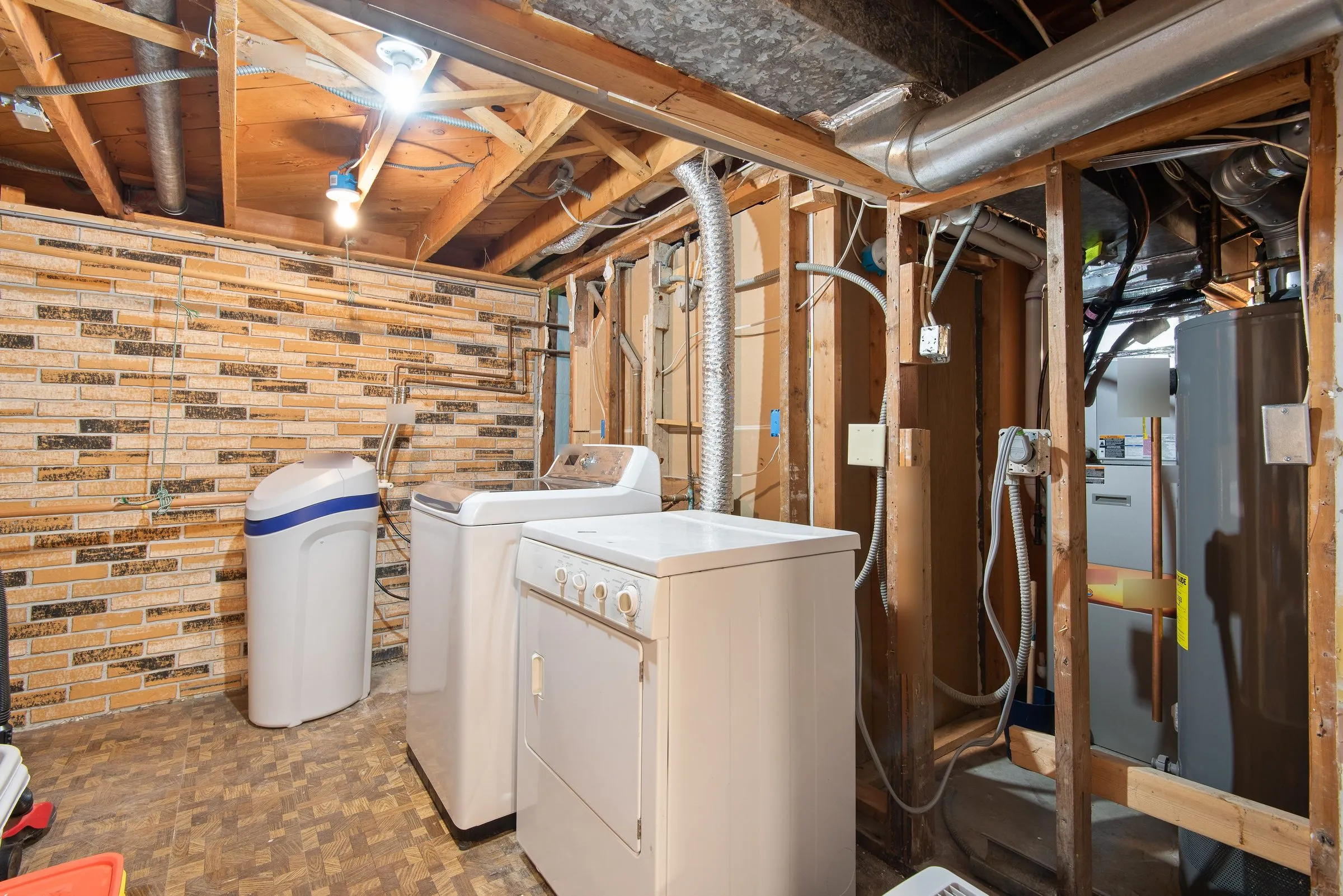
Water pooling at the base of a furnace nearly always traces back to a drain. A high-efficiency furnace makes water on purpose and pipes it away, so a furnace leaking water onto the floor has a drain path that is blocked somewhere. An older furnace shouldn’t make water at all, and a puddle under one usually comes from something nearby. Turn the furnace off before you go looking.
Turn the furnace off first
If you smell gas or a carbon monoxide alarm is going off, forget the puddle. Don’t touch any switch, including the furnace switch or the breaker: New Jersey Natural Gas warns that switches and electrical devices can spark. Get everyone out of the house, then call your gas utility or 911 from outside. In New Jersey that utility is PSE&G, New Jersey Natural Gas, South Jersey Gas or Elizabethtown Gas, whichever name is on your gas bill.
On a lot of furnaces the blower motor, the control board and the wiring sit low in the cabinet, right where a puddle collects. Lennox calls water leaking from a furnace a shock hazard, and Bryant and Trane both tell owners to shut the system down first.
Set the thermostat to off, then switch off the furnace itself. There’s usually a switch that looks like an ordinary light switch on or near the unit, and failing that, the breaker. Leave the cabinet panels where they are.
Why a high-efficiency furnace makes water (and an older one shouldn’t)
Burning natural gas produces water vapor. An older furnace, the kind rated around 80 percent efficient, sends that vapor up a metal flue while it’s still hot, so it leaves as a gas and you never see it.
A condensing furnace squeezes more heat out of the same exhaust. Trane describes it this way: the exhaust passes through a secondary heat exchanger, cools enough for the vapor to turn back into liquid, and that water drains away through a condensate line. Carrier says high-efficiency furnaces (90 percent AFUE and up) naturally produce condensation and puts a number on it: a 60,000 BTU/h furnace at full input makes roughly 0.7 gallons of water vapor an hour, before counting how much of it actually condenses and drains. Bryant puts the result at typically a few gallons per day during heating, and that water has to get through a trap, into a drain line and out to a floor drain, a sink or a pump.
Not sure which kind you have? White plastic vent pipes running out through a wall or the roof, plus a thin plastic drain tube, almost always mean a condensing furnace. A metal flue heading into a chimney usually means an older one, and then the water probably comes from something above or beside it.
Where the water comes from, and when it shows up
Heat on, AC off: start with the condensate drain. AC on in summer: start above the furnace.
Heat on: a clogged condensate trap or drain line
This is the most likely answer to “why is my furnace leaking water” in winter, and Carrier calls a clogged condensate drain one of the most common causes of furnace water leaks.
The trap is a small plastic loop or box, usually on the side of the furnace or just below it, that the condensate passes through on its way to the drain line. It holds a little water permanently, as a seal, so the fan that pushes exhaust out doesn’t pull air backward up the drain. That standing water is also why traps clog: over time a slimy film and bits of sediment settle in it, the passage narrows, and one day the water can’t get through fast enough.
Then the water backs up and spills out of the trap or a fitting. On many condensing furnaces it also trips a pressure switch that shuts the burner off, which catches people off guard, because the first thing they notice is a cold house rather than a puddle. Water leaking from a furnace plus no heat points strongly at the drain.
Cold weather adds a second version. Bryant lists a frozen discharge line as a possible cause. The end freezes, the water behind it has nowhere to go, and it comes back out at the furnace. If you only see water leaking from the furnace in winter, and only on the coldest days, suspect this.
A condensate pump that has quit
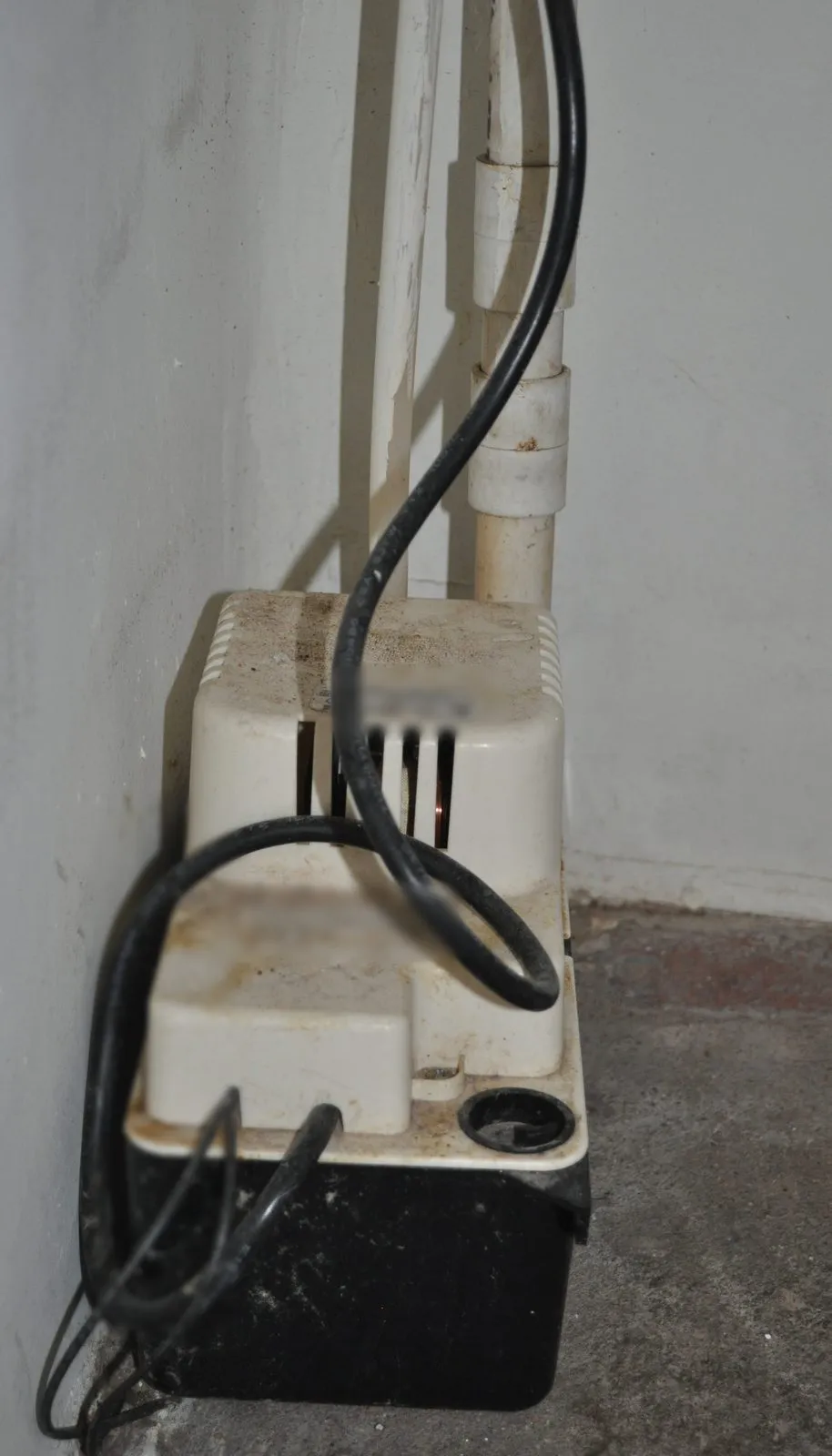
If the nearest floor drain or sink sits higher than the furnace’s drain outlet, gravity can’t get the water there, so the condensate runs into a small pump instead. It’s a plastic box about the size of a shoebox, usually on the floor next to the furnace. Inside is a reservoir with a float; lift the lid and you can see it. As the water rises the float lifts, the pump kicks on, and it pushes the water up a thin clear or white tube to a sink or drain, sometimes across the ceiling of the basement to get there.
When the pump fails, the reservoir overflows, and the water tends to show up around the pump rather than under the furnace. Lennox puts the typical life of these pumps at three to five years, so on an older furnace the pump may already be a replacement. A pump that hums without emptying, or a full reservoir with a silent pump, is the giveaway.
Furnace leaking water when the AC is on
In many homes with central air and a furnace, the AC’s indoor coil sits in a box directly on top of the furnace. The coil pulls moisture out of the air, and that water drains to a pan and a line under the coil. When the pan or line clogs, it overflows, and the water runs down the outside of the furnace cabinet and pools at the bottom, so it looks like the furnace is leaking. If the water only appears when the air conditioning is running, it is almost always this, and the fix is on the AC side.
A whole-house humidifier
If a humidifier is mounted on the ductwork, it has its own water supply and its own small drain line. Trane mentions clogged pads and cracked drain lines as leak sources. It usually happens in heating season, when the humidifier is running, and the water usually leaves a trail down the duct from the humidifier box. Our article on indoor humidity in New Jersey homes covers what the humidifier should be set to.
Loose fittings, sagging vent pipes and dirty filters
A condensate fitting can work loose or crack over the years, and then it drips at the joint rather than at the trap.
The white plastic vent pipes are a separate case. They are meant to slope so that any condensation inside them runs back to the furnace. If a hanger gives way or a joint separates, the pipe sags, and water collects at the low point and drips out. That is often what people mean by a furnace pipe leaking water.
Lennox also lists clogged filters among the causes, so check yours against the filter change schedule. And sometimes the water heater or a pipe next to the furnace is to blame, with the furnace itself perfectly dry.
What you can check yourself, with the power off
Dry the floor completely, then watch where fresh water appears first. A few sheets of paper towel laid around the base will show you the spot faster than staring at it.
Then follow the drain. Trace the plastic tube from the furnace to wherever it ends and look for a kink, a section that has pulled out of the floor drain or sink, or a plug of gunk at the end. If the line runs outside, check whether the end is iced over or buried in snow.
If there’s a pump, look at the reservoir. Full and silent means the pump, not the furnace.
Pull the filter. If you can’t see light through it, change it.
Mop up standing water and move any cardboard boxes stored against the furnace. Damp cardboard in a basement is how a small leak becomes a mold problem.
Don’t open the cabinet or touch the wiring, and stay away from the heat exchanger. Carrier is blunt about that last one: “Do not attempt to inspect, repair or replace a heat exchanger yourself.”
When it’s a job for a technician
If the leak comes back after you’ve cleared the trap once, stop and have the drain path and the venting checked. A clear trap doesn’t rule out a sagging vent or a pump on its way out. The same goes for water that is plainly coming from inside the cabinet, or rust and scale on metal parts that ought to be dry. Rust on an older furnace is also one of the signs a furnace needs replacing, and that article is worth reading before you decide what to fix.
The secondary heat exchanger is the part people worry about, and with reason. It’s where the condensate forms, and a crack in it can let water end up where it shouldn’t. You can’t see it without taking the furnace apart, which is exactly the work Carrier tells owners not to do.
Venting is the other one. On a condensing furnace the exhaust and the condensate share the vent pipes for part of the way, so a vent that is blocked, badly sloped or disconnected can show up as water first.
Keeping it from coming back
An annual heating check that includes the trap and drain line is the practical fix, because the build-up that clogs a trap happens slowly. Between visits, keep the filter on schedule and learn where your trap and pump are, so you know where to look next time. If you’re weighing whether a yearly plan is worth paying for, we went through that in is an HVAC maintenance plan worth it?.
Questions about your own system? Get in touch.