
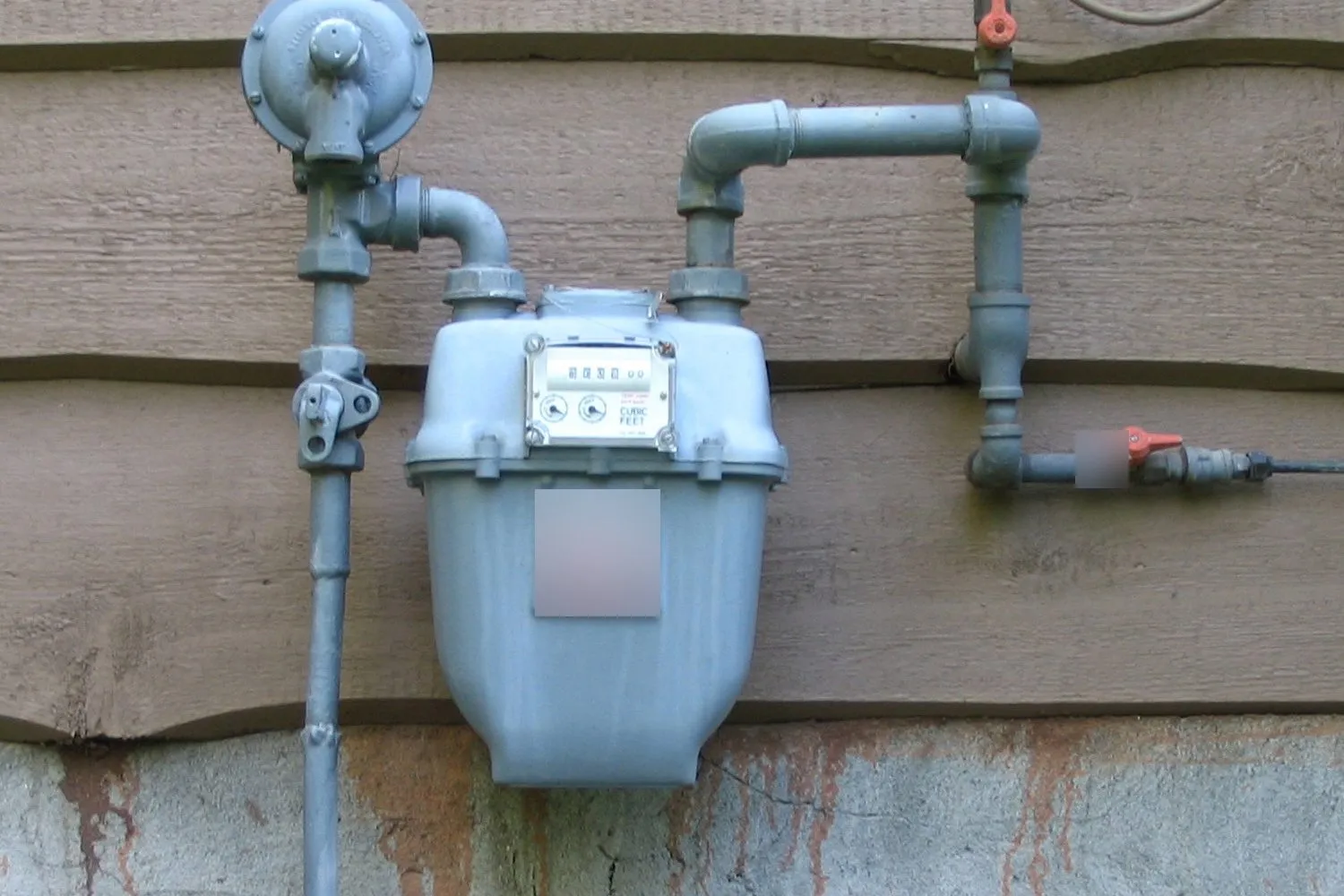
An oil to gas conversion is really four separate decisions that happen to share a name. First, can the gas utility get gas to your house at all? Then what you do with the boiler or furnace, what you do with the chimney, and what you do with the oil tank. Each one has its own timeline and its own price, and the answers change from street to street.
This guide takes them in the order most homeowners run into them. Where a figure is quoted, the source and date are next to it. Where we couldn’t find a trustworthy figure, we say so.
Step 1: Is natural gas available at your street?
Everything else waits on this. If there’s no gas main on your street, the project changes shape, and it may stop being the obvious choice.
Your utility is the one that answers the question, not an installer. Call or write to them with your address before you get any equipment quotes.
How the utility connection works
The broad shape is similar everywhere. You ask the utility, it checks whether a main runs close enough, and it works out whether a new service line (the pipe from the main to your meter) is needed, or a main extension as well. Somewhere in there it will want to know how much gas the new equipment will burn. Then comes the digging, the meter, the installation, and an inspection before the gas goes on for heating.
The details are where utilities differ: who you contact, what they charge for, how long each stage takes, and what they expect you to handle on your own property. PSE&G lays its version out on a natural gas conversion process page, and if you’re a PSE&G customer read that page itself rather than anyone’s summary of it, ours included. Terms like these get revised.
What we can say without a utility’s fine print: the wait between “we’d like gas” and “the meter is live” is the part people underestimate. Start that conversation in spring or summer, not in November when the boiler is already running every day.
If you already have gas in the house
Some oil-heated homes already have a gas meter for a range, a dryer or a water heater. That helps, but it doesn’t mean the pipe can feed a boiler too. A range burns a small fraction of what a heating system does, so expect the utility to look at the new load and decide whether the existing service and meter can carry it or need an upgrade.
The four gas utilities, and why yours matters
Four companies deliver natural gas to homes in the state: PSE&G, New Jersey Natural Gas, South Jersey Gas and Elizabethtown Gas. Each runs its own intake. NJNG, for example, takes conversion requests through an online form on its Switch To Gas site. Elizabethtown has an upgrade-to-gas FAQ, filed under its business customers, which asks you to send details about your building to find out whether gas is available. Check which company serves your address and follow their process, since terms, timelines and any charges are theirs to set.
Step 2: The equipment
This is the section where an oil to gas boiler conversion and an oil to gas furnace conversion start to look different, so it’s worth being clear about which one you have. A boiler heats water or makes steam for radiators or baseboard. A furnace heats air and pushes it through ducts.
A gas burner in the old boiler, or a new boiler or furnace?
There are two broad routes. One keeps the existing boiler and swaps the oil burner for a gas conversion burner. The other takes the oil equipment out and puts in a new gas boiler or furnace.
The age of the boiler mostly decides it. A conversion burner costs less up front, but the boiler behind it was designed around oil, and a new burner doesn’t make the heat exchanger any younger. On a fairly new boiler in good shape, a burner swap can be a sensible way to keep it running. On an old one, it means new parts on a unit that may need replacing soon anyway, which is why replacement is often the better fit there.
A new unit also opens the door to high-efficiency gas equipment. That matters for venting, which is the next question.
On the furnace side, the answer is simpler: most people replace an oil furnace with a gas furnace rather than convert it. Our guide to what a new furnace costs covers what drives that price. If you have a boiler and aren’t sure whether it’s steam or hot water, steam vs hot water boilers explains how to tell, and that choice shapes what the replacement looks like.
One small practical point from that Elizabethtown FAQ: old oil equipment can be taken apart on site, and most new gas heating equipment is designed to fit through a standard 36-inch doorway, whole or in sections that are put together on site. Old oil boilers are heavy, and basement stairs are narrow.
Also check where your hot water comes from. Many oil boilers make domestic hot water too, either through a coil inside the boiler or a separate indirect tank. Take the oil boiler out and that hot water supply needs a new plan, which can mean a separate water heater.
Chimney liner or new venting
Oil and gas equipment produce different exhaust, and a chimney that handled oil fumes for decades isn’t automatically right for gas. A chimney used for gas often needs a liner suited to gas exhaust.
The alternative is to skip the chimney. Many high-efficiency gas boilers and furnaces are sealed-combustion (direct vent) units that draw air in and push exhaust out through pipes in a side wall. That takes the boiler or furnace off the chimney, though the vent location has its own rules about clearances from windows and doors. If a gas water heater will still vent into the chimney, the chimney question hasn’t gone away, so ask about that too.
Which one your house needs comes down to an inspection of the chimney and the equipment you choose. We didn’t find a single state rule that settles it for every home, so ask whoever quotes the work how they plan to vent it and why.
Step 3: The old oil tank
Switching fuels leaves the oil tank behind, and the state has rules about residential heating oil tanks. We’re not going to paraphrase them. Read them at the source: the New Jersey Department of Environmental Protection keeps a section on unregulated heating oil tanks, with an FAQ, and a fact sheet on the Unregulated Heating Oil UST Fund, a state program for eligible homeowners. Your town’s construction office is the other place to ask.
A side note for anyone who bought the house without knowing its history: a buried tank usually gives itself away with a fill pipe or a small vent pipe sticking up near the foundation. Worth a walk around the outside before anyone starts digging for a gas line.
Step 4: What an oil to gas conversion costs
A caveat before any numbers. We couldn’t find an independent, dated cost range for the state from a utility or government source. The only itemized figures we found come from a company that removes oil tanks, which means it has a stake in the work. Read them as one company’s published estimate, not as a benchmark, and never as Greystone prices.
That company, Oil Tank Removal NJ (published March 16, 2026, retrieved September 24, 2026), puts a complete project at $12,000 to $18,000 including oil tank decommissioning, and $8,000 to $12,000 where gas is already at the street. Its breakdown:
| Part of the job | Their published range |
|---|---|
| Gas boiler or furnace | $3,500 to $7,500 |
| Interior gas piping | $500 to $1,500 |
| Street gas service (if needed) | $0 to $3,000+ |
| Permits | $150 to $600 |
| Oil tank removal | $1,000 to $3,500+ |
| Water heater (optional) | $800 to $2,500 |
The line that swings the total most is the street service, and that’s the one only your utility can price. The same page says that cost varies widely with how close the main is and whether the utility subsidizes new connections in your area. The ”+” at the top end is doing a lot of work, and nobody can fill it in without looking at your street.
Venting isn’t a separate line in their table. If your chimney needs a liner, ask where it sits in any quote you get. For how to compare quotes and plan the spend, see costs and planning.
Or a heat pump instead?
If the utility tells you gas is far away, or the main extension estimate is large, an oil to heat pump conversion is the other route. A heat pump runs on electricity, so there’s no gas line to wait for and no chimney to line. It also cools the house in summer.
It isn’t automatically cheaper to run. Electricity is expensive here, and whether a heat pump beats gas on heating cost depends on the house and the equipment. Furnace vs heat pump: which costs less runs the numbers, and heat pump rebates in New Jersey covers what incentives exist and how to confirm them for your address.
For a home already giving up oil, it’s worth pricing both before committing to either.
Questions to settle before you start
Not a to-do list so much as the questions that decide the project:
- Does the gas utility serve your street, and what does it say the service line or main extension will involve?
- Is your current system a boiler or a furnace, and how old is it?
- Burner swap or new equipment, given how old the boiler is?
- Chimney liner or direct venting, and who has actually looked at the chimney?
- Where will your hot water come from once the oil boiler is gone?
- What’s the tank’s situation: above ground or buried, and any sign of a leak?
- Have you priced a heat pump alongside gas?
Nobody can answer all seven from a desk. Numbers 1 and 4 in particular need someone to look.
If you’d like to talk through your own house, get in touch.
Cost figures are one company’s published estimate, dated where cited. They are not Greystone prices or quotes. Utility processes and state programs change, so confirm current details with your utility and NJDEP before deciding.