
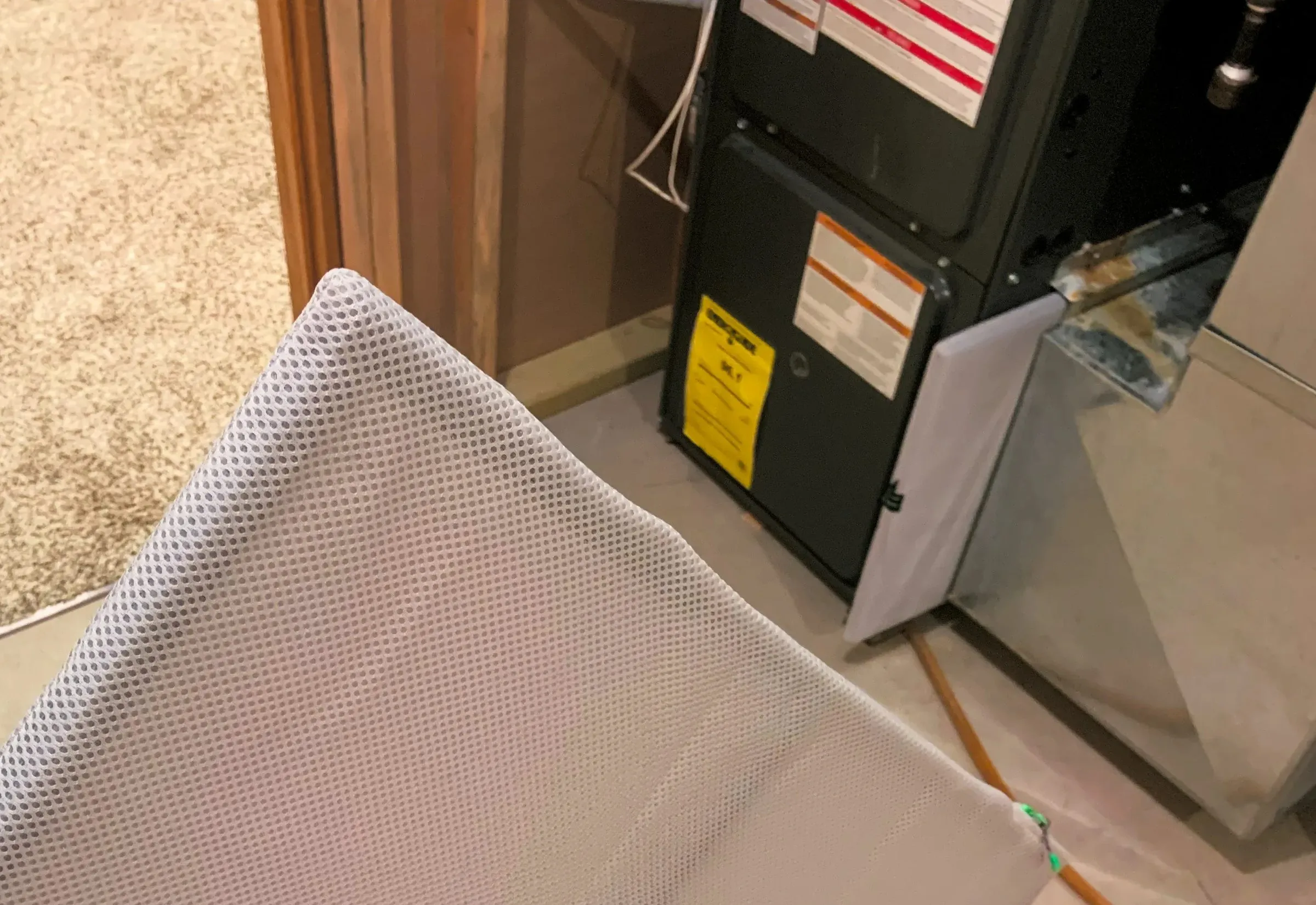
When a January cold snap settles in and the furnace down in the basement stays silent, it’s hard not to assume the worst. Usually it’s something smaller, like a thermostat on the wrong setting or a switch someone bumped. Whether your furnace won’t start at all or just isn’t kicking on when the thermostat calls, work through the checks below in order, easiest and safest first.
Safety first: if you smell gas, leave
If you smell gas (the rotten-egg smell added to natural gas), don’t troubleshoot anything. Get everyone out of the house, then call your gas utility and 911 from outside. Don’t flip light switches, use a phone or start a car while you’re still inside or next to the house.
New Jersey has more than one gas utility, so check which name is on your bill. Each one publishes its own instructions: PSE&G, New Jersey Natural Gas and South Jersey Gas. NJNG, for instance, says to evacuate first, call from a safe location, and not go back in until it says the building is safe.
A carbon monoxide alarm gets the same treatment. The Consumer Product Safety Commission says to immediately move outside to fresh air and call 911 or the fire department, without hunting for the source first.
If your furnace burns oil, the gas utility isn’t the call to make, but the rule doesn’t change: a smell of oil or smoke, or soot around the burner, means you stop here.
And a furnace that won’t start is never a reason to open the burner compartment or touch the gas piping. Everything in this guide stays on the outside of that.
Check the thermostat first
It sounds too obvious to bother with. Check it anyway, because it’s the one piece of the system most people touch every day, and it’s where a lot of “the furnace is dead” moments end.
Trane’s troubleshooting page puts it plainly: make sure the thermostat is set to “Heat” and that the room is actually colder than the setpoint. Carrier’s version adds that the thermostat has to have power. So, in order:
- The mode says Heat, not Cool, Off or Fan.
- The setpoint is a few degrees above what the room reads right now. If the house is 64 and the setpoint is 62, the furnace is doing exactly what it was told.
- The screen is lit. A blank or fading display usually means the batteries are done.
- If it’s a smart or programmable thermostat, a schedule or an “away” mode isn’t holding the temperature down.
Swap the batteries even if you aren’t sure they’re the problem. They’re cheap, and it takes one thing off the list.
Thermostat not responding at all
If you’ve fixed the settings, changed the batteries and the furnace still ignores it after several minutes, leave the thermostat alone and move to the furnace. Some thermostats take their power from the furnace rather than from batteries, which means a furnace with no power can look like a broken thermostat. The next check sorts that out.
Check the furnace power switch and the breaker
Most furnaces have a service switch nearby that cuts all power to the unit. Trane describes it as looking like a light switch, on the side of the furnace, on a nearby wall or on a ceiling joist. Bryant says the same and notes that it must be in the “ON” position.
That switch looks like the basement light switch, and sometimes sits beside it. It exists so a technician can kill power before opening the cabinet, but it’s easy for someone hunting for the basement light to flip it off without a second thought. If you find it off, that may be the whole story.
If the switch is on, go to your electrical panel and find the breaker for the furnace. A tripped breaker sits in the middle, or off, instead of lined up with the rest. Reset it once by pushing it fully off and then back on.
If it trips again right away, stop there. A breaker that won’t stay on is telling you something in the circuit or the furnace is drawing more than it should, and that’s an electrician’s or technician’s job.
Make sure the blower door is on properly
Many furnaces have a door switch: a small button that the lower access panel presses in when it’s closed. With the panel off, or on crooked, the switch cuts power and the furnace won’t start. The idea is to keep the blower from running while someone has a hand inside.
That makes it an easy one to trip after changing a filter. If you’ve had the lower panel off recently, take a look and make sure it’s fully seated, with every tab in its slot. That’s the whole check. Your owner’s manual shows how the panel on your model fits.
Don’t try to get around the switch to get the furnace going. It’s there for the next person who opens that panel.
A clogged filter can shut the furnace down
A very dirty filter doesn’t only make the furnace work harder. Bryant explains that a clogged filter restricts airflow, causing the heat exchanger to overheat and triggering a safety shutdown. Pull it and look. If it’s grey and matted, replace it, give the furnace a few minutes and try again. How often to change it, and what size you need, are covered in how often to change your HVAC filter.
Condensate drain and float switch (high-efficiency furnaces)
This one only applies to high-efficiency furnaces, the kind vented with white plastic (PVC) pipes instead of a metal flue. Those furnaces pull so much heat out of the exhaust that water condenses inside them, and that water has to drain away through a small trap and tube, often to a floor drain or a little pump.
Bryant notes that if the drain line becomes blocked, a float switch will prevent the furnace from turning on to avoid water damage. It protects the floor, though it can leave a healthy furnace refusing to run on a cold morning.
What you can do here is look. Is there water pooled under or around the furnace? Is the clear or white drain tube full, kinked or disconnected? If the furnace drains into a condensate pump, is the pump’s reservoir full? If you find water where it shouldn’t be, or a drain that looks blocked, have it cleared by someone who does this work. We’d rather you didn’t start taking the trap apart; on some models it’s easy to reassemble wrong, and a trap that leaks back into the cabinet is worse than one that’s blocked.
Older furnaces: the pilot light and the gas supply
Newer furnaces light electronically and don’t have a standing pilot. Older ones do, and Bryant points out that a pilot light can blow out. If yours has one and it’s out, the relighting steps are on a label on the furnace or in the manual; follow the manufacturer’s instructions to relight it safely and nothing else. Never relight a pilot if you smell gas.
If other gas appliances in the house (a stove, a water heater) aren’t working either, the problem may be the gas supply itself. That’s a call to your gas utility, and Trane lists gas supply and valve problems as a job for a professional.
Oil-fired furnaces
Some older New Jersey houses still heat with oil instead of gas, often with the furnace in the basement and the tank not far from it. (A lot of oil homes have a boiler rather than a furnace, which is a different machine, but its oil burner works much the same way.) The earlier checks still apply: thermostat, switch, breaker, door, filter. Two things are different. First, check the tank gauge, because an empty tank looks exactly like a dead furnace. Second, the reset button most people mean is a red one on the burner’s control box, not on the furnace cabinet. That button belongs to the oil burner’s own safety control, and it has its own rules, covered in the reset section below.
What the status light is telling you
Most modern furnaces have a small LED on the control board, often visible through a little window in the lower door. It blinks in patterns: a steady rhythm for normal, and different counts of flashes for different faults.
We’re not going to list the codes here, because they differ by brand and even by model, and a code chart from the wrong furnace does more harm than good. The chart for yours is usually printed on a label inside the furnace door, and it’s in the owner’s manual. Before you open anything, count the flashes and write the pattern down (two flashes, pause, two flashes, and so on). If you end up calling someone, that one detail can save a lot of guessing.
The furnace reset button: when to press it, and when to leave it
A lot of people search for how to reset a furnace hoping for a single button that fixes everything. Some furnaces do have a reset button, though what it resets depends on the model. On some it’s a flame rollout switch, a safety device that trips when flame or heat shows up where it shouldn’t in the burner area. On others it resets the burner controls. Your manual says whether yours has one and where it is.
What matters more is what a trip means. The furnace shut itself down for a reason. Lennox’s page on the flame rollout switch places it near the burner assembly and heat exchanger opening, and warns that incomplete combustion during a rollout event also generates carbon monoxide. The same page says to treat a single tripping event as a prompt to investigate, not a problem to reset and walk away from. So a tripped rollout switch is a reason to call a technician, not something to reset yourself.
Oil burners are stricter about this. Beckett’s troubleshooting guide says its GeniSys oil burner control goes into a restricted, or hard, lockout once it has locked out three times. The GeniSys 7505 manual goes further: it marks reset and service as for a qualified technician only, and says a hard lockout must be reset only by a qualified service technician. On an oil burner, leave the red button to whoever services it.
Our own plain advice, as general guidance, for a gas furnace: press a reset button only if it’s on the outside of the cabinet, you can reach it without taking off any panel or burner door, and the owner’s manual says the owner may press it. Then press it once. If the furnace starts and keeps running, keep an eye on it and still mention it to whoever services the furnace next. If it trips again, stop. Never take a door off to get at a reset button, because that puts you in the burner compartment this guide keeps you out of. Pressing a button over and over doesn’t fix the cause, and on a gas appliance the cause can matter.
When to stop and call someone
Carrier’s troubleshooting page is blunt about this: do not attempt to diagnose or repair gas, oil, combustion, or electrical components yourself. We agree. Stop checking and get help if:
- you smell gas (leave first, call from outside)
- a CO alarm is sounding
- the breaker trips again after one reset
- the reset button trips again
- you see soot, scorch marks or smell something burning
- there’s water around the furnace or the drain looks blocked
- you’ve done the checks above and the furnace still won’t start
Or if you’re simply not sure. That’s a fine reason on its own, and it covers the furnace not coming on for no reason you can find.
It helps to have a few things ready when you call: the make and model from the rating plate inside the cabinet, what the status light is doing, and which of these checks you’ve already done. If this is the third or fourth no-start in a couple of winters, it’s worth reading the signs a furnace needs replacing before you approve the next repair. And routine maintenance is aimed at exactly this kind of mid-winter surprise; whether a plan for it is worth paying for is its own question, covered in is an HVAC maintenance plan worth it.
For more on furnaces and boilers, the heating guides are the place to start.
Questions about your furnace? Contact us.