
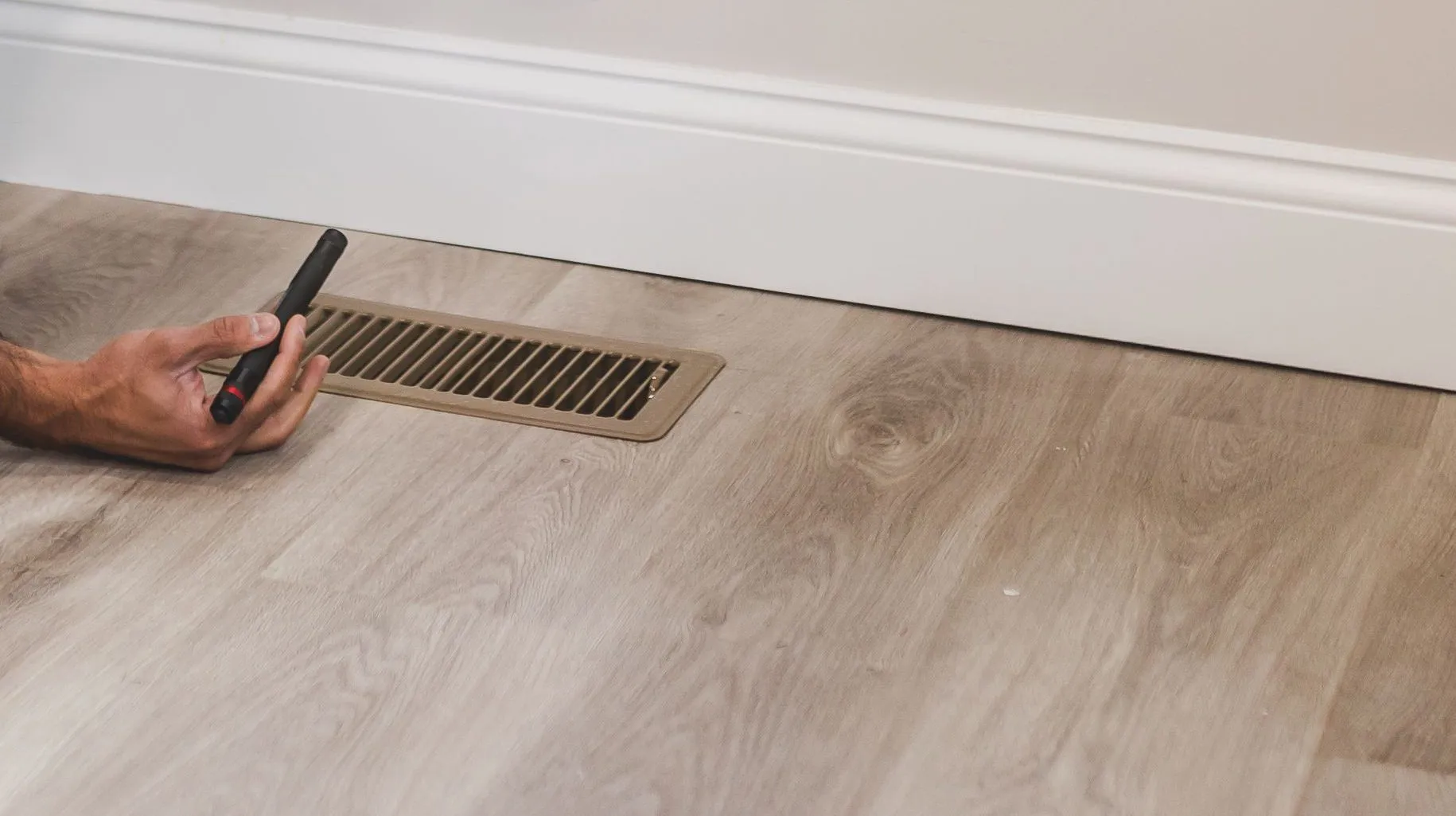
You turned the heat up, the blower came on, and the vents are blowing cold air. In a state where the January average sits just below freezing (31.7°F statewide, per the Office of the New Jersey State Climatologist, accessed September 24, 2026), that’s alarming, but the cause is usually a setting, a dirty filter or a blocked drain. Several of those you can check yourself before anyone has to come out.
If you smell rotten eggs or sulfur near the furnace, don’t troubleshoot. Leave the house and call your gas utility or 911 from outside.
Check these first
Thermostat on Heat, fan on Auto
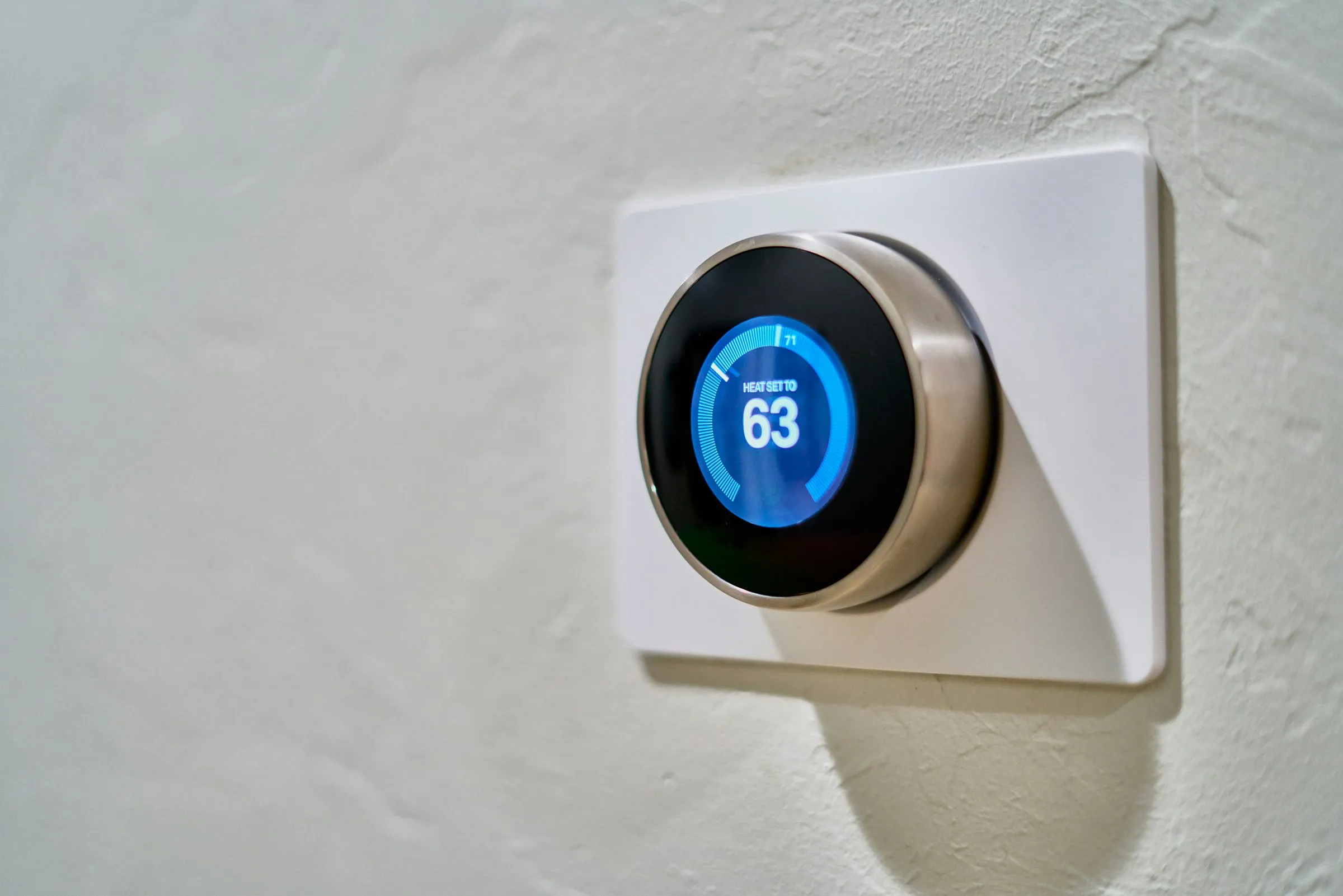
It’s the simplest reason for a furnace blowing cold air when the heat is on, and nothing is broken. Most thermostats have a fan setting next to the mode setting. On Auto, the blower runs only while the furnace is heating. On On, it runs all the time, and Carrier notes that it then circulates room-temperature air between heating cycles. Room-temperature air moving across your hand feels cold.
Look at two things. The mode should say Heat (not Cool, not Off, not Emergency), and the fan should say Auto. Then set the temperature a few degrees above the room so the furnace actually gets a call for heat. A weak thermostat battery can blank the screen or drop the call for heat. If the display is dim, swap the batteries.
Give it a minute
A gas furnace doesn’t blow hot air the instant it starts. The burners light, the heat exchanger warms, and only then does the blower kick in. Carrier says some furnaces hold the blower for roughly 30 to 60 seconds after the burners ignite. The first puff can still feel cool, because it’s air that sat in the ducts since the last cycle.
After a repair, expect longer: Bryant puts it at 5 to 15 minutes.
Still cold after a few minutes of steady running? Move on.
Vents and registers
Open every supply register in the house and pull furniture and rugs off them. Closed vents won’t turn the air cold by themselves, but they choke airflow, and choked airflow is how the filter problem below starts.
Why is my furnace blowing cold air? What each cause points to
A gas furnace has safety devices that shut the burners off when something is wrong. When one trips, the blower often keeps running, pushing air through a heat exchanger that nothing is heating anymore. So a gas furnace blowing cold air is, more often than not, a furnace that switched off its own burners on purpose. That’s the “furnace blowing cold air instead of heat” symptom, and it covers the first three causes below.
When the cold air shows up tells you a lot:
- Cold from the very first second, every time, usually means the burners never lit or went straight back out. Rule out the thermostat, then suspect ignition.
- Warm for a few minutes, then cold, then warm again is a safety switch tripping and resetting, most often the high-limit switch behind a clogged filter.
- Warm near the furnace and cool in the far rooms points away from the furnace and toward the ducts.
A clogged filter and the high-limit switch
Start here. It’s the cheapest fix and the one you can do yourself.
A dirty filter chokes the airflow through the furnace. With too little air carrying the heat away, the inside of the furnace gets too hot. Carrier describes what happens next: the heat builds up, the safety limit switch trips, and the burners shut off to prevent a fire, but the fan may keep running to cool the unit down. Once things cool, the burners relight, run a while, overheat and shut off again.
Pull the filter and hold it up to a light. If you can’t see through it, or it’s grey and matted, replace it. Bryant’s general guidance is every 1 to 3 months for standard filters, and our article on how often to change your HVAC filter goes into what pushes a house toward either end of that range. If the size has worn off the old frame, here’s how to find your HVAC filter size.
A clean filter that doesn’t fix it tells you something too. If the furnace still cycles with a new filter and every vent open, it needs a technician. A limit switch that has tripped over and over can start acting up by itself, and airflow can also be blocked somewhere you can’t see.
A dirty flame sensor or an ignition fault
Burners light, run a few seconds and go out, sometimes several times before lockout. That’s the classic sign.
The flame sensor is a thin metal rod that sits in the burner flame and tells the control board there’s fire. It works by passing a tiny electrical current through the flame. Once the rod gets coated, the board stops getting that signal, and in Carrier’s words a dirty sensor may fail to detect the flame, so the furnace shuts the burners down as a safety precaution. An ignition fault looks much the same from outside: the furnace tries to start and never holds a flame.
You’ll find videos of homeowners pulling the sensor and sanding it. We’d leave it alone. It means opening the burner compartment of a gas appliance, and if the sensor turns out to be fine, the real problem is still in there with you.
A blocked condensate drain on a high-efficiency furnace
Look at the pipes coming out of your furnace. White or grey plastic instead of a metal flue means a high-efficiency, condensing furnace. It pulls so much heat out of the exhaust that water condenses inside it, and that water drains away through a small tube or pipe to a floor drain or a condensate pump.
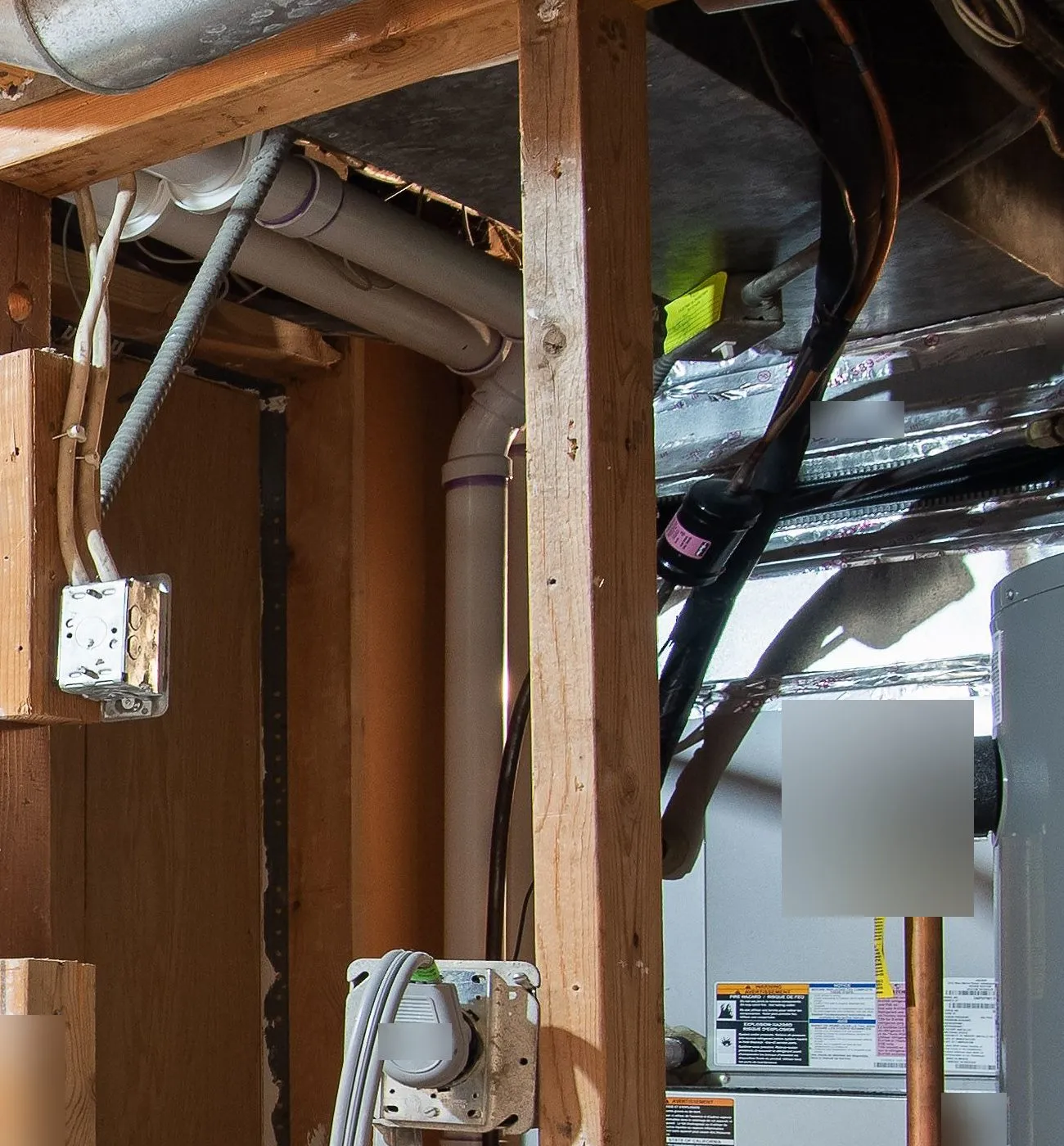
White plastic venting like this is the sign of a high-efficiency, condensing furnace.
When that drain clogs, the water has nowhere to go. Lennox says a blockage in those lines can deactivate the burners and leave the furnace blowing cold air, and tells homeowners to make sure the PVC pipe to the floor drain is clear. Without opening anything, you can look for water pooling around the base, a condensate pump that’s full or silent, and a drain line that’s kinked or has slipped out of the drain. The trap and the internal connections belong to a technician.
Leaky ducts
Warm air at the vents near the furnace, lukewarm or cool air in the rooms at the far end. That’s the pattern, and here the furnace itself may be fine.
Walk the house with your hand at each vent and note where it changes. Then think about where the ducts to those rooms run. A duct inside the heated house loses little. One that passes through an attic, a crawlspace or the ceiling of a garage sits in cold air all winter, and a loose joint there leaks heat out and draws cold air in. ENERGY STAR puts the loss in a typical house at about 20 to 30 percent of the air moving through the ducts (accessed September 24, 2026). Feeling along the joints you can reach for moving air is fair game. Sealing ductwork properly is a bigger job.
Is it a heat pump? Cool air during defrost is normal
If your system is a heat pump with an indoor air handler rather than a gas furnace, cool air for a few minutes in cold weather can be completely normal. Frost builds on the outdoor coil in winter, and the system runs a defrost cycle to melt it. American Standard says most homeowners have backup electric heat strips that come on during defrost, so the heat feels normal. In a home without backup heat, you may notice cool air from the vents for a few minutes, which American Standard calls perfectly normal. If it goes on much longer or happens constantly, that’s worth a call. The heat pumps guide covers how these systems work, and do heat pumps work in New Jersey winters? covers the cold-weather side.
What you can safely check, and what needs a technician
| You can check | Leave to a technician |
|---|---|
| Thermostat mode, fan setting, temperature and batteries | Anything inside the burner compartment, including the flame sensor and igniter |
| The air filter, and replacing it | Gas supply, gas valve and pilot problems |
| That every supply vent is open and unblocked | The condensate trap and internal drain connections |
| Visible water around the furnace, a full or silent condensate pump, a kinked drain line | A furnace that keeps tripping the limit switch with a clean filter |
| A one-time power reset (Bryant: off for 30 seconds, then on) | A failing control board, or error codes that keep coming back |
| Feeling for air at duct joints you can reach | Sealing or repairing ductwork |
Bryant says to call once you’ve checked the filter and thermostat and the air is still cold, or if you notice short cycling, strange noises or a pilot light that won’t stay lit. Carrier adds that blinking LED lights on the control board are diagnostic codes. It says to remove the cabinet door to look only if your owner’s manual specifically permits homeowner access, then note the pattern for the technician. If the manual doesn’t list it as a homeowner step, leave the panel on.
If the furnace has needed repairs more than once this winter, Signs your furnace needs replacing walks through how to weigh repair against replacement.
If you smell gas
A rotten-egg or sulfur smell means leave, not troubleshoot. New Jersey Natural Gas tells customers to get everyone out right away, not to use phones (cell or cordless) inside, not to flip light switches or use appliances, flashlights, doorbells or garage door openers, and to call 800-GAS-LEAK (427-5325) from a safe place. Don’t go back in until the utility says it’s safe.
Not every home is on NJNG. If your gas comes from PSE&G or another utility, follow your own utility’s instructions, such as PSE&G’s gas leak page, or call 911 from outside. Source for the steps above: NJNG, “Smell gas?”, accessed September 24, 2026.
Still stuck, or have a question about your own system? You can reach us here.