
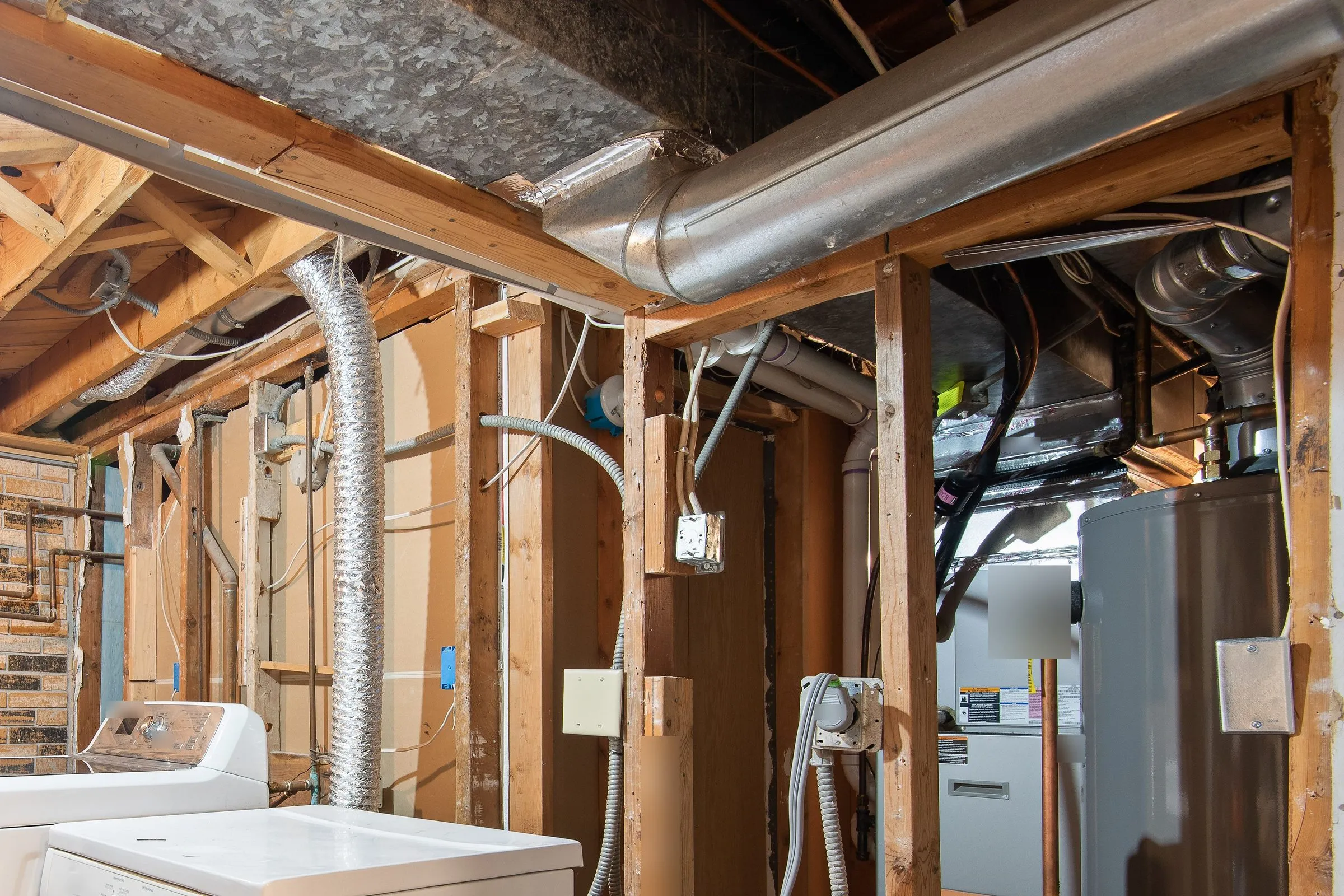
Forced air heating warms a house by heating air and blowing it through ducts. A furnace or a heat pump makes the heat, a blower moves the air, and grilles in the floors, walls or ceilings let it into each room while other grilles pull it back. It’s one kind of central heating. A boiler that feeds radiators is another kind, and that’s the comparison most people are really after.
How a forced air system works
The loop is simple once you picture it as a circle. Air from the house is drawn into a return duct, passes through a filter, gets heated, and is pushed back out to the rooms through supply ducts. Then it drifts back to a return grille and goes round again. The Department of Energy’s Energy Saver guide puts the whole idea in one sentence: furnaces “heat air and distribute the heated air through the house using ducts” (DOE, Furnaces and Boilers, archived copy).
The heat source: furnace or heat pump
Most forced air systems are built around a furnace. Plenty burn natural gas, some burn oil or propane, and a few heat with electric elements. A furnace burns fuel (or runs current through heating elements), and the heat passes through a metal heat exchanger into the air stream. The flame never touches the air you breathe.
A ducted heat pump is also forced air. It moves heat in from outdoors instead of making it, but the blower, the ducts and the grilles are the same. Which of the two costs less to run is its own question, covered in furnace vs heat pump: which costs less in New Jersey.
Efficiency on the fuel-burning side is rated as AFUE, the share of the fuel’s energy that ends up as heat in the house over a year. The same DOE page puts older, low-efficiency systems at 56 to 70 percent and today’s high-efficiency ones at 90 to 98.5 percent. That spread is a big part of why a very old furnace gets replaced even when it still runs.
Blower, supply ducts and return ducts
The blower is a large fan inside the furnace or air handler cabinet. When the thermostat calls for heat, the burner lights first and the blower follows a short while later, once the heat exchanger has warmed up, so you don’t get a blast of cold air at the start.
Supply ducts carry the warm air out. They usually branch off a big trunk line in the basement and end at small registers in each room, often under a window. Return ducts are fewer and bigger. A house might have one or two large return grilles in a hallway or stairwell and a register in nearly every room, which surprises people the first time they count.
Returns matter more than they look. A room with a supply and no path back for the air tends to run warmer or cooler than the rest of the house, and closing the door makes it worse. Keeping furniture and rugs off the return grilles is about the cheapest thing you can do for a forced air system.
The filter
The filter sits where the return air enters the furnace, sometimes in a slot on the side of the cabinet and sometimes behind a return grille in a wall or ceiling. Its main job is protecting the blower and the heat exchanger from dust. Cleaner air in the rooms is a side benefit, and how much of one depends on the filter. MERV ratings explained covers which rating makes sense, and how often to change your HVAC filter covers the schedule.
Forced air vs central heating: what’s the difference?
This one trips a lot of people up, partly because listings and contractors use the words loosely.
Central heating is the category. It means one heat source in one place, usually the basement, heating the whole house. Forced air is one way of delivering that heat. A gas boiler that sends hot water to baseboards in every room is central heating as well. It just isn’t forced air.
Then there’s “central air,” which almost always means central air conditioning. In a house with forced air heat, the AC usually shares the furnace’s blower and ducts: a cooling coil sits on top of the furnace, and the same registers blow cold air in summer. So a listing that says “forced air heat, central air” is describing two systems that share one set of ducts. A house with a boiler and central air has two separate systems, and the AC has ducts of its own, often in the attic.
How to tell which system you have
You can usually work this out in a few minutes, without opening anything.
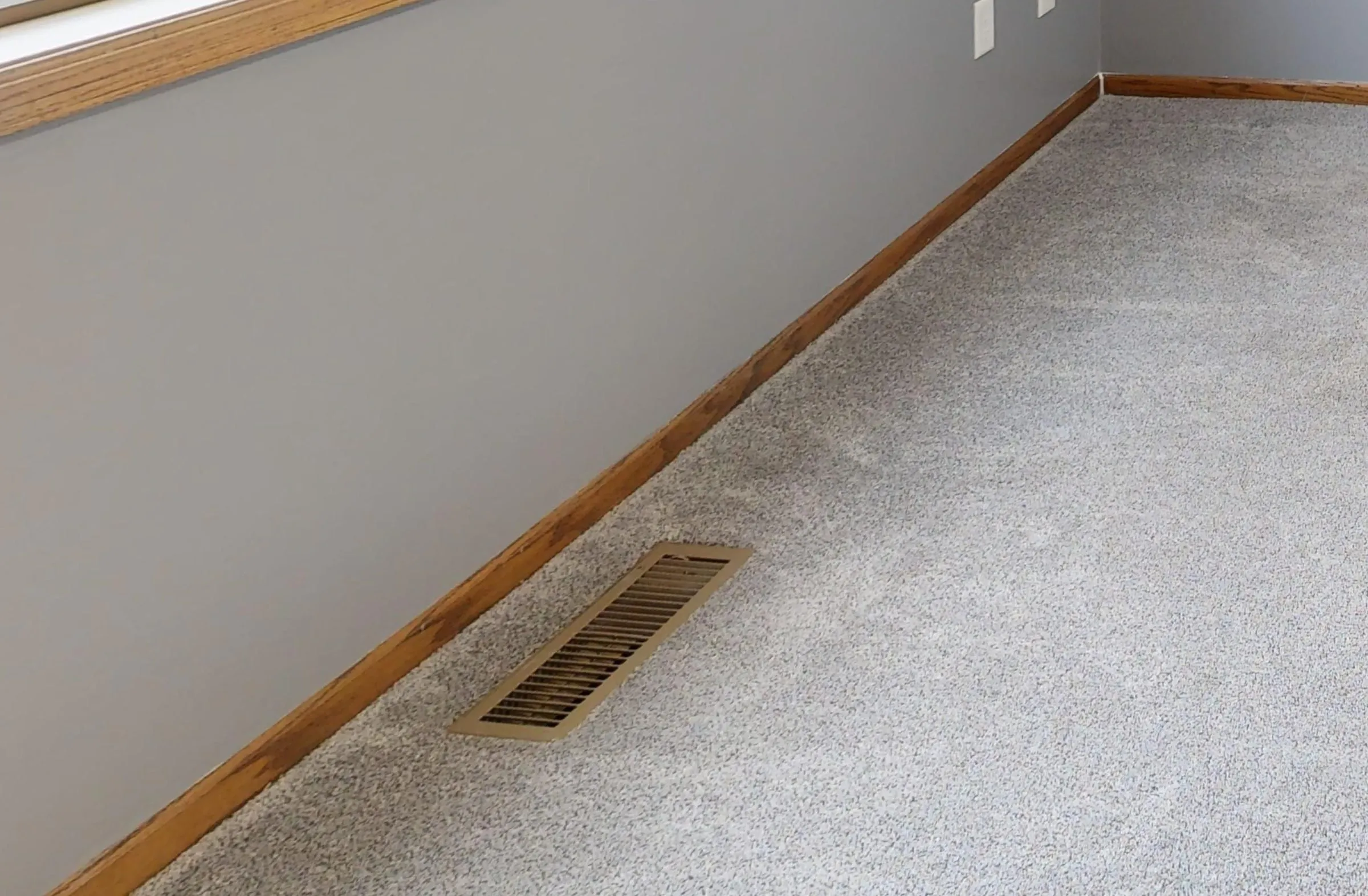
Turn the heat up and hold a hand near the grilles in the floor or walls. Warm air coming out of them means forced air. Look for the larger return grille somewhere central, and for a thermostat on a main-floor wall.
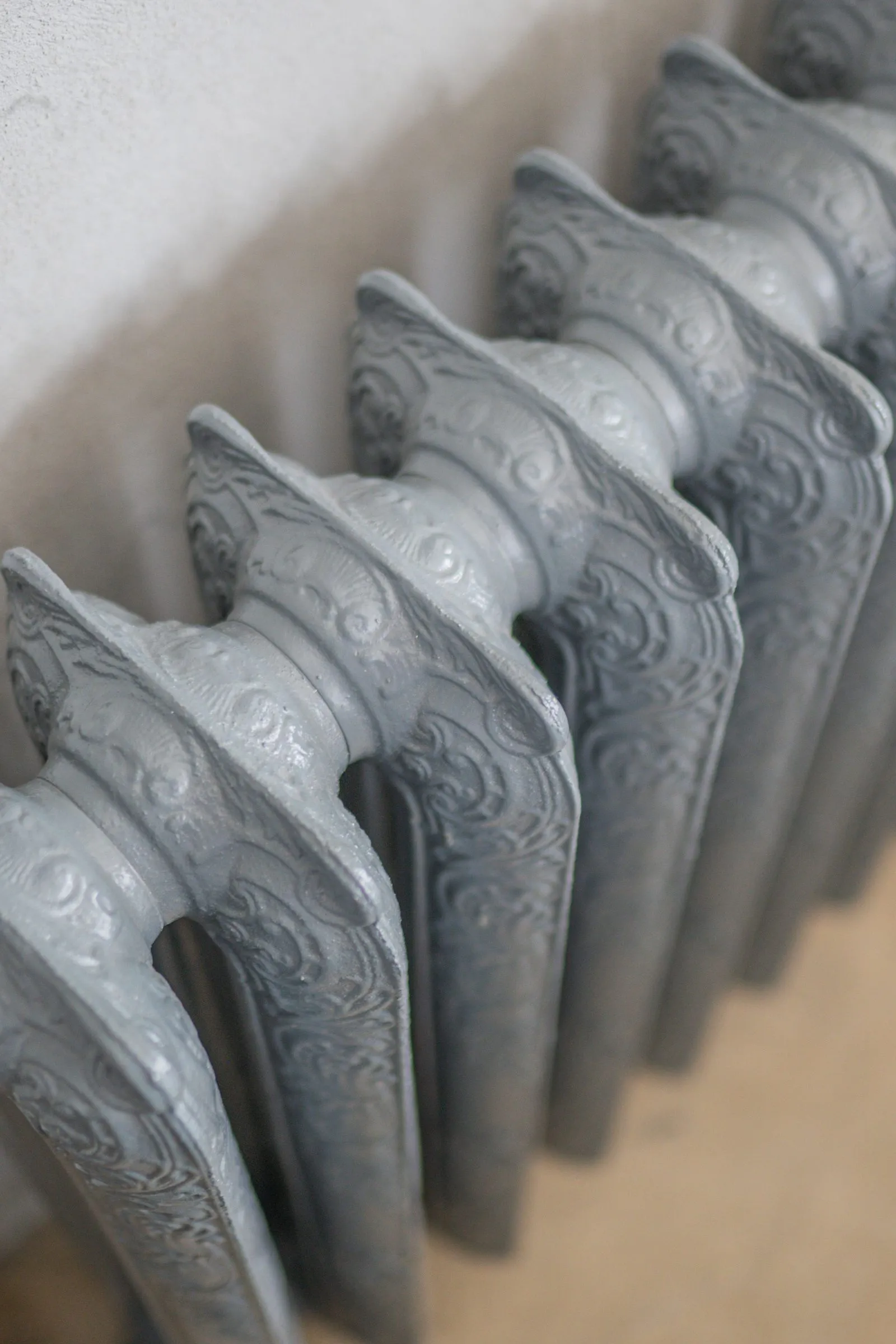
No grilles, and something along the wall gets warm instead? That’s boiler heat, or electric. Cast iron radiators, or long low baseboard covers with thin metal fins inside and pipes running into them, mean a boiler. Baseboards with no pipes, a thermostat on the unit or on the wall of each room, and wiring instead of plumbing are electric baseboard heat, which has no boiler at all.
Radiant floors are the sneaky one. There’s nothing to see in the room, only a floor that’s warm to stand on. The clue is in the basement: a boiler with a manifold of small plastic tubes running up into the floor.
In the basement, a furnace is a metal cabinet with big rectangular sheet metal ducts coming off it. A boiler has pipes, not ducts, and usually a pressure gauge on the front. If it’s a boiler and you’re not sure which kind, steam vs hot water boilers walks through the sight glass and the other clues.
How common is each in New Jersey?
One caveat up front: the best state figure we found is from 2020, and it counts all homes, new and old together. It says nothing about which system older houses tend to have, so we won’t guess at that either.
In the U.S. Energy Information Administration’s 2020 Residential Energy Consumption Survey state highlights for space heating, New Jersey had about 3.39 million homes. A furnace was the main heating equipment in about 61 percent of them. A steam or hot water boiler was the main heat in about 25 percent, and central heat pumps came in at 3 percent. Nationally the boiler share is 8 percent, so New Jersey has roughly three times the national share of boiler-heated homes.
The same table counts homes that use a humidifier: about 26 percent in New Jersey. It’s an odd thing to find in a heating survey, and it fits the dry-air complaint in the next section.
Forced air vs boiler heat (hot water, radiators, radiant floors and steam)
The DOE’s description of the other side: boilers heat water and supply hot water or steam; steam goes to radiators, and hot water goes to baseboard radiators or radiant floor systems. From the room’s point of view, all of those behave much the same way, so they’re compared here as one group. The differences between steam and hot water are in the boiler article.
Comfort and how the heat feels
Boiler heat warms the surfaces in a room, and the room warms up from them. It’s slower to respond when you turn the thermostat up, and it holds on longer after the boiler stops, especially cast iron. Forced air is the opposite: quick to warm a room, quick to cool off, and you can feel the air moving when it runs.
Which feels better is personal, and we’d be lying if we said there was a right answer. Plenty of people who grew up with radiators find forced air drafty. Plenty of people who grew up with forced air find radiator heat slow and uneven between rooms. Radiant floors tend to win the comfort argument with most people who have lived with them. Warm feet are hard to argue with.
Dry air and dust
Two separate complaints, and forced air gets blamed for both.
Dry air in winter is mostly not the furnace’s fault. Cold outdoor air holds little moisture, and heating it to 70 degrees drops the relative humidity whatever system does the heating. Forced air may feel drier because the air is moving across your skin, and a leaky return duct in an unheated space can pull in cold, dry air, but a boiler house gets dry too. A cheap hygrometer will tell you where you stand. Indoor humidity in New Jersey has the EPA’s 30 to 50 percent range and what to do about readings outside it. A forced air system does have one advantage here: a whole-house humidifier can be mounted on the ductwork. A boiler house needs room units.
Dust is a fairer charge. A forced air system pulls the house’s air through the ducts over and over while it runs, and whatever the filter misses gets moved around with it. The DOE’s radiant heating page says it plainly: people with allergies often prefer radiant heat “because it doesn’t distribute allergens like forced air systems can” (DOE, Radiant Heating, archived copy). The same page says radiant heat is usually more efficient than forced air because it has no duct losses. The flip side is that forced air is the only one of these systems that filters the air at all, and a better filter changes the picture more than people expect.
Noise
Boilers are quiet in the rooms, with some exceptions (steam pipes that bang, a hot water circulator you can hear through the floor). Forced air makes a steady whoosh when the blower runs, and a small or undersized duct can whistle. Neither is loud when it’s working right.
Adding central AC
This is where the two differ most, and for a lot of buyers it’s the deciding point.
In a forced air house, most of the work is already done. The ducts, the blower and the registers are there. Central air means adding a cooling coil at the furnace, an outdoor condenser and the refrigerant lines between them. It’s still real work, and the existing ducts have to be large enough for cooling, which needs more airflow than heating. Ducts that were sized only for heat can be a limit.
A boiler house has none of that. The usual routes, none free of trade-offs:
- Conventional ducts run through the attic and closets, feeding ceiling registers on the upper floor. This works well enough in many houses. The lower floor can be the problem.
- Small-duct, high-velocity systems, which use flexible tubes a couple of inches across that can be snaked through walls. They’re designed for older houses with plaster walls and no room for regular ductwork.
- Ductless mini-splits: an outdoor unit and wall-mounted heads in the rooms, no ducts at all. Most of them are heat pumps, so they can also take on some of the heating.
Our view: if a boiler house has good radiators and a boiler with years left in it, don’t let the lack of AC talk you into tearing out a heating system that works. Adding cooling is a separate project, and it can be done without replacing the boiler. What any of those routes costs in a particular house is something only a site visit can answer, so no prices here.
Converting a boiler house to forced air heating throughout is possible, but it’s a big job in a finished house with plaster walls, and it gives up the comfort and quiet that boiler owners tend to like. It’s rarely the first thing to consider.
What about running costs?
It depends mostly on the fuel, the efficiency of the equipment and the house, much more than on whether the heat moves by air or water. For furnaces and heat pumps side by side, see furnace vs heat pump: which costs less in New Jersey. More heating guides are on the heating hub.
Questions about the system in your house? Get in touch.